
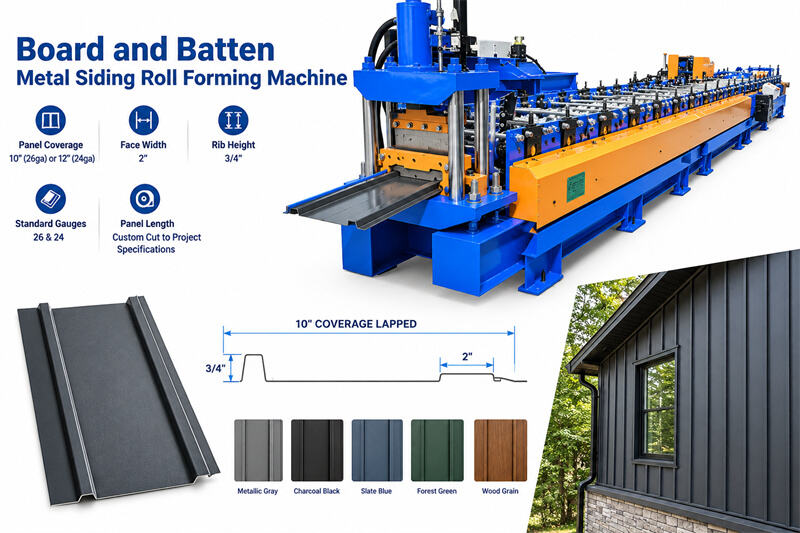
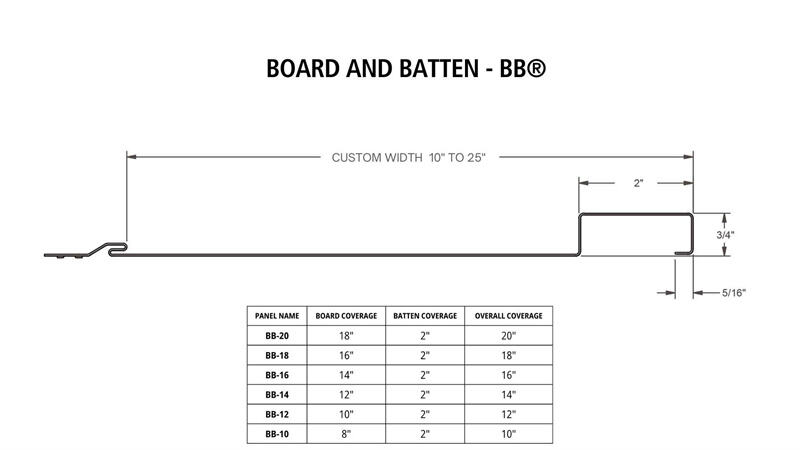

The Board and Batten Metal Siding Roll Forming Machine is a specialized production line designed to manufacture vertical metal siding panels with a traditional board-and-batten appearance. By combining continuous roll forming, precision cutting, and automatic control, the machine produces consistent panels for residential, agricultural, commercial, and industrial buildings.
Unlike conventional wood siding, metal board and batten panels provide a more stable solution for exterior wall applications. At the same time, manufacturers can produce different panel lengths according to project requirements. With precise forming technology, the finished panels maintain uniform dimensions, clean ribs, and reliable interlocking connections.
At ZTRFM, we customize board and batten siding roll forming machines according to panel width, material thickness, production speed, and automation requirements. Our equipment can process galvanized steel, pre-painted steel, and other suitable metal coils to meet different siding applications.
What Is Board and Batten Metal Siding?
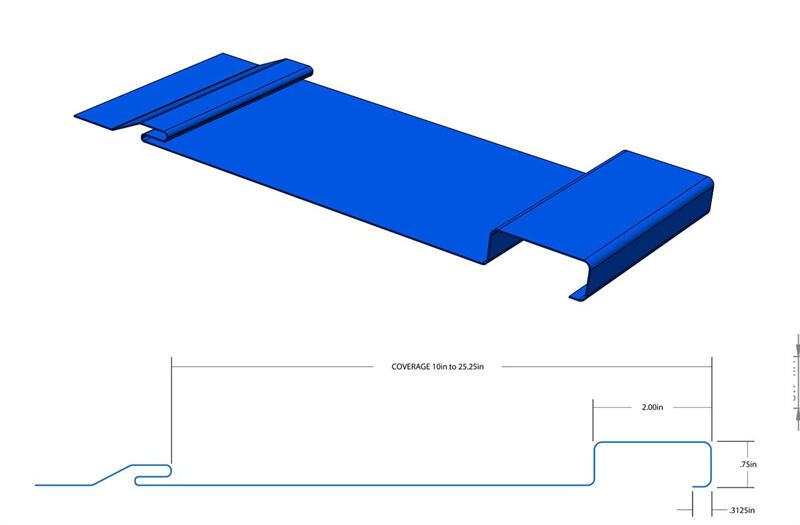
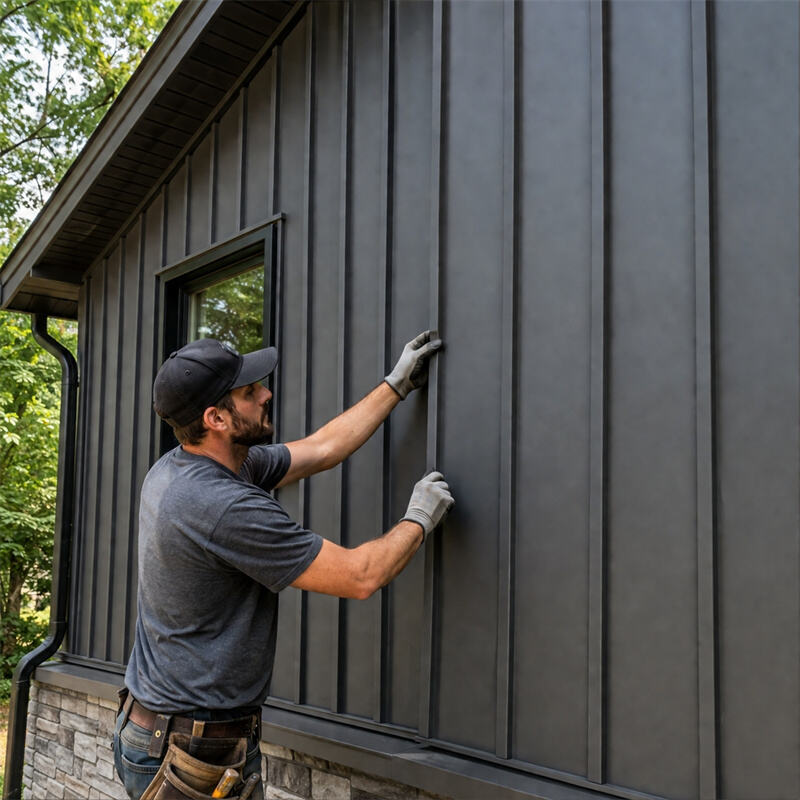
Board and batten metal siding is a vertical wall panel characterized by wide flat sections and raised ribs that cover the panel joints. This profile creates a distinctive architectural appearance while providing a practical exterior cladding solution.
A typical board and batten panel can feature a 2-inch face width and 3/4-inch rib height, while the panel coverage can be customized for different construction requirements. For example, common specifications include 10-inch coverage for 26-gauge material and 12-inch coverage for 24-gauge material.
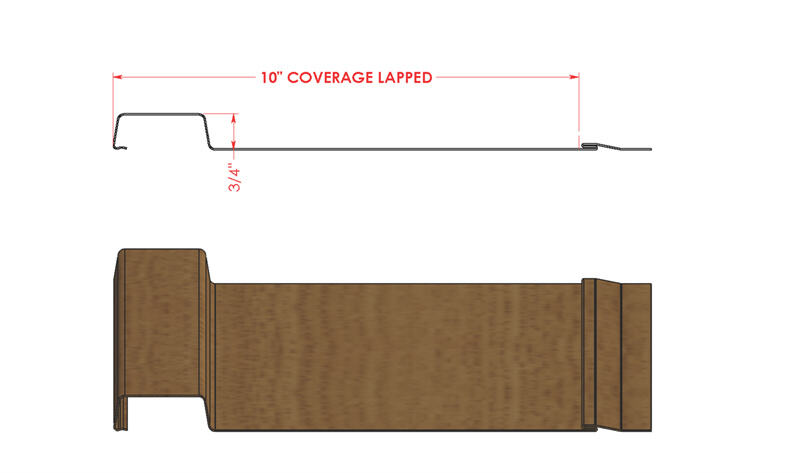
The vertical configuration also gives the finished wall a clean, continuous appearance. Furthermore, the raised ribs add structural rigidity and create clearly defined lines across the building facade.
The finished panels are suitable for:
- Residential houses and exterior walls
- Garages and workshops
- Barns and agricultural buildings
- Warehouses and commercial buildings
- Storage and utility buildings
- Architectural wall cladding projects
For manufacturers, the biggest advantage is flexibility. The roll forming machine can continuously produce panels and cut them to the required project length.
Board and Batten Panel Specifications
The exact profile can be adjusted according to the customer’s drawings. However, the following specifications represent a common board and batten panel configuration:
| Item | Typical Specification |
|---|---|
| Panel Type | Board and Batten Metal Siding |
| Panel Coverage | 10″ / 12″ |
| Material Thickness | 26 ga / 24 ga |
| Rib Height | 3/4″ |
| Face Width | 2″ |
| Material | Galvanized / Pre-painted Steel |
| Panel Length | Custom cut |
| Forming Direction | Vertical siding profile |
| Connection | S-lock / interlocking design |
| Application | Wall cladding and exterior siding |
The panel length does not need to follow a fixed standard. Instead, the automatic cutting system can cut the formed siding to the length programmed through the control system.
This flexibility helps manufacturers reduce unnecessary material waste while producing panels for different building dimensions.
Board and Batten Siding Roll Forming Machine
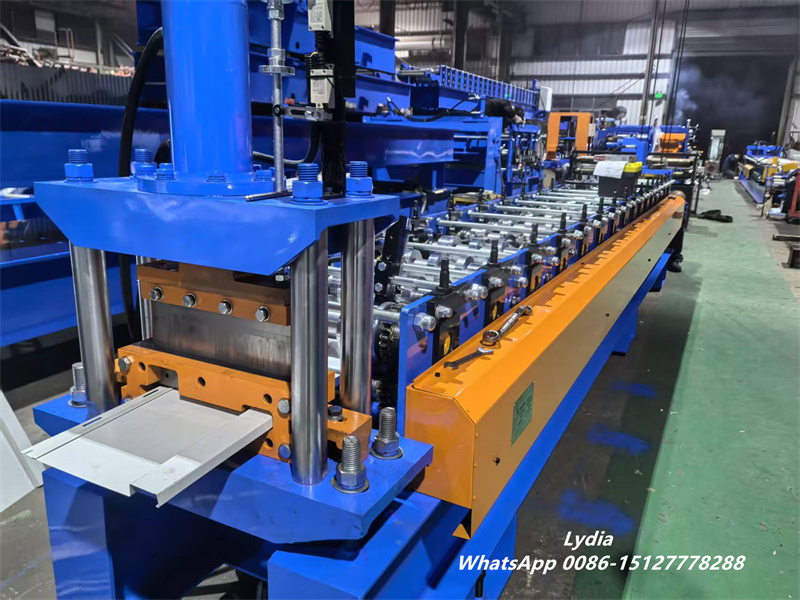
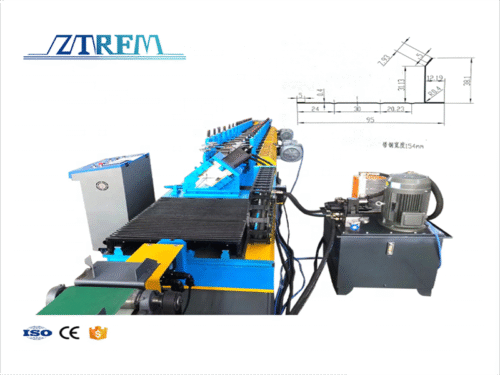
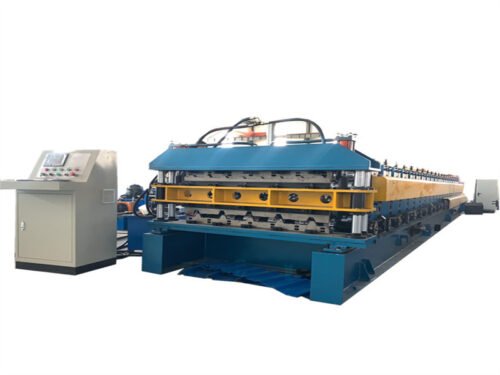
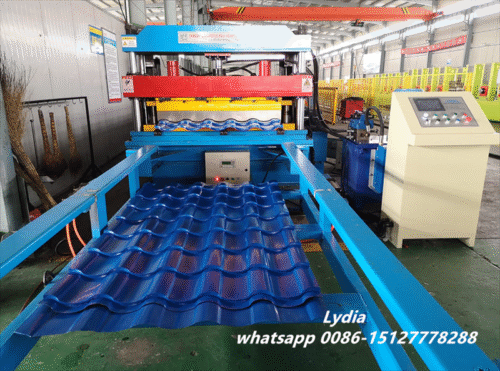
The Board and Batten Siding Roll Forming Machine converts metal coils into finished siding panels through a continuous cold roll forming process.
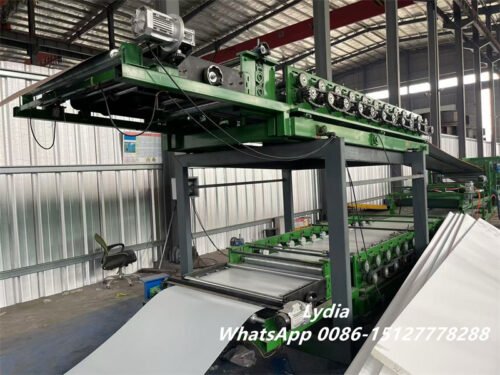
First, the coil is loaded onto the decoiler. The strip then enters the feeding and leveling section, where the machine guides the material into the forming system. Next, a series of precision rollers gradually shapes the flat strip into the required board and batten profile.
After forming, the hydraulic or servo-controlled cutting unit cuts each panel to the programmed length. Finally, operators can collect the finished siding panels for packaging, transportation, or direct installation.
A typical production line can include:
Hydraulic Decoiler → Feeding & Leveling → Roll Forming → Cutting → PLC Control → Run-Out Table
Typical Machine Parameters
| Machine Item | Typical Specification |
|---|---|
| Machine Type | Board and Batten Siding Roll Former |
| Suitable Material | GI / PPGI / Aluminum |
| Material Thickness | Approx. 0.3–0.8 mm |
| Forming Speed | 0–20 m/min |
| Shaft Diameter | 50 mm |
| Roller Material | GCr15 / Cr12 |
| Frame Structure | Heavy-duty welded frame |
| Transmission | Gear / chain transmission |
| Cutting Method | Hydraulic or servo flying cutting |
| Control System | PLC + Touch Screen |
| Main Motor | Approx. 7.5–11 kW |
| Power Supply | 380V, 50Hz, 3 Phase |
| Length Control | Encoder + PLC |
| Panel Length | Customized |
| Automation | Automatic production |
Note: Machine specifications can be customized according to the required profile, material thickness, production speed, and customer’s electrical standard.
How the Board and Batten Roll Former Works
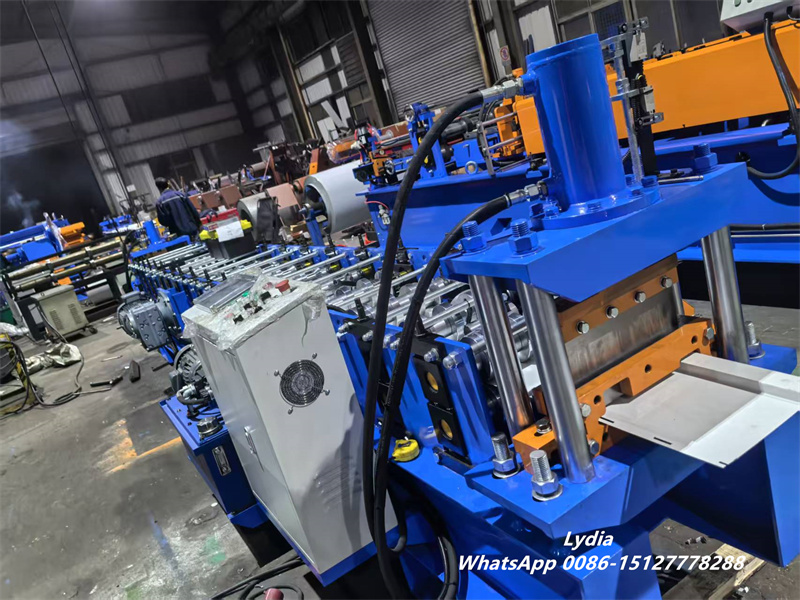
The production process starts with a steel coil. The automatic or manual decoiler feeds the strip into the forming machine at a controlled speed.
The feeding system keeps the material centered before it enters the forming rollers. Because the profile contains several bends and raised sections, the rollers gradually shape the material instead of forming the entire profile in one operation.
This progressive forming method reduces deformation and helps maintain consistent panel dimensions.
Meanwhile, the PLC system monitors the production process and controls the forming speed, panel length, and cutting operation. Once the panel reaches the preset length, the cutting system separates it without manually stopping the entire production line.
As a result, manufacturers can achieve:
- Consistent panel dimensions
- Stable rib height
- Accurate panel length
- Faster production
- Reduced manual operation
- Better material utilization
- Easy length adjustment
For projects requiring higher automation, the production line can also be equipped with an automatic stacking or packing system.
Why Choose a Board and Batten Metal Siding Machine?
A dedicated board and batten siding roll former allows manufacturers to produce their own panels instead of relying entirely on pre-fabricated siding suppliers.
More importantly, roll forming provides excellent repeatability. Once the forming rollers are properly adjusted, the machine can continuously manufacture panels with the same profile and dimensions.
The system also provides production flexibility. Manufacturers can adjust panel length through the PLC control system, while the forming section can be designed around the customer’s specific board and batten profile.
For example, the machine can be configured for different:
- Panel coverage widths
- Rib heights
- Face widths
- Material thicknesses
- Panel lengths
- Punching requirements
- Cutting methods
Therefore, one production line can be optimized around a specific product range rather than relying on a one-size-fits-all configuration.
Board and Batten Panels for Different Building Applications
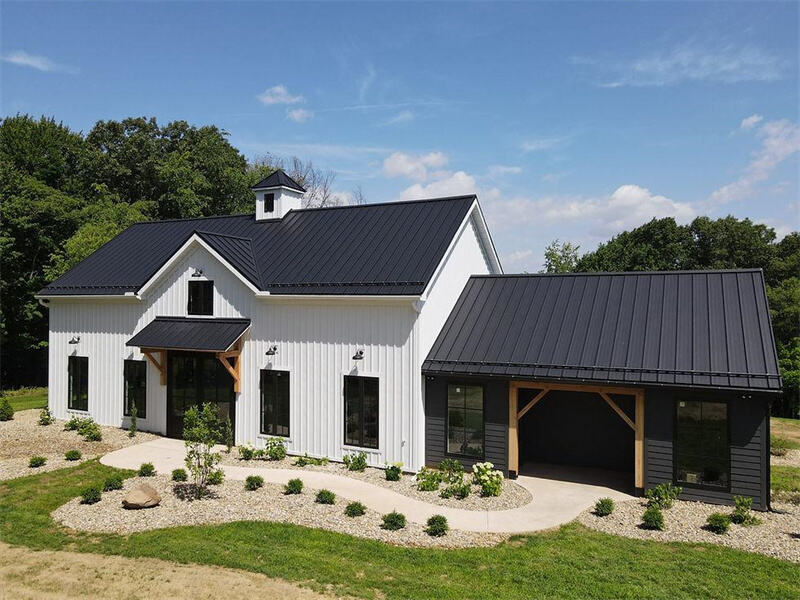
The finished board and batten metal siding panels combine a traditional architectural appearance with the advantages of modern metal fabrication.
For residential buildings, the vertical profile creates a clean exterior and works well with modern, farmhouse, and traditional architectural styles. For barns and agricultural buildings, the metal construction provides a practical exterior cladding option.
Commercial and industrial buildings can also use the panels where designers want a more architectural appearance instead of conventional ribbed wall panels.
In addition, the panels can be manufactured to project-specific lengths. This feature is particularly useful for contractors who need to match wall dimensions while minimizing unnecessary joints.
ZTRFM Board and Batten Siding Roll Former
ZTRFM provides customized metal siding roll forming machines for manufacturers, contractors, and metal building suppliers. We can design the forming rollers according to your actual panel drawing rather than simply supplying a standard machine.
Our engineers can also configure the machine around your production requirements, including material thickness, panel width, rib height, cutting length, and production speed.
For customers who already have a board and batten panel drawing, you can provide the profile drawing, panel dimensions, material specification, and required output. We can then recommend the appropriate roll forming configuration.
FAQ About Board and Batten Metal Siding Roll Forming Machine
1. What material can the machine process?
The machine can normally process galvanized steel, pre-painted galvanized steel, and other suitable metal coils. Material thickness depends on the specific profile and machine configuration.
2. Can the machine produce different panel lengths?
Yes. The PLC control system allows operators to enter the required panel length. The encoder measures the forming length and sends the cutting signal automatically.
3. What is the typical production speed?
A typical board and batten siding machine can operate at approximately 0–20 m/min, depending on material thickness, profile complexity, cutting method, and machine configuration.
4. Can you manufacture a machine according to our panel drawing?
Yes. This is one of the main advantages of a customized roll forming machine. Customers can provide a CAD profile drawing or finished panel sample, and our engineers can design the forming rollers accordingly.
5. Can the machine produce both 10-inch and 12-inch board and batten panels?
The answer depends on the required profile configuration. If both profiles have substantially different dimensions, we recommend confirming the drawings first. ZTRFM can then evaluate whether they can be produced with interchangeable tooling or require separate forming configurations.


Reviews
There are no reviews yet.