
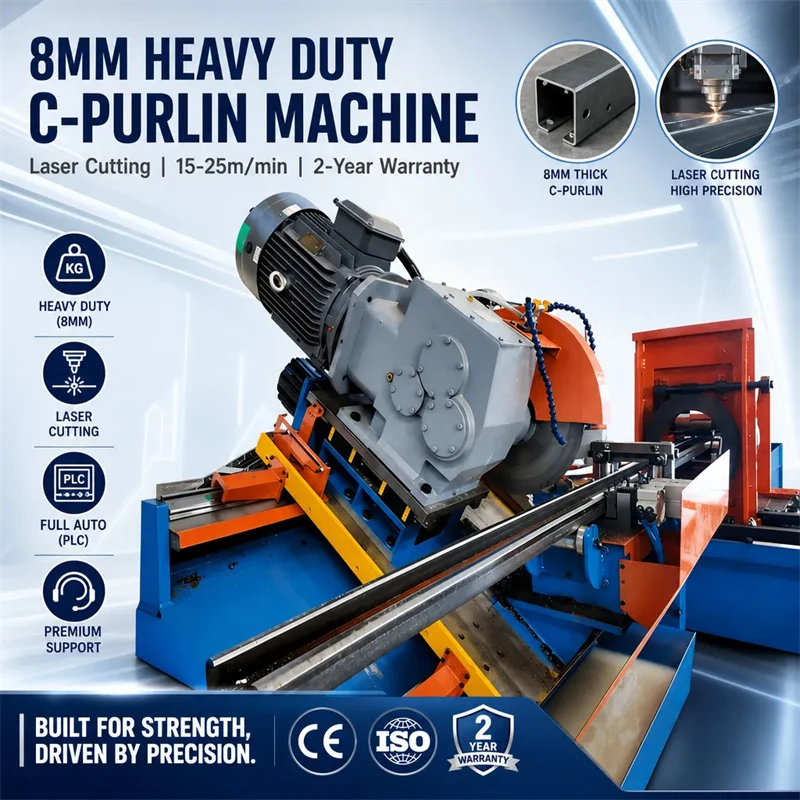




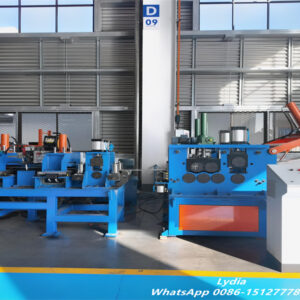

As industrial buildings, steel structures, and heavy-duty construction projects continue to expand, manufacturers increasingly require equipment capable of processing thicker and stronger steel materials. A standard roll forming line may struggle to handle the forming pressure, material resistance, and dimensional requirements associated with heavy-gauge steel. Therefore, investing in a reliable 8mm Heavy Duty Roll Forming Machine is essential for manufacturers producing structural steel profiles and load-bearing components.
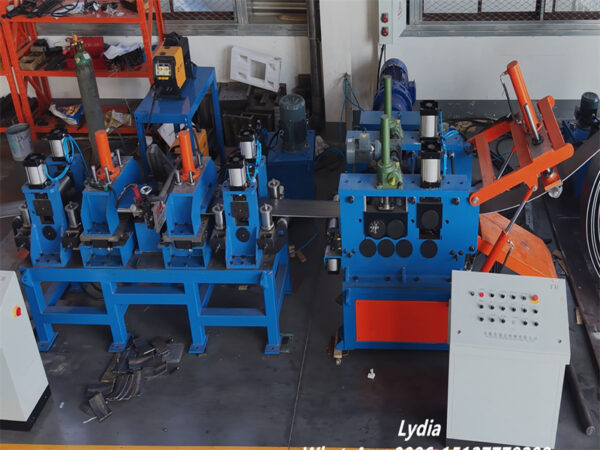
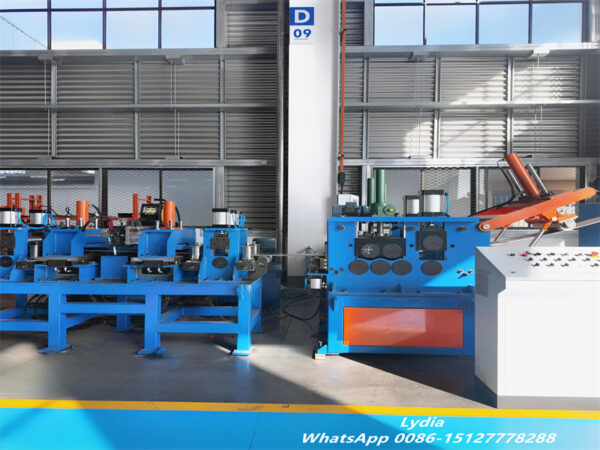
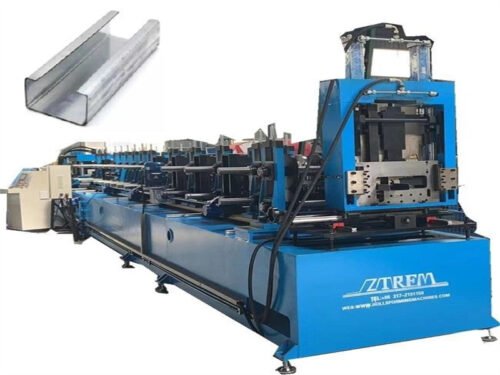
ZTRFM designs this Heavy Gauge Roll Forming Machine specifically for processing steel strips up to 8.0 mm thick. The production line integrates hydraulic decoiling, precision leveling, strip shearing and butt welding, multi-station roll forming, servo flying cold saw cutting, and automatic material discharge. As a result, the entire system supports continuous production while maintaining consistent profile dimensions and cutting accuracy.
Equipped with 18 forming stations and a 110 kW main drive system, this Heavy Duty Steel Roll Forming Machine delivers the forming force required for demanding industrial applications. Furthermore, ZTRFM can customize the roller configuration and finished profile dimensions according to customer drawings, making the equipment suitable for heavy channels, structural sections, C-shaped profiles, and other customized steel components.
1. Heavy-Duty Design for 8mm Thick Steel Processing
Processing 8mm steel requires considerably more forming force and machine rigidity than conventional thin-sheet applications. For this reason, ZTRFM uses a reinforced machine structure, heavy-duty transmission components, and precision-engineered forming rollers to support stable operation under high loads.
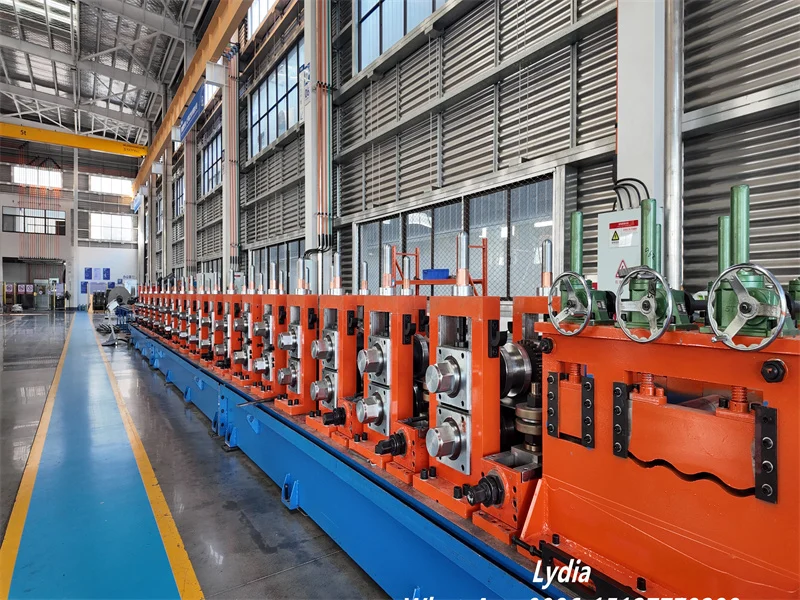
The main forming section features 18 forming stations, allowing the steel strip to pass through a gradual shaping process. Instead of applying excessive deformation at one point, each station contributes to the final profile geometry. Consequently, the machine helps control material stress, reduce unwanted deformation, and maintain consistent dimensions along the finished profile.
The machine stands use integral cast steel construction, while the main shafts are manufactured from 40Cr steel with quenching and tempering treatment. In addition, the forming rollers use Cr12MoV alloy steel with heat treatment to improve hardness and wear resistance. These components work together to support long-term production in demanding manufacturing environments.
To further improve machining accuracy, the machine frame undergoes stress relief, shot blasting, and precision machining. A gantry machining center processes the critical mounting surfaces, helping maintain alignment between the forming stations throughout extended operation.
2. Complete Production Line Configuration and Technical Specifications
The 8mm Heavy Duty Roll Forming Machine combines several processing units into one coordinated production system. Each machine performs a specific task, from preparing the steel coil to delivering accurately cut finished profiles. Moreover, the integrated configuration reduces manual handling and improves overall production efficiency.
The production line starts with a 10-ton hydraulic decoiler, which supplies the steel strip to the leveling section. After leveling, the shear and butt welding unit connects the coil ends. This arrangement allows operators to prepare the next coil while maintaining production continuity. The material then enters the main roll forming machine before the servo flying cold saw cuts the finished profiles to the required length.
| No. | Equipment | Main Specification | Qty. | Power |
|---|---|---|---|---|
| 1 | Hydraulic Decoiler | 10T hydraulic powered type | 1 set | 10.5 kW |
| 2 | Leveling Machine | 300 model | 1 set | 30 kW |
| 3 | Shear & Butt Welder | 300 model, maximum 8mm thickness | 1 set | — |
| 4 | Roll Forming Machine | 18 forming stations | 1 set | 110 kW |
| 5 | Servo Flying Cold Saw | Servo tracking cutting system | 1 set | 30 kW |
| 6 | Automatic Run-out Table | 6 meters | 1 set | 2.2 kW |
| 7 | Electrical Control System | PLC centralized control | 1 set | — |
Main Technical Parameters:
| Technical Item | Specification |
|---|---|
| Maximum Material Thickness | 8.0 mm |
| Steel Strip Width | 300 mm |
| Applicable Materials | Q235 / Q355 steel, galvanized steel strip |
| Forming Stations | 18 stations |
| Production Speed | 8–15 m/min |
| Main Motor Power | 110 kW |
| Cutting Length Tolerance | ±1.5 mm |
| Straightness Tolerance | ≤ ±2 mm / 6000 mm |
| Angle Tolerance | ≤ ±2 / 6000 mm |
| Run-out Table Length | 6 meters |
| Approximate Line Dimensions | 34 × 4.5 m |
| Profile Design | Customized according to customer drawings |
These specifications provide a reference for the standard configuration. However, the actual machine design, forming speed, and production capacity depend on the material grade, profile geometry, and customer requirements.
3. Key Machine Components and Advanced Manufacturing Technology
Hydraulic Decoiling and Precision Leveling
The production process begins with a 10-ton hydraulic powered decoiler. Its hydraulic expansion system securely holds the steel coil, while the pneumatic pressing arm helps prevent the material from loosening during rotation. Double-side guide plates maintain coil alignment, and the reinforced braking system supports safe operation.
After decoiling, the strip enters the bridge feeding and leveling unit. This section uses a heavy-duty gantry frame and a multi-roller leveling arrangement to correct coil deformation before forming. The feeding rollers have a diameter of 152 mm, while the leveling rollers measure 160 mm. GCr15 bearing steel rollers with HRC 58–62 hardness provide excellent wear resistance.
Shear and Butt Welding System
Continuous production requires reliable coil connection. Therefore, the line includes a TH-300 shear and butt welding machine designed for steel strips up to 300 mm wide and 8.0 mm thick. The hydraulic shearing mechanism prepares the strip ends, while the moving welding torch performs gas-shielded butt welding. Its welding speed ranges from 500 to 1500 mm/min, helping operators connect successive coils efficiently and reduce unnecessary production interruptions.
18-Station Heavy-Duty Roll Forming Section
The main forming machine provides the power and structural rigidity needed to shape thick steel strips. Its 110 kW main motor works with a dual-driven feeding arrangement to deliver stable material movement. Furthermore, flange-connected gearboxes and universal joint transmission distribute power to the forming stations.
The Cr12MoV forming rollers receive heat treatment to improve surface hardness and service life. Meanwhile, 125 mm diameter 40Cr main shafts provide the strength required for heavy forming operations. Heavy-duty Harbin bearings support the rotating components, and an INOVANCE frequency inverter allows operators to adjust the forming speed according to production conditions.
Servo Flying Cold Saw Cutting System
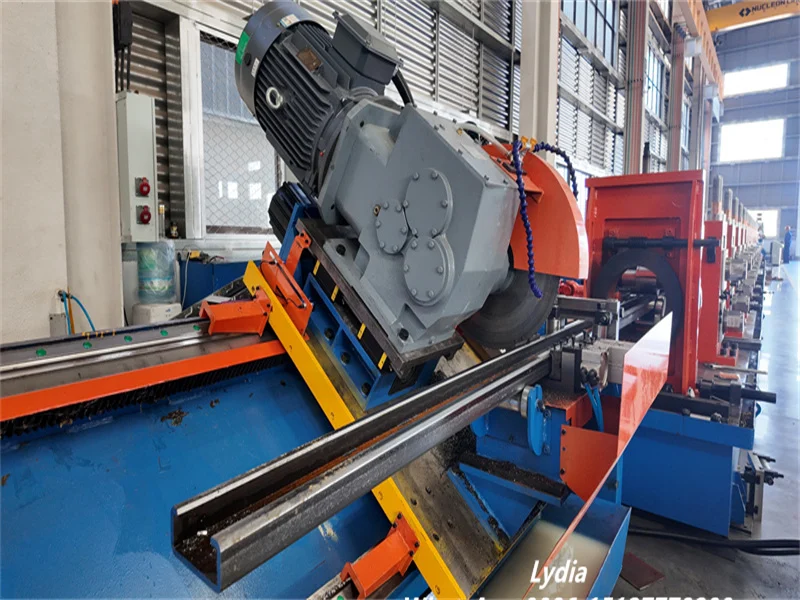
Accurate cutting plays an important role in the final assembly of structural steel components. Unlike a conventional fixed cutting system, the servo flying cold saw tracks the moving profile and completes cutting without requiring the entire production line to stop. The tracking servo motor is rated at 30 kW, while the saw motor uses a 22 kW frequency-controlled drive.
The system supports cutting steel materials up to 8.0 mm thick, including Q235 and Q355. Its pneumatic clamping arrangement holds the profile securely during cutting. In addition, the high-speed steel saw blade helps achieve clean cutting edges and consistent finished lengths.
Automatic Run-out and PLC Control
After cutting, the finished profiles move onto a 6-meter automatic run-out table. The powered roller conveyor transfers the products away from the cutting area, reducing manual handling and supporting organized collection.
Meanwhile, the centralized PLC control system coordinates the production line. Operators can set cutting lengths, adjust production parameters, switch between manual and automatic modes, and monitor operating conditions through the touchscreen HMI. Alarm functions and emergency stop buttons also improve operational safety.
4. Production Process and Industrial Applications
The Heavy Duty Roll Forming Production Line follows a coordinated coil-to-length manufacturing process. First, the hydraulic decoiler feeds the steel strip into the leveling machine. Next, the shear and butt welding unit connects the strip ends to maintain material supply. The prepared steel then passes through the feeding and roll forming sections, where 18 forming stations gradually produce the required profile.
Once the profile reaches the preset length, the servo flying cold saw tracks and cuts the moving material. Finally, the automatic run-out table conveys the finished components for collection and further processing.
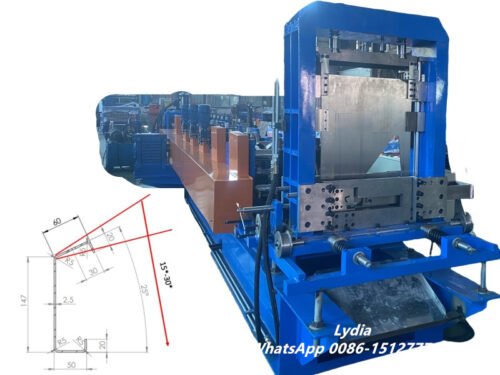
This production arrangement suits manufacturers that need consistent heavy-gauge steel profiles for demanding structural applications. Depending on the customized roller design and profile drawings, the machine can produce heavy-duty channels, C-shaped structural sections, industrial framing components, and construction support profiles.
Typical applications include:
- Heavy industrial warehouse structures and load-bearing frames.
- Multi-story steel building structural components.
- Heavy-duty C channels and customized structural profiles.
- Large agricultural storage buildings and equipment structures.
- Industrial support frames and infrastructure components.
- Customized steel sections for construction and engineering projects.
For customers manufacturing heavy-duty C purlins or other structural sections, ZTRFM can develop a dedicated roller design according to the required cross-section. The final machine configuration depends on the profile dimensions, steel grade, thickness, and production requirements. Therefore, customers should provide detailed drawings before confirming the technical design.
5. Why Choose ZTRFM as Your Heavy Duty Roll Forming Machine Manufacturer?
Choosing a machine for 8mm steel processing involves more than comparing motor power or production speed. Manufacturers must also consider frame rigidity, roller materials, transmission design, machining accuracy, and after-sales support. ZTRFM combines these engineering factors to deliver reliable Heavy Gauge Roll Forming Machines for industrial production.
Our engineering team develops customized forming solutions based on the customer’s material specifications and finished product drawings. Rather than applying a standard roller arrangement to every project, we evaluate the profile geometry and forming requirements before finalizing the machine design.
In addition, ZTRFM provides machine testing, technical documentation, installation guidance, and after-sales technical support. Our equipment is designed for international markets, including Europe, the Middle East, and North America. We can also discuss electrical standards, production layouts, and optional automation according to the customer’s factory conditions.
With its reinforced construction, 18 forming stations, 110 kW main drive, and integrated servo cutting system, the 8mm Heavy Duty Roll Forming Machine offers a practical manufacturing solution for thick steel structural profiles. Contact ZTRFM with your product drawings and material specifications to receive a customized machine proposal.



Reviews
There are no reviews yet.