
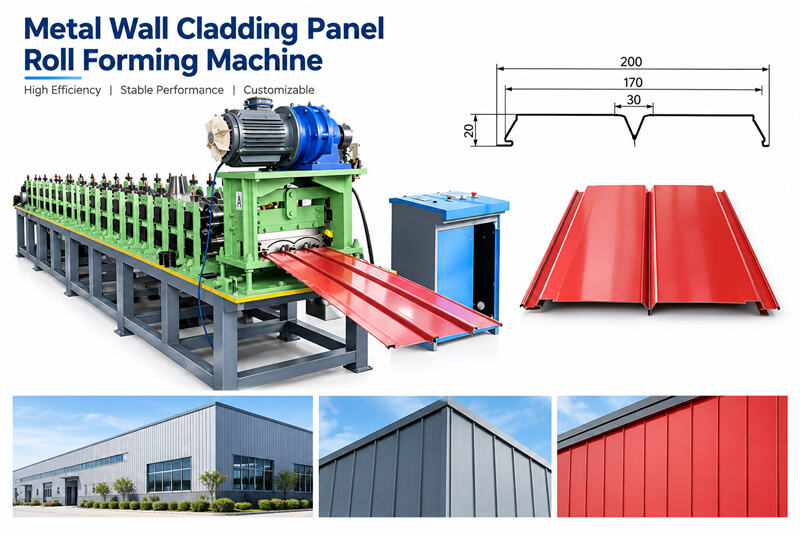
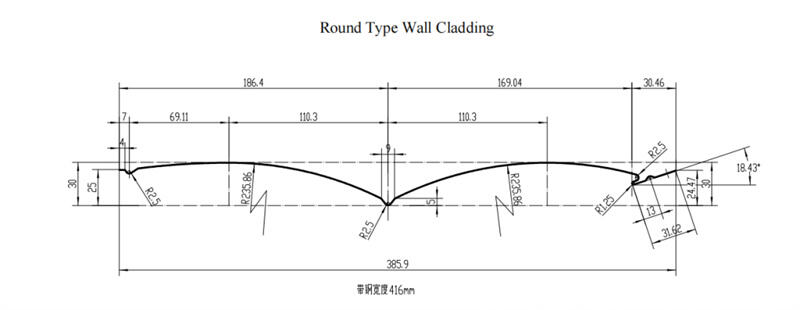
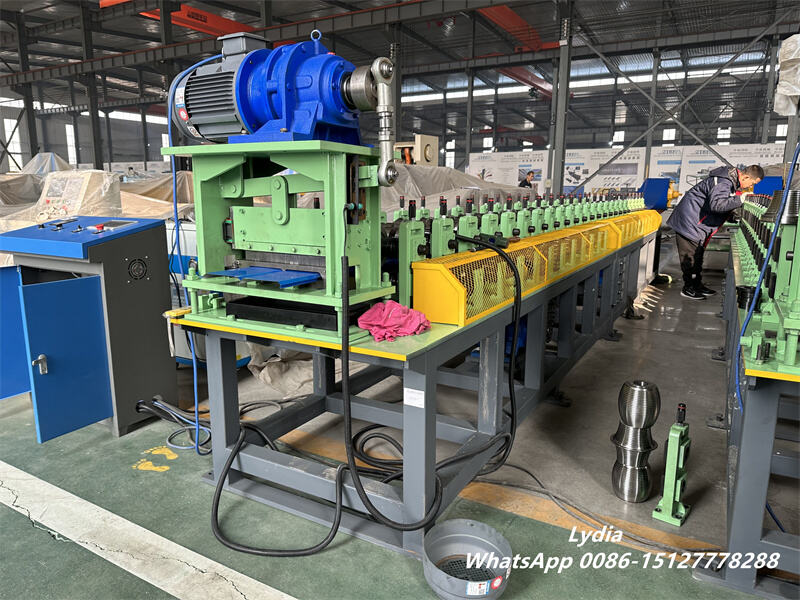

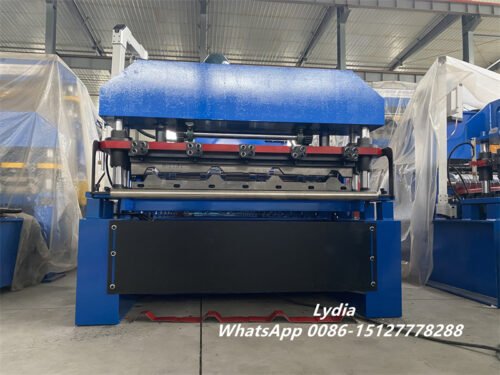
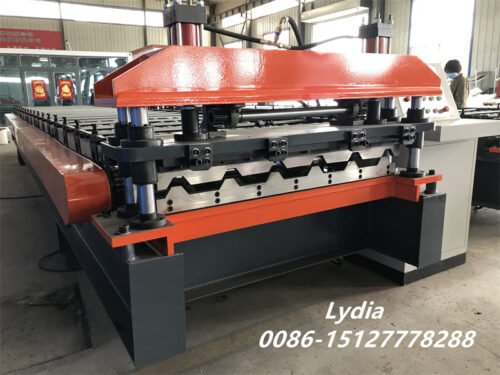
The wall cladding panel roll forming machine provides an efficient solution for producing continuous metal wall panels for commercial, industrial, and architectural projects. This automatic production line processes 0.3–0.7 mm steel coils and gradually forms them into accurate cladding profiles through multiple roller stations.
As a professional cladding rolling machine, it integrates coil feeding, roll forming, hydraulic cutting, and PLC control into one continuous production process. Therefore, manufacturers can reduce manual operations while maintaining consistent panel dimensions and surface quality.
The equipment can also serve as a metal sheet cladding machine for customers who need reliable production of steel wall and roof cladding profiles.
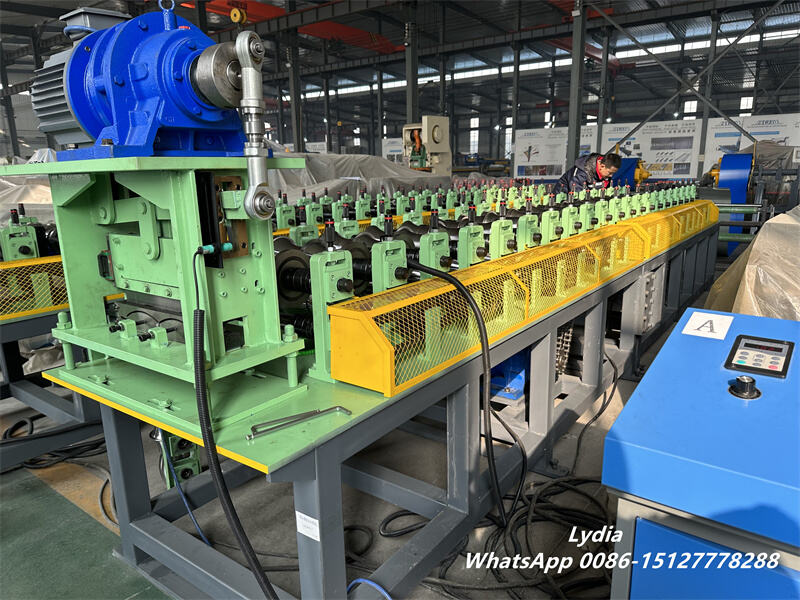
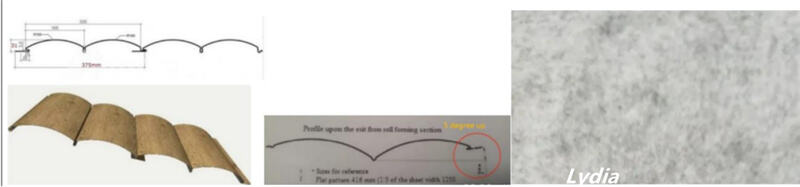
Efficient Wall Cladding Roll Forming Process
The production line follows a simple and efficient workflow:
Decoiler → Feeding & Guiding → Roll Forming → Hydraulic Cutting → Finished Panel Receiving
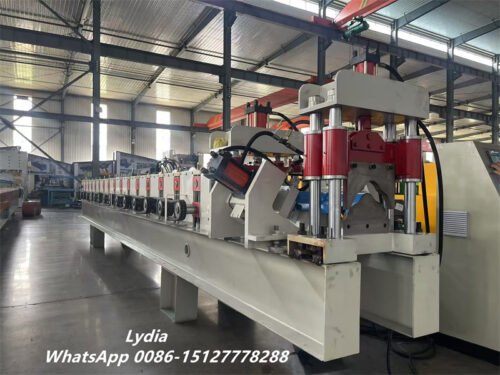
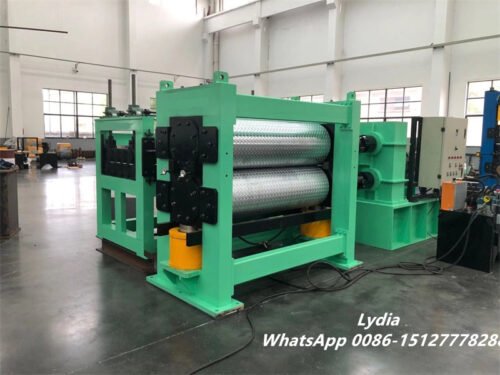
First, the decoiler supplies the metal coil to the production line. The feeding device then guides the strip into the forming section and keeps the material properly aligned. Next, the forming rollers gradually bend the flat sheet into the required wall panel profile.
After forming, the hydraulic cutting system cuts the continuous panel to the preset length. Finally, workers can collect the finished products from the receiving table.
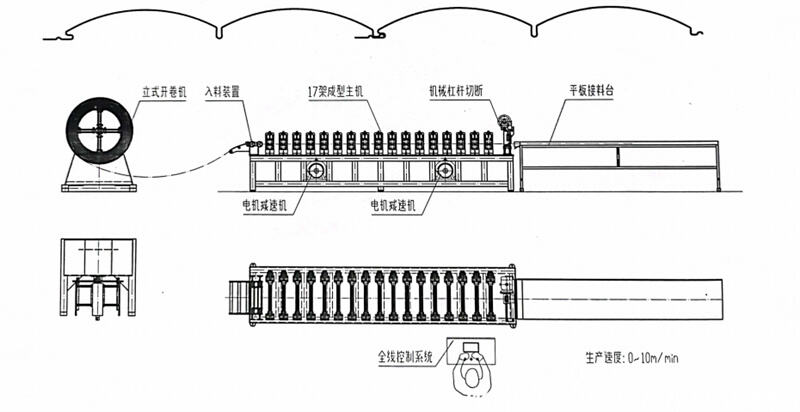
This integrated process makes the equipment suitable for cladding panels exterior wall machine applications, particularly where manufacturers need continuous production and consistent panel dimensions.
Strong Structure and Stable Forming Performance
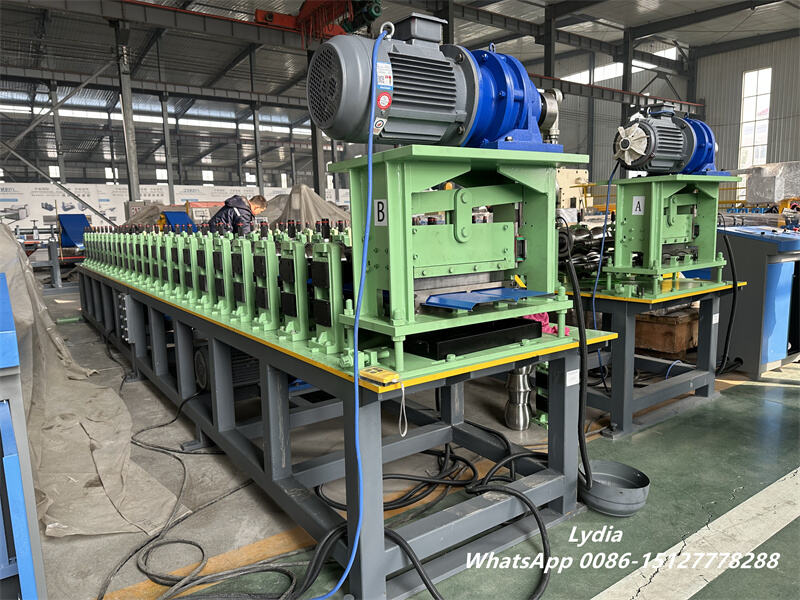
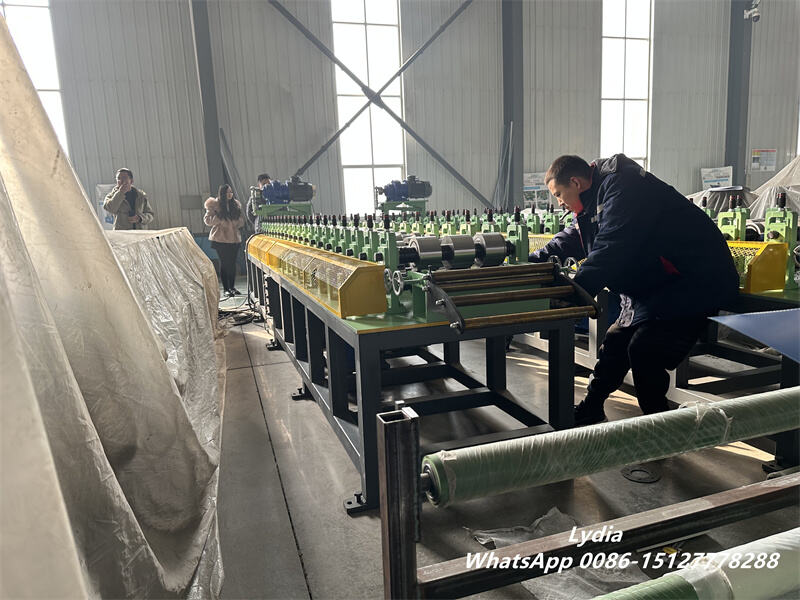
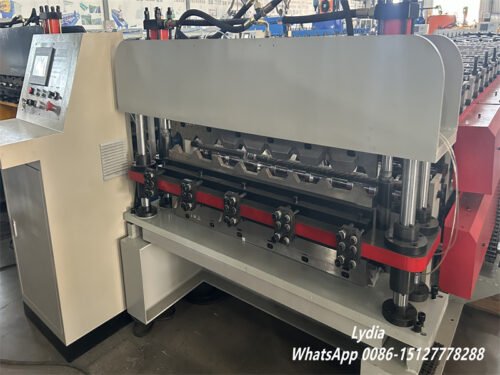
The machine uses a 350H steel main frame to provide stable support for the forming system. Depending on the required profile, the machine can use approximately 14–18 forming stations.
The forming shafts use 45# steel with a 50 mm diameter, while the rollers also use 45# steel with chrome treatment. This combination provides good mechanical strength and improves roller wear and corrosion resistance.
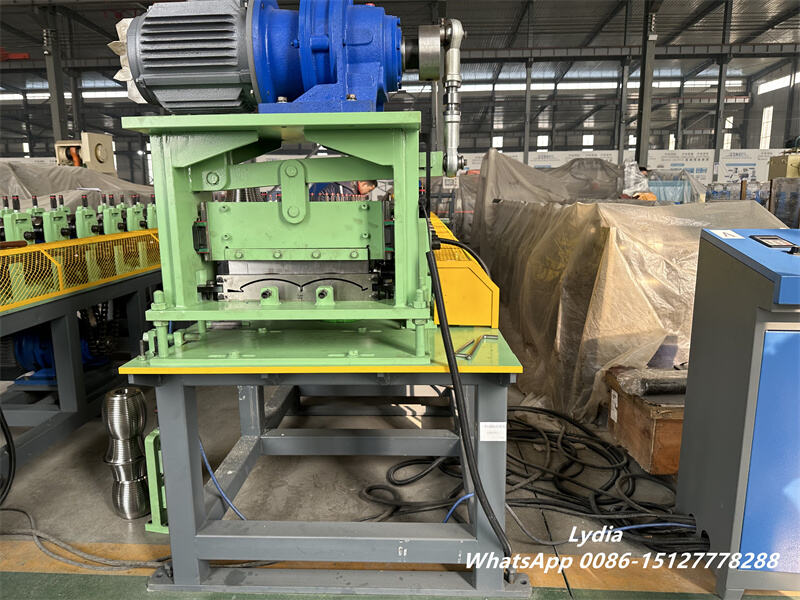
In addition, the machine can use chain or gear transmission according to the selected configuration. Anti-rust treatment on the spacers and pull rods further improves the durability of the forming section.
| Item | Specification |
|---|---|
| Machine Type | Metal Wall Cladding Panel Roll Forming Machine |
| Suitable Material | Color-coated / Galvanized Steel |
| Coil Thickness | 0.3–0.7 mm |
| Main Frame | 350H Steel |
| Shaft Diameter | 50 mm |
| Shaft Material | 45# Steel |
| Roller Material | 45# Steel, Chrome Treated |
| Forming Stations | 14–18 Rows |
| Forming Speed | 15–22 m/min |
| Main Motor | 11 kW |
| Hydraulic Power | 5.5 kW |
| Cutting Method | Hydraulic Cutting |
| Cutter Material | Cr12 Quenched |
| PLC | Delta |
| Encoder | Omron |
| Voltage | 380 V |
| Certification | ISO / CE |
Automatic Control and Precise Cutting
The PLC system coordinates the main forming and cutting operations. The standard configuration uses a Delta PLC and Delta frequency converter, while an Omron encoder monitors the production length.
Operators can set production parameters through the touch screen and control the machine through the electrical cabinet. The system supports Chinese and English interfaces, while other languages can be customized when required.
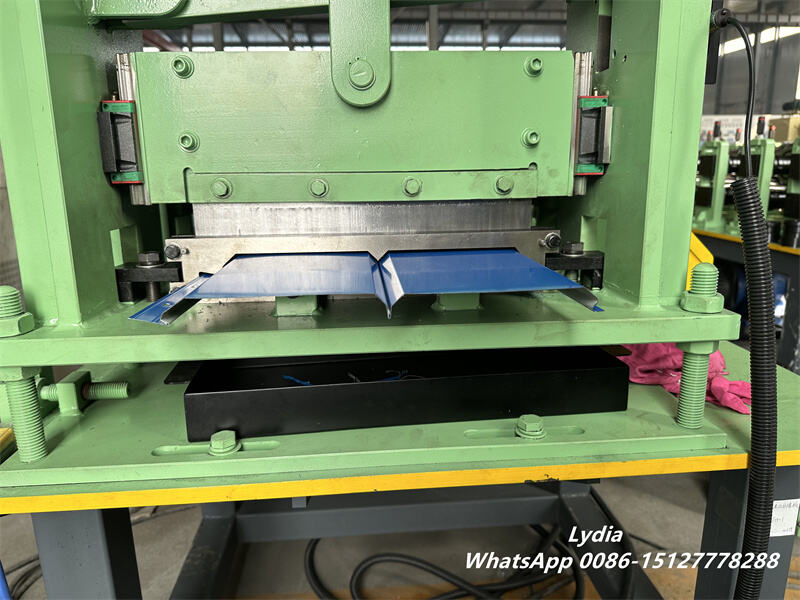
Meanwhile, the hydraulic cutting system uses a four-guide-pillar structure to improve stability during cutting. The Cr12 quenched cutter provides good hardness and wear resistance, while the cutting tolerance can reach approximately ±1.5 mm under suitable operating conditions.
For manufacturers looking for a cladding sheet bending machine, this forming and cutting configuration provides a continuous solution instead of relying on separate bending and cutting operations.
Flexible Decoiling and Material Feeding
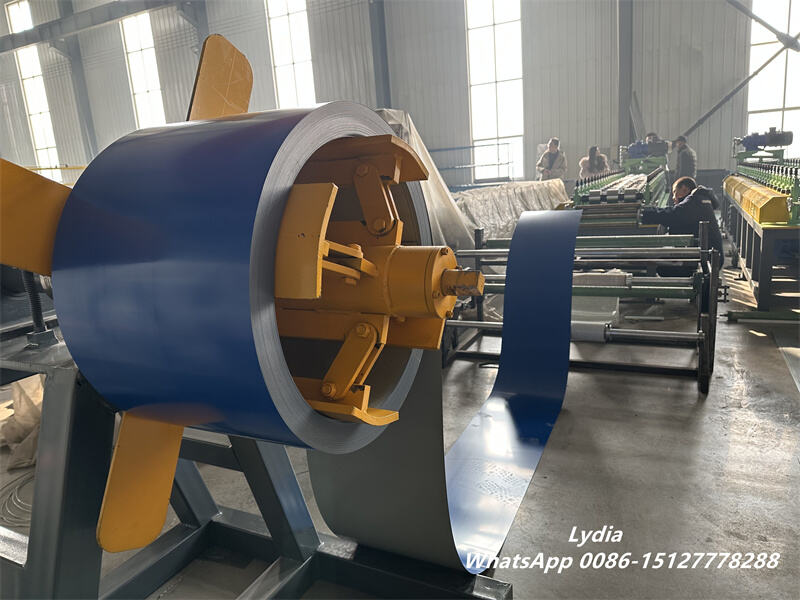
The production line supports a 3-ton manual decoiler or a 3-ton electric decoiler. The manual version offers a straightforward and economical option, while the electric decoiler provides more convenient coil handling for customers seeking a higher level of automation.
Before the material enters the forming section, the feeding device uses adjustable hand wheels to control the feeding width. Four stainless-steel rollers then guide the metal strip smoothly into the machine and help reduce scratches on the visible surface.
Because of this controlled feeding process, the equipment can produce stable and uniform panels for different construction applications. It can also be configured as an aluminium cladding making machine when the material, thickness, tooling, and forming requirements are suitable for aluminum.
Applications of Metal Wall and Roof Cladding
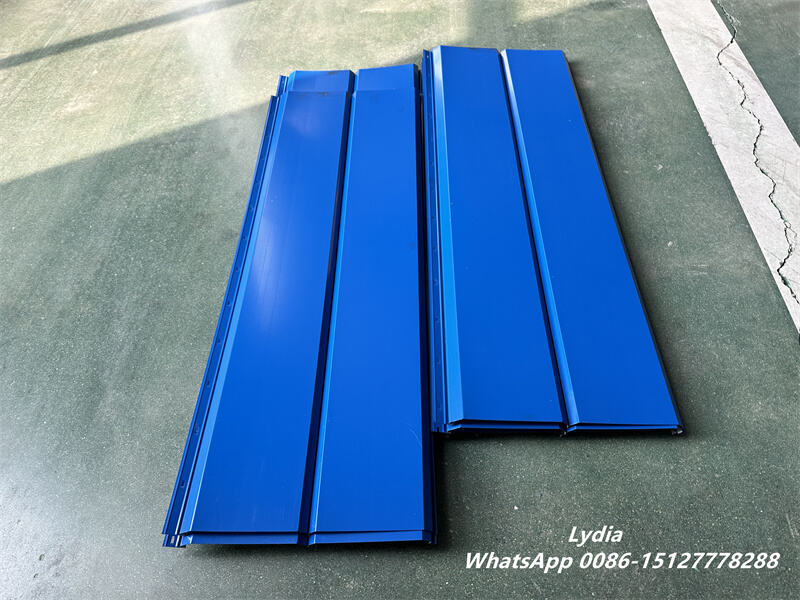
The finished profiles can serve both functional and decorative purposes in modern construction. Manufacturers can use the machine to produce panels for commercial buildings, industrial facilities, offices, railway stations, airports, and steel structure projects.
For exterior applications, the equipment works as a steel wall cladding machine, producing durable panels for building façades and exterior walls. Depending on the profile design, it can also support wall cladding roll forming machine applications for different architectural requirements.
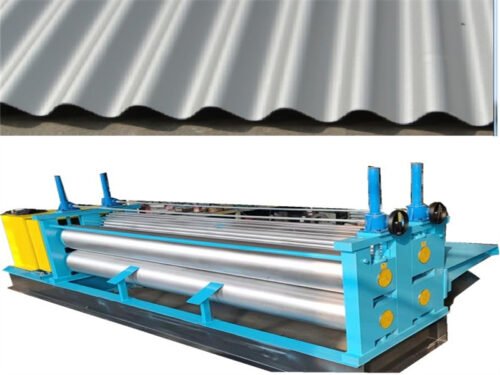
For customers producing roofing profiles, a suitable configuration can also be used as a metal roof cladding roll forming machine or roof cladding cold rolled machine, provided that the tooling and profile dimensions match the required roof panel design.
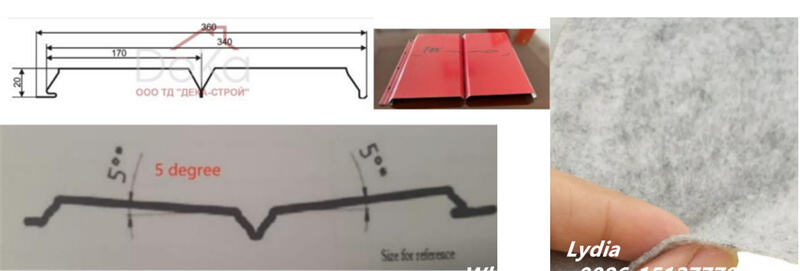
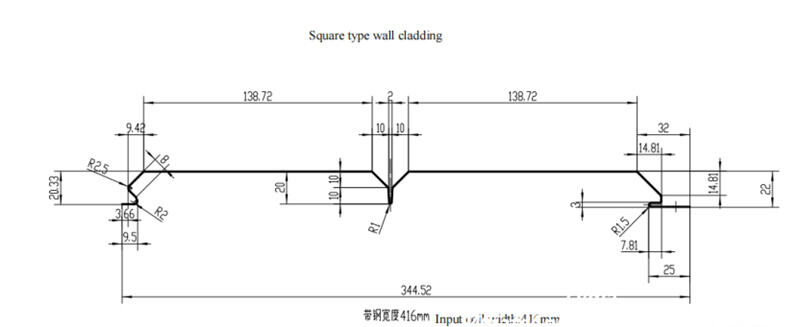
The machine therefore gives manufacturers flexibility when serving different markets for metal cladding products. By replacing or customizing the forming rollers according to the profile drawing, producers can develop panels with different widths, shapes, and applications.
Overall, this manufacturing machine cladding solution combines automatic feeding, precision roll forming, hydraulic cutting, and PLC control to help manufacturers improve production efficiency while reducing repetitive manual operations.
Frequently Asked Questions
1. What materials can the wall cladding panel roll forming machine process?
The machine is mainly designed for steel coils such as galvanized steel and color-coated steel with a typical thickness of 0.3–0.7 mm. With suitable rollers and machine settings, the system can also be configured for certain aluminum applications.
2. What is the production speed of the cladding rolling machine?
The standard forming speed is approximately 15–22 m/min. The actual production speed depends on the panel profile, material thickness, cutting length, and forming requirements.
3. Can this metal sheet cladding machine produce different wall panel profiles?
Yes. The forming rollers are manufactured according to the customer’s profile drawing. By using different tooling configurations, the machine can produce various steel wall cladding and exterior wall panel profiles.
4. Can the machine be used for roof cladding?
Yes. With the appropriate roller tooling and profile design, the equipment can be configured for metal roof cladding roll forming machine applications. The final machine configuration should be determined according to the customer’s roof panel drawing and material specifications.
5. How does the wall cladding roll forming machine control panel length?
The PLC control system works together with an encoder to measure the formed panel length. The operator can enter the required cutting length through the touch screen, and the hydraulic cutting system then cuts the finished panel automatically.


Reviews
There are no reviews yet.