
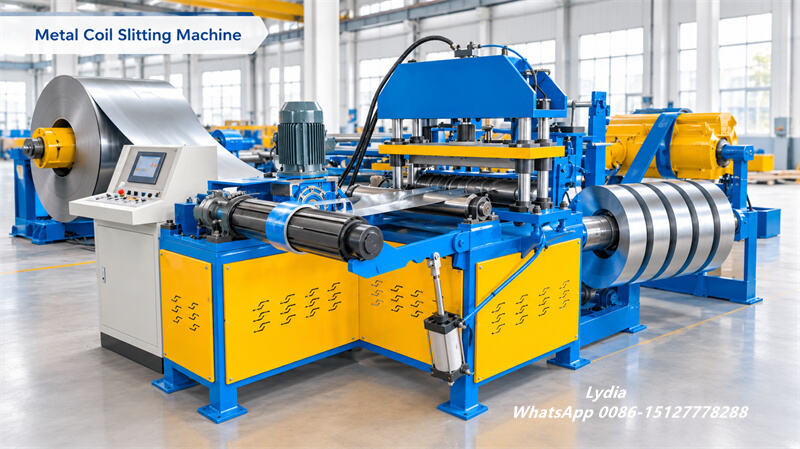

A Dividing Big Coils into Smaller Coils Machine provides an efficient solution for converting wide metal coils into multiple narrow strips. Also known as a metal coil slitting machine, this equipment helps steel service centers, roofing manufacturers, pipe producers, and metal fabricators prepare coils for downstream production.
Instead of purchasing multiple coil widths, manufacturers can use a coil slitting and rewinding machine to divide one master coil into several smaller coils according to actual production requirements. The machine integrates uncoiling, feeding, precision slitting, tension control, and rewinding in one continuous process. As a result, it improves material utilization while giving users greater flexibility in metal coil processing.
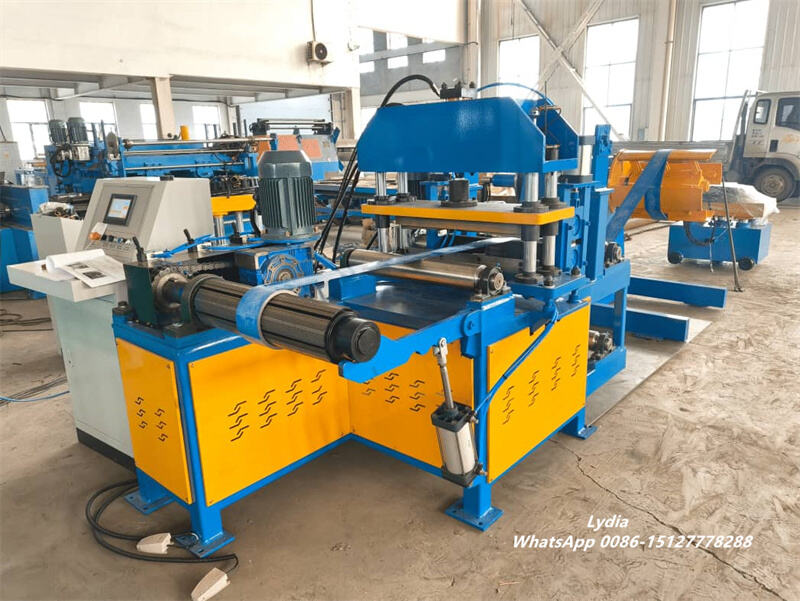
What Is a Dividing Big Coils into Smaller Coils Machine?
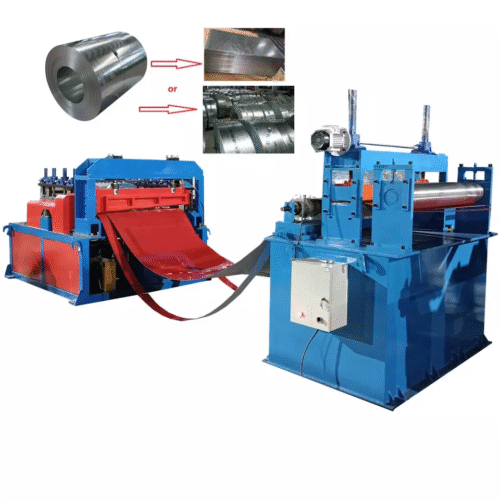
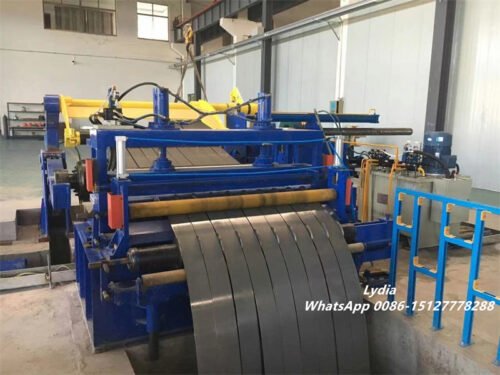
A Dividing Big Coils into Smaller Coils Machine longitudinally cuts a wide metal coil into several narrower strips and rewinds them into individual coils. The metal coil slitting machine uses circular slitting knives to cut the material, while the tension control system keeps each strip stable during rewinding.
The standard working process includes coil loading, uncoiling, feeding, slitting, edge trimming, tension control, and rewinding. Depending on the required configuration, manufacturers can also add leveling, automatic unloading, or other functions.
Because the coil slitting line combines multiple processes, operators can reduce manual material handling between production stages. In addition, the PLC control system allows operators to adjust important production parameters through the HMI.
The steel coil slitting machine can process galvanized steel, cold-rolled steel, hot-rolled steel, PPGI, stainless steel, aluminum, and other coated metal coils. Therefore, it can meet the raw material preparation requirements of many metal processing industries.
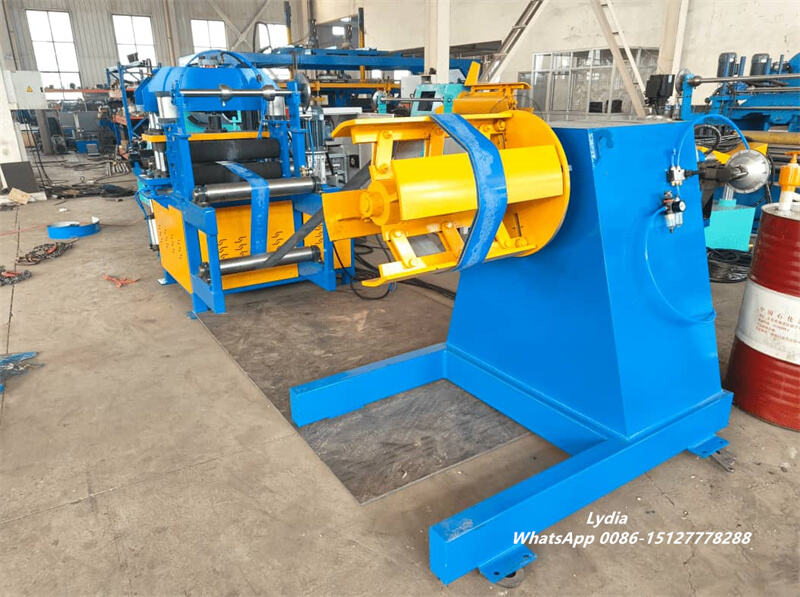
Metal Coil Slitting Machine Configuration and Specifications
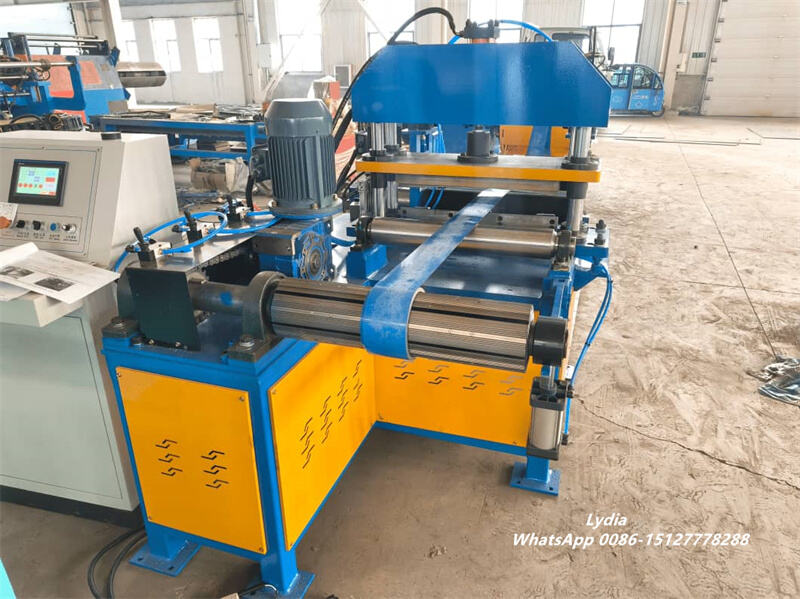
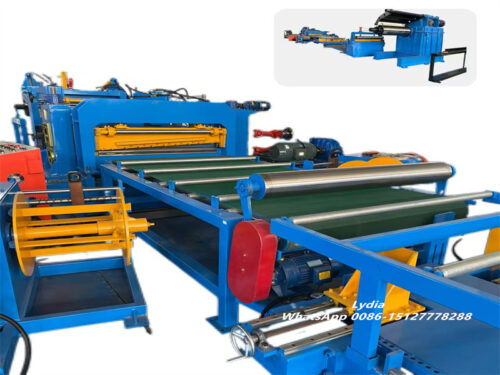
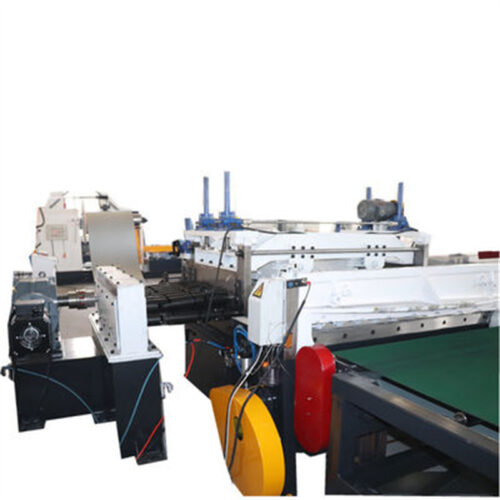
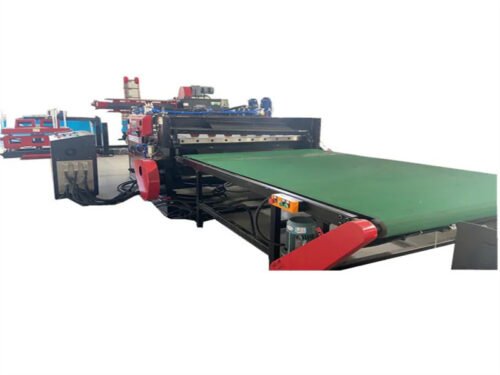
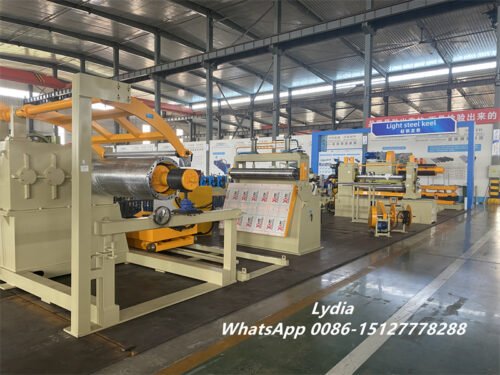
ZTRFM designs the metal coil slitting machine according to the customer’s coil width, material thickness, finished strip width, coil weight, and production requirements. A typical configuration includes a manual decoiler, feeding and slitting section, recoiler, hydraulic power station, and PLC control system.
| Component | Typical Configuration | Function |
|---|---|---|
| Decoiler | 5-ton manual decoiler | Supports and unwinds the master coil |
| Feeding & Slitting Unit | Slitting shaft + cutting knives | Divides the wide coil into narrow strips |
| Recoiler | Customized mandrel | Rewinds slit strips into smaller coils |
| Hydraulic Station | Hydraulic power unit with cooling | Supplies hydraulic power |
| PLC Control System | PLC + HMI | Controls slitting, feeding, tension, and rewinding |
| Material | GI, PPGI, steel, aluminum, etc. | Supports various metal coils |
| Material Thickness | Approx. 0.3–16 mm* | Depends on machine configuration |
| Coil Width | Customized | Matches the master coil |
| Slitting Width | Adjustable | Determined by knives and spacers |
*The actual processing thickness depends on material strength, coil width, machine structure, and cutting requirements.
For compact roofing-material applications, the steel coil slitting machine can process coils up to approximately 24 inches wide. A typical configuration can use a 5-ton decoiler, 5.5 kW slitting drive, and 4 kW rewinding drive. ZTRFM can also customize the coil ID, finished coil width, and electrical system.
Precision Slitting and Stable Coil Rewinding
Slitting accuracy directly affects the quality of finished narrow coils. Therefore, this automatic coil slitting machine uses a rigid slitting shaft and precisely positioned cutting knives to maintain consistent strip widths.
Operators can arrange the knives and spacers according to the required strip dimensions. After positioning the knives, the coil slitting machine guides the metal strip through the cutting section and separates the master coil into several narrower strips.
Meanwhile, the coil rewinding machine maintains appropriate strip tension during the winding process. Proper tension helps prevent loose winding, telescoping, and uneven coil edges. Consequently, the finished narrow coils remain neat and easier to transport or use in subsequent production.
For higher-performance applications, servo-driven systems and encoder feedback can further improve positioning and tension control. The actual slitting tolerance depends on the material, thickness, coil width, knife configuration, and machine specification.
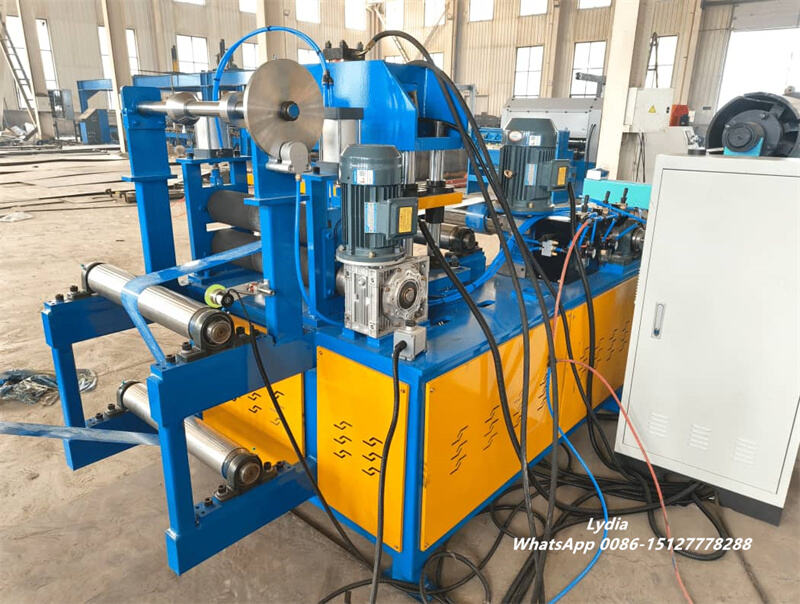
PLC Control and Flexible Coil Slitting Setup
The PLC system coordinates the main working sections of the automatic metal coil slitting machine. Through the HMI, operators can set production parameters and monitor machine operation from a centralized interface.
Moreover, the adjustable knife-and-spacer system allows users to change the required strip widths for different orders. This flexibility makes the coil slitting production line suitable for manufacturers that process coils for multiple customers.
The machine can support different electrical standards, including 220V, 380V, 415V, and 440V, with 50 Hz or 60 Hz three-phase configurations. ZTRFM can customize the electrical system according to the customer’s installation location.
For different production requirements, users can select compact or heavy-duty steel coil slitting machines. The final configuration should match the material grade, maximum coil weight, master coil width, finished strip width, material thickness, and required production capacity.
Applications of Coil Slitting and Rewinding Machine
A coil slitting and rewinding machine supports many downstream metal processing industries. Steel service centers use it to divide large master coils into customer-specific widths before resale or further processing.
In the roll forming and cold bending industry, the machine prepares narrow strips for roofing panels, wall panels, purlins, light steel framing, and other formed products. Similarly, pipe manufacturers can use slit strips as raw material for welded pipe production.
The metal coil slitting machine also serves automotive, appliance, packaging, and construction applications. For example, manufacturers can slit galvanized or color-coated coils into narrower strips before stamping, roll forming, or other fabrication processes.
Most importantly, the Dividing Big Coils into Smaller Coils Machine gives manufacturers greater control over their raw materials. Instead of keeping many different coil widths in stock, companies can purchase suitable master coils and divide them according to actual production requirements.
ZTRFM provides customized metal coil slitting machines, steel coil slitting lines, and coil slitting and rewinding machines based on material type, coil dimensions, finished strip width, production capacity, and automation requirements.
Frequently Asked Questions
Q1: What materials can this metal coil slitting machine process?
The metal coil slitting machine can process galvanized steel, PPGI, cold-rolled steel, hot-rolled steel, stainless steel, aluminum, and other coated metal coils. The actual material range depends on the machine configuration and material properties.
Q2: Can the machine divide one large coil into several smaller coils?
Yes. The Dividing Big Coils into Smaller Coils Machine uses multiple circular cutting knives to slit a wide master coil into several narrower strips. The rewinding section then winds these strips into separate finished coils.
Q3: How do I change the slitting width?
Operators can adjust the positions of the cutting knives and spacers on the slitting shaft according to the required strip width. This setup allows the steel coil slitting machine to produce different coil widths for different orders.
Q4: Does the machine automatically rewind the slit strips?
Yes. The coil slitting and rewinding machine continuously rewinds the slit strips after cutting. The tension control system helps maintain stable winding tension and produces compact, evenly wound coils.
Q5: What coil thickness can the machine process?
The processing range can be customized according to the material, coil width, tensile strength, and production requirements. Certain configurations can handle approximately 0.3–16 mm material, while lighter-duty models are designed for thinner roofing and coated steel coils.
Q6: What control system does the machine use?
The machine uses a PLC control system with an HMI touchscreen. Operators can set production parameters, monitor machine status, and control the main working sections from the control panel.
Q7: Can the coil slitting line be customized for the US market?
Yes. ZTRFM can customize the coil slitting line according to the customer’s coil dimensions, finished strip widths, production capacity, and electrical requirements. Common configurations can support 220V, 380V, 415V, or 440V, 50/60Hz, three-phase power.
Q8: What industries use a steel coil slitting machine?
The steel coil slitting machine is widely used in steel service centers, roofing and wall panel manufacturing, roll forming, welded pipe production, automotive manufacturing, appliance production, packaging, and general metal fabrication.


Reviews
There are no reviews yet.