
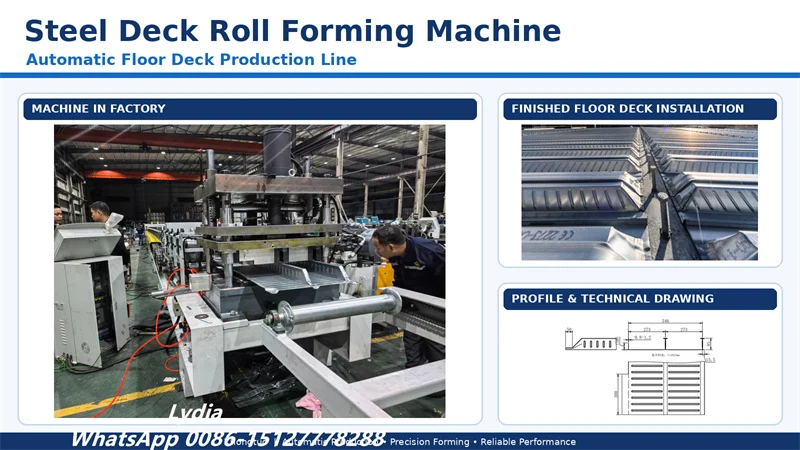
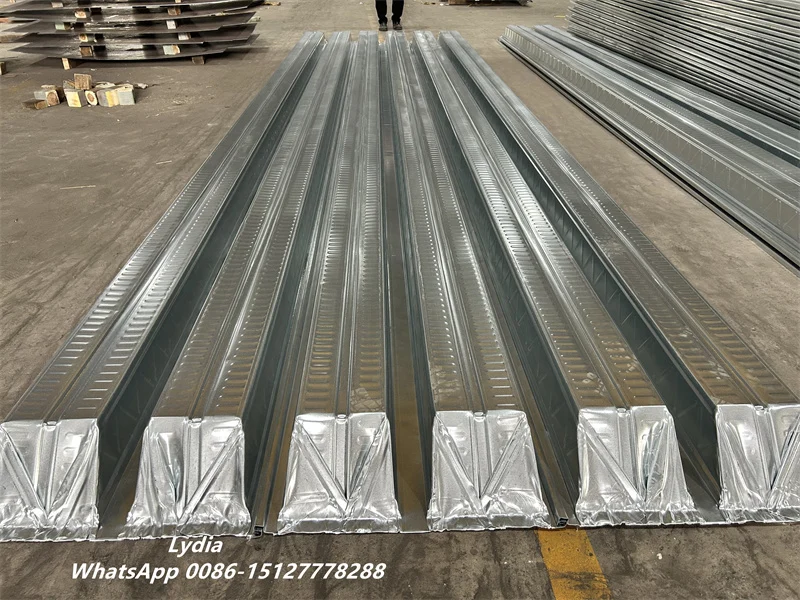
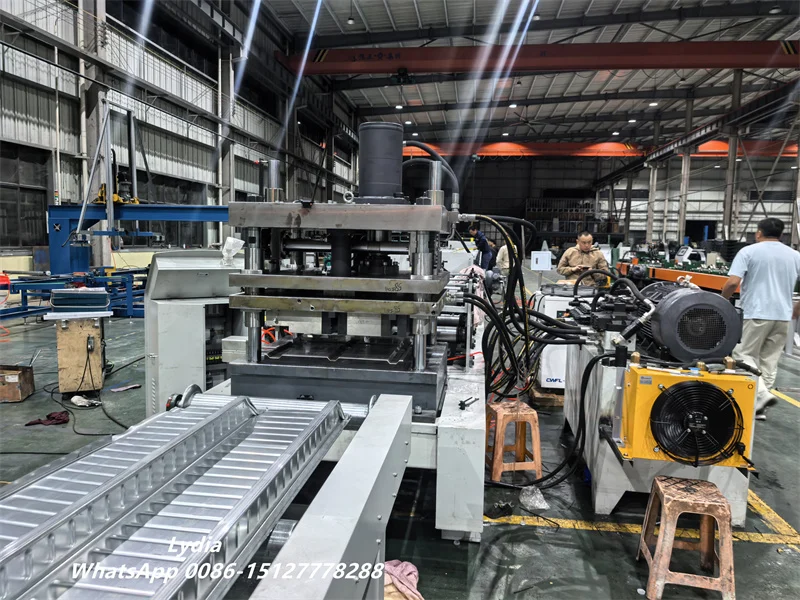

The Steel Deck Roll Forming Machine plays an important role in modern steel structure construction by producing high-quality galvanized steel floor deck profiles. As demand for multi-story buildings, industrial factories, commercial complexes, and parking garages continues to grow, manufacturers need efficient equipment to produce durable and accurately formed steel decking. Zhongtuo provides an automatic steel deck production solution integrating hydraulic decoiling, laser welding, continuous roll forming, precision cutting, and automatic stacking to help manufacturers improve production efficiency and product consistency.
Steel structures combined with composite floor systems provide an effective solution to these challenges. Compared with conventional concrete formwork methods, steel floor decking offers convenient transportation, rapid installation, and consistent manufacturing quality. As a result, it has become an essential component in many modern steel-framed buildings.
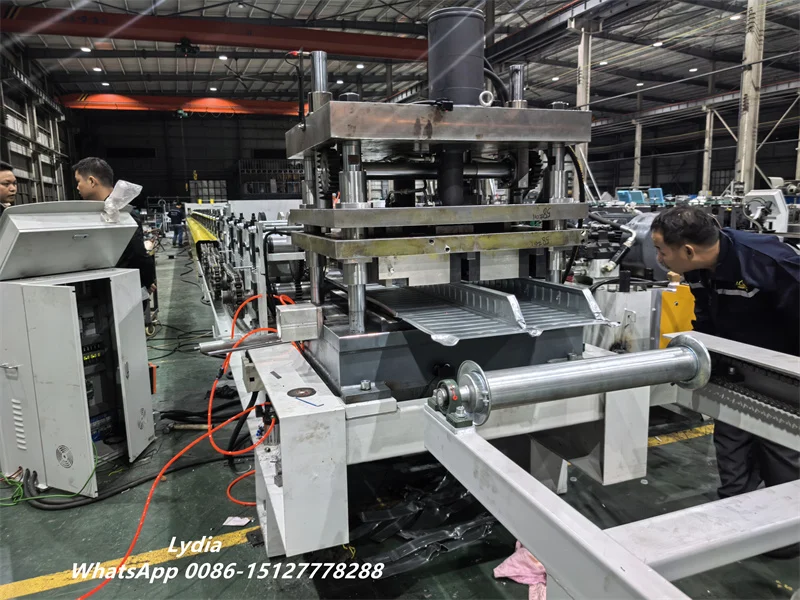
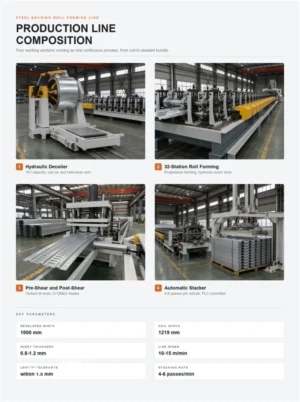
To meet this growing demand, Zhongtuo manufactures the Steel Deck Roll Forming Machine, an automatic production solution designed to transform galvanized steel coils into structural floor deck profiles. The production line integrates hydraulic decoiling, laser welding, continuous roll forming, automatic cutting, and finished-product stacking.
What Is Steel Decking and How Is It Used?
Definition and Main Functions of Steel Decking
Steel decking, also known as metal floor decking, corrugated steel decking, or profiled steel sheeting, is a cold-formed steel product widely used in floor and roof construction. Manufacturers produce it by passing galvanized steel sheets through a series of specially designed forming rollers to create regular ribs and corrugations.
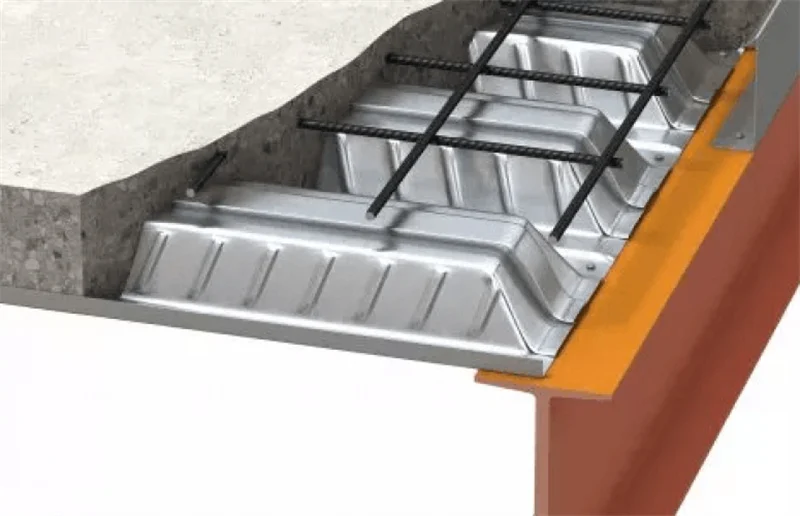
In floor construction, steel decking is commonly used as permanent formwork for reinforced concrete slabs. It supports wet concrete during construction and, when designed as part of a composite floor system, works together with the concrete after curing to contribute to the overall structural performance.
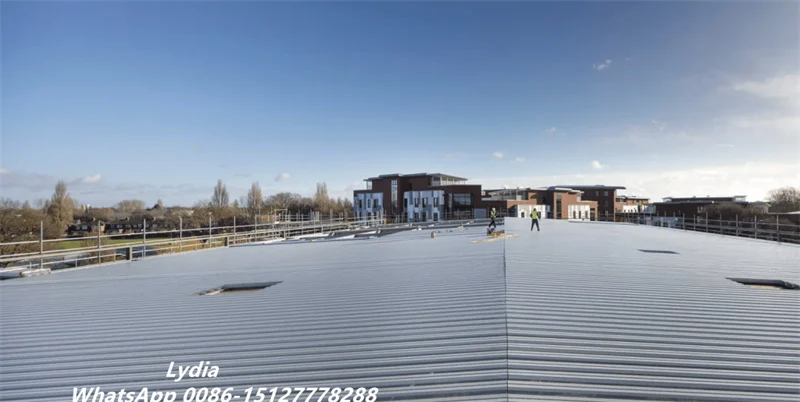
Steel decking can also serve as a structural component in roof construction. Depending on the profile design and engineering requirements, metal roof decking supports insulation materials, waterproofing membranes, and other roofing components.
Advantages of Steel Decking in Modern Buildings
One of the main advantages of steel decking is its high strength-to-weight ratio. It provides a strong supporting surface without adding unnecessary dead weight to the building structure. Furthermore, galvanized steel offers consistent material quality, good durability, and reliable corrosion resistance under suitable service conditions.
Steel is also a recyclable construction material. Manufacturers can recover and reuse steel at the end of a product’s service life, helping reduce material waste and support more sustainable construction practices.
Because of these advantages, composite steel decking has become a practical choice for projects that require efficient floor construction, reduced installation work, and flexible structural layouts.
Steel Deck Profiles, Materials and Manufacturing Process
Shallow and Deep Steel Deck Profiles
The manufacturing process directly influences the dimensional accuracy, structural performance, and surface quality of steel deck profiles. Steel decking generally comes in different profile configurations. Two common categories are shallow profiles and deep profiles.
Shallow steel deck profiles often feature dovetail or re-entrant shapes. Their relatively low profile heights make them suitable for certain shorter-span floor systems. In contrast, deep steel deck profiles typically use trapezoidal rib configurations. Their greater structural depth can provide advantages in applications requiring longer spans or specific load-bearing capacities.
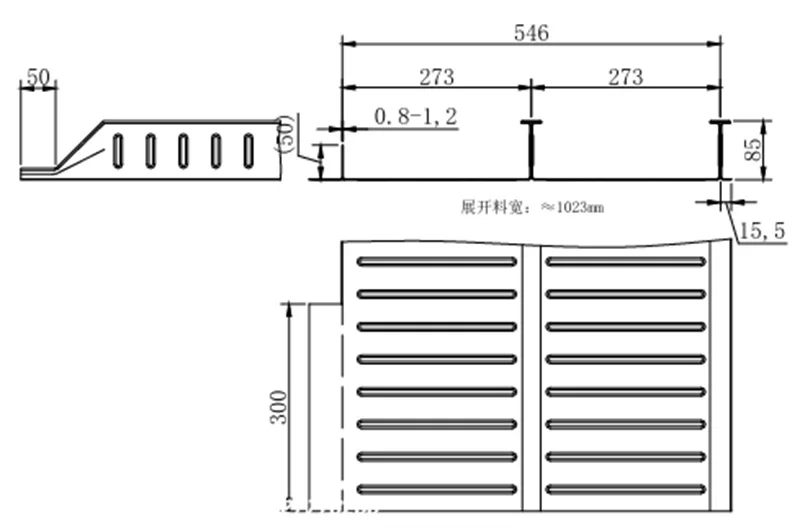
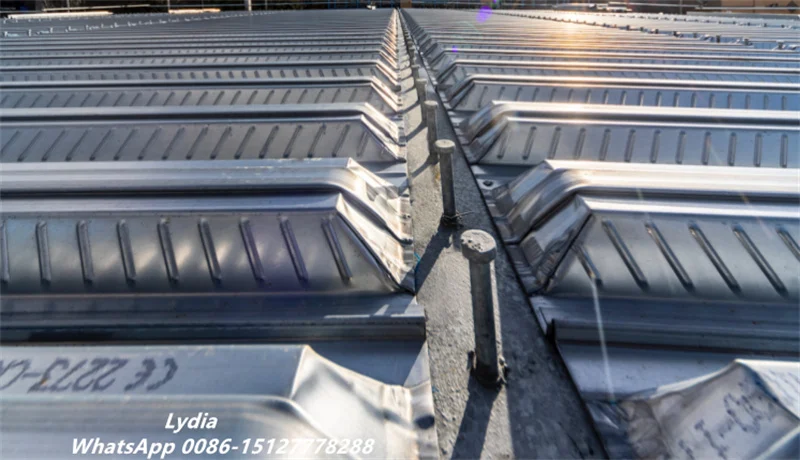
The actual profile height, rib spacing, flange width, and sheet thickness depend on the structural design and project requirements. Therefore, manufacturers must select the appropriate roller configuration and forming parameters for each product.
Raw Materials and Steel Thickness Requirements
Steel deck profiles are commonly manufactured from galvanized steel coils with different thicknesses and strength grades. Material thickness may vary according to the intended application, while the steel grade affects the forming requirements and final structural performance.
For many floor decking applications, manufacturers select galvanized steel because its protective zinc coating helps resist corrosion. The specific steel grade, thickness, and coil width should match the approved profile design and production requirements.
Several factors influence the quality of finished steel decking:
- Steel grade and yield strength of the raw material.
- Material thickness and coil width.
- Profile height, rib spacing, and cross-sectional geometry.
- Roller design and forming station configuration.
- Cutting accuracy and finished panel length.
- Surface coating and corrosion protection requirements.
Cold Roll Forming Process
During cold roll forming, manufacturers feed the steel strip through multiple sets of precision-engineered rollers. Each station performs a controlled bending operation until the material reaches its final cross-sectional shape.
This gradual forming process helps maintain the required profile geometry while reducing excessive deformation. In addition, precision-machined rollers and accurately aligned shafts help ensure consistent production quality.
Unlike conventional sheet metal bending equipment, a Steel Deck Roll Forming Machine performs continuous forming operations. This process allows manufacturers to produce long steel deck panels with consistent dimensions and repeatable profile shapes.
For this reason, a customized Floor Deck Roll Forming Machine should be designed according to approved profile drawings rather than relying on a standard roller arrangement for every product.
How Does a Composite Steel Deck Floor System Work?
Steel Deck Installation on Structural Beams
A composite concrete floor slab combines profiled steel decking, concrete, reinforcement, and structural steel beams. These components work together to create a floor system that meets the building’s structural and construction requirements.
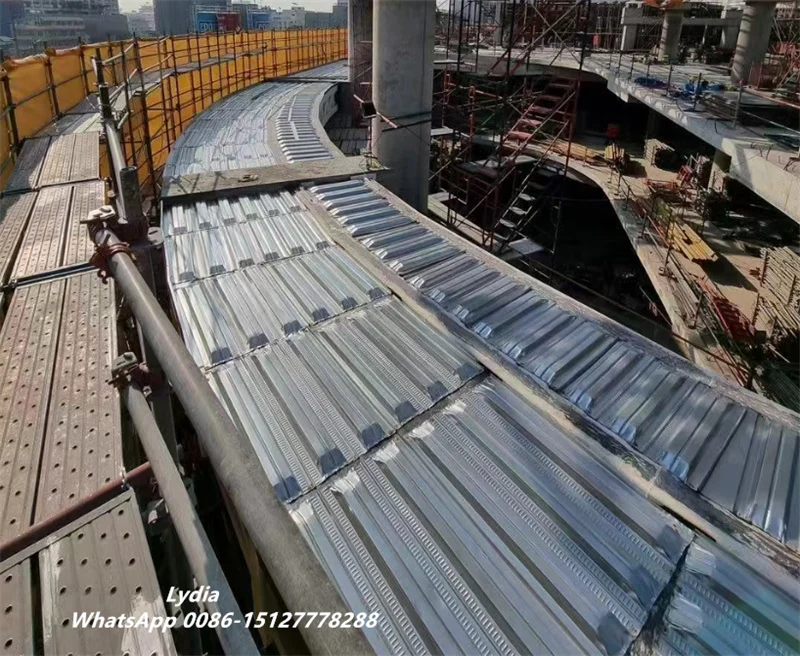
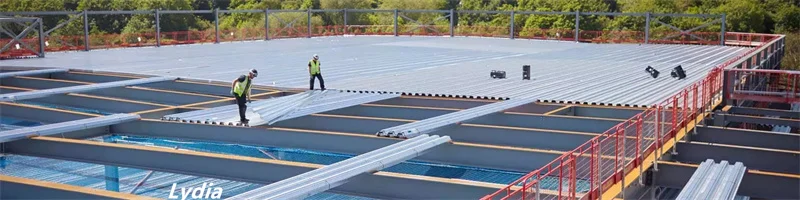
First, workers transport the finished steel deck panels to the construction site and install them horizontally across the supporting steel beams. They then fix the decking to the beams using suitable fastening methods. Depending on the structural design, shear connectors may also be welded through the decking or directly onto the steel beams.
Concrete Pouring and Reinforcement
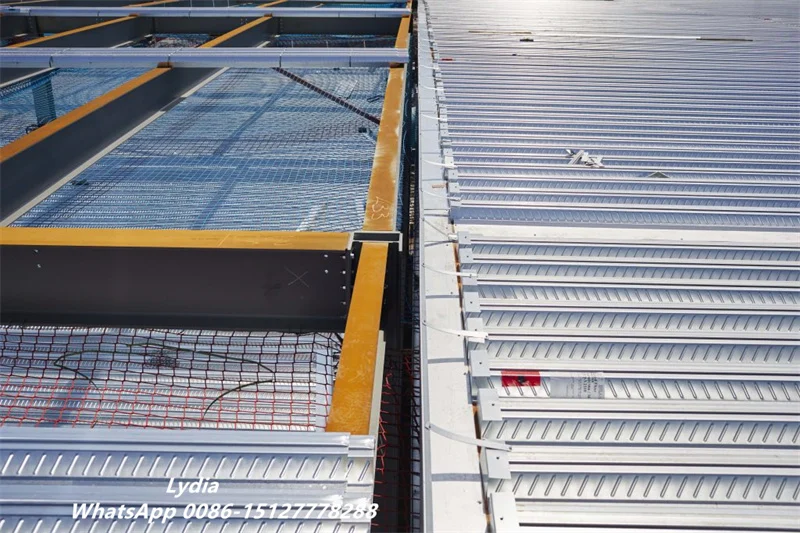
Next, workers install reinforcement mesh or other specified reinforcement above the steel decking. Concrete is then poured over the profiled sheets and leveled to the required thickness. During this stage, the steel decking supports the wet concrete and construction loads, subject to the approved temporary construction design.
After the concrete hardens, the decking may act together with the concrete as part of a composite floor system. The embossed surfaces and specially designed ribs of the steel profile can help improve mechanical interaction between the steel sheet and concrete.
Depending on the project, engineers may specify conventional reinforcement mesh, steel fiber reinforcement, or a combination of reinforcement methods. These solutions help control cracking and meet the required structural and fire performance criteria.
Composite Action Between Steel and Concrete
Shear connectors play an important role in composite construction. They transfer shear forces between the structural steel beams and concrete slab, allowing the components to work together according to the structural engineer’s design.
In addition, the ribs and indentations on the steel deck surface can help create mechanical interlocking between the steel and concrete. This interaction contributes to composite behavior when the profile and slab have been properly engineered.
Therefore, the quality of the manufactured steel deck profile is important. Accurate rib geometry, consistent thickness, and reliable dimensional tolerances help ensure that the panels fit the intended structural design.
Surface Coating, Corrosion Protection and Steel Deck Applications
Powder Coating and Surface Finishing
Surface protection is another important consideration when selecting materials for steel decking production. Galvanized steel is widely used because its zinc coating helps protect the underlying steel against corrosion. However, different building environments may require additional protective treatments.
Some steel decking products receive an additional paint or powder coating. Besides improving appearance, this surface treatment can provide an extra protective layer. It is particularly useful when the underside of the steel decking remains visible after installation.
For example, exposed steel decking in commercial buildings, warehouses, and parking garages may require a colored finish to improve interior appearance. In multi-story parking structures, different coating colors can also help distinguish floor levels and improve visual identification.
Corrosion Protection for Harsh Environments
In more aggressive environments, manufacturers and construction designers may consider enhanced metallic coatings or other specialized corrosion protection systems. These options can be useful in coastal areas, swimming pool buildings, industrial facilities, and parking structures exposed to moisture or corrosive substances.
Advanced metallic coatings can combine zinc with other alloying elements, such as aluminum and magnesium, to improve corrosion resistance. Depending on the coating formulation and environmental conditions, these systems may also provide additional protection around cut edges.
Nevertheless, the appropriate coating system should always depend on the actual environmental conditions, maintenance requirements, and project specifications. Galvanized coatings, alloy coatings, and additional paint systems offer different levels of protection and should be evaluated accordingly.
Steel Decking for Multi-Story Parking Structures
Steel decking is widely used in single-story and multi-story parking garage construction. Its relatively low weight helps reduce structural dead loads, while prefabricated panels allow construction teams to install floor sections efficiently.
Moreover, the structural flexibility of steel decking can help designers coordinate beam spacing and floor layouts. This flexibility is particularly valuable in parking facilities, where column positioning and clear vehicle circulation areas directly affect the number of available parking spaces.
Other common applications include:
- Industrial factories and manufacturing workshops.
- Commercial office buildings and shopping centers.
- Multi-story residential buildings and apartment complexes.
- Warehouses and logistics centers.
- Hospitals, schools, and public buildings.
- Multi-level parking garages and steel structure projects.
With its combination of efficient installation, adaptable profile designs, and structural versatility, steel decking continues to play an important role in modern construction.
Zhongtuo Steel Deck Roll Forming Machine: Configuration and Technical Advantages
10 Ton Hydraulic Decoiler and Laser Welding System
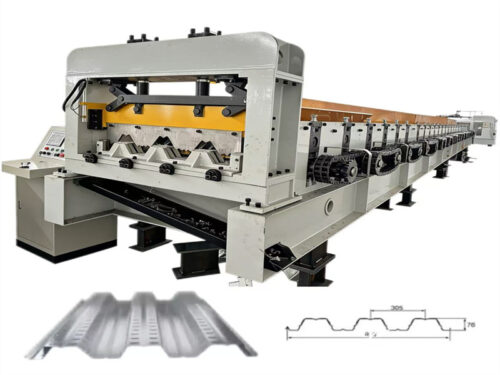
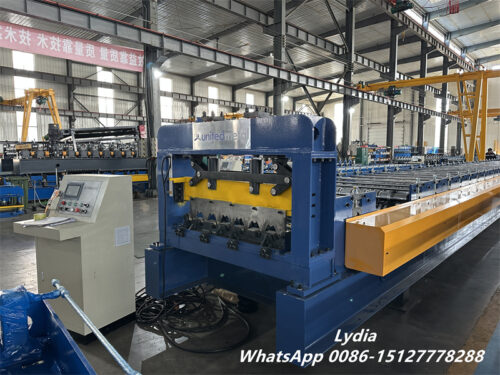
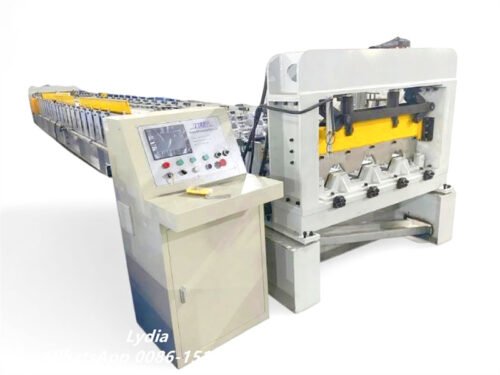
To manufacture high-quality steel floor deck profiles, Zhongtuo provides a complete Steel Deck Roll Forming Machine equipped with automatic material handling and precision forming systems. The production line is designed for galvanized steel with a material thickness of 0.8–1.2 mm and a maximum material strength of 550 MPa.
The complete line starts with a 10-ton hydraulic decoiler equipped with an automatic loading trolley and pressing arm. Its hydraulic system controls the expansion and contraction of the coil mandrel, allowing operators to load and secure heavy steel coils more conveniently. The decoiler supports a maximum working width of 1300 mm.
After decoiling, the material passes through the laser welding section. This equipment handles steel thicknesses from 0.8 to 1.2 mm and provides a welding speed range of 0–15 mm/s. It supports intermittent spot welding, including the specified welding intervals of 50 mm at sheet ends and 300 mm along the sheet, according to the production process.
32-Station Roll Forming and Hydraulic Cutting System
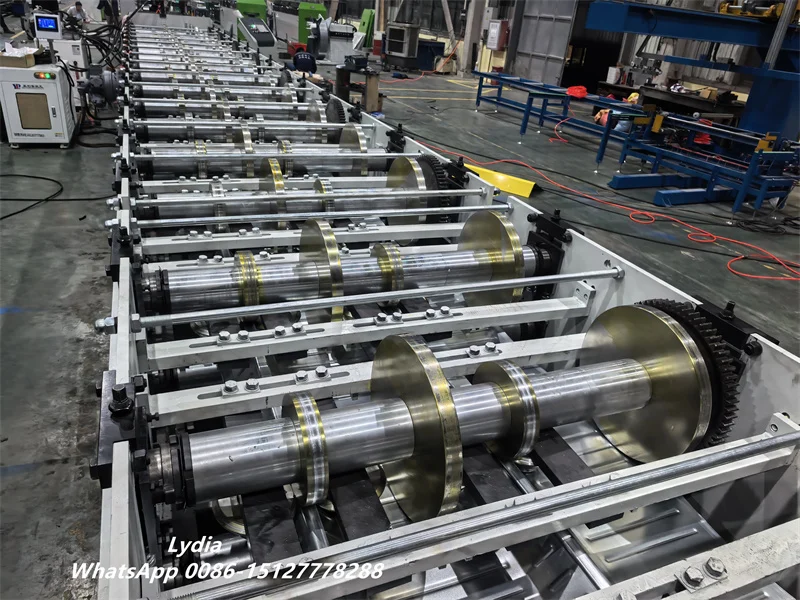
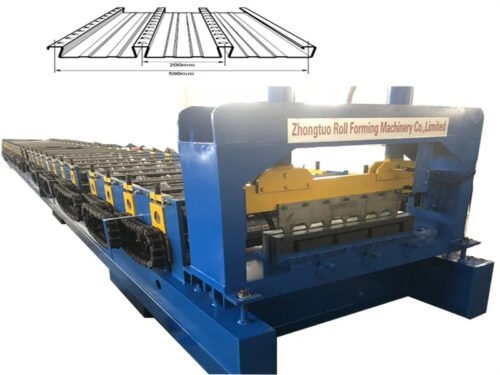
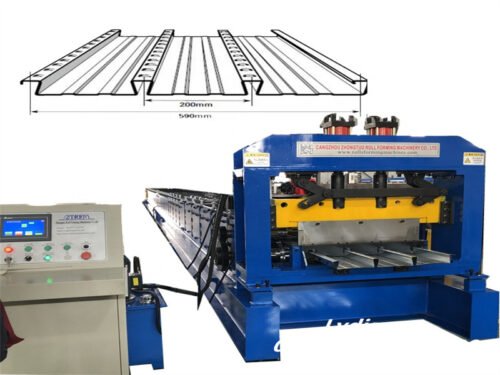
The main roll forming machine uses 32 forming stations and a 30 kW hydraulic motor drive. Its Mitsubishi PLC control system manages production quantities and cutting lengths. Operators can switch the interface between Chinese, English, and Thai, making the equipment suitable for different international markets.
To improve forming consistency and durability, the machine uses Cr12 tool steel rollers that undergo heat treatment to HRC 58–60. The main shafts use 40Cr material, which receives quenching and tempering treatment to a hardness of 280–320 HB before precision machining.
In addition, the main frame combines 400# H-beams with welded steel plates to provide a stable supporting structure. The robust frame helps maintain alignment during continuous production.
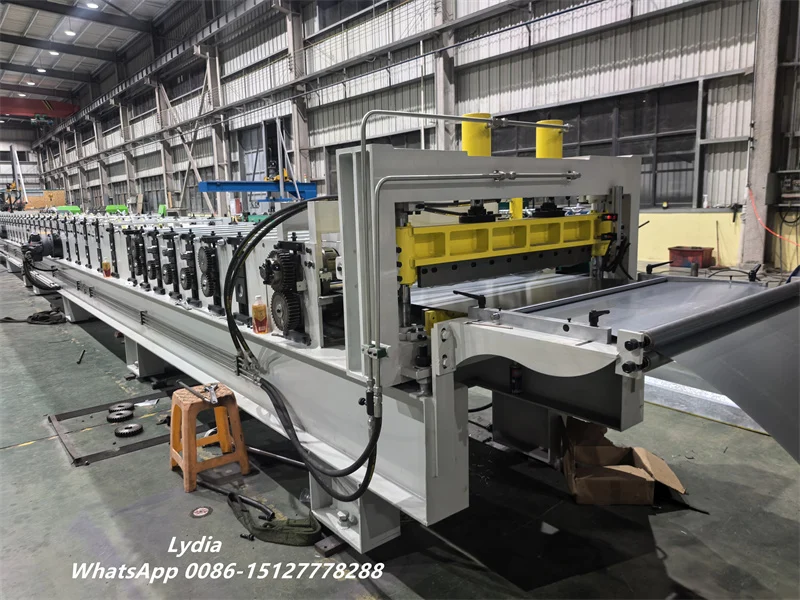
The cutting section uses Cr12MoV blades and a front-and-rear cutting arrangement with end closure forming. The machine automatically controls the production quantity and cutting length, with a specified length tolerance of ±1.5 mm. Customers can also request customized waist-height and flat-surface logo designs based on their supplied drawings.
Automatic Stacking and Finished Product Handling
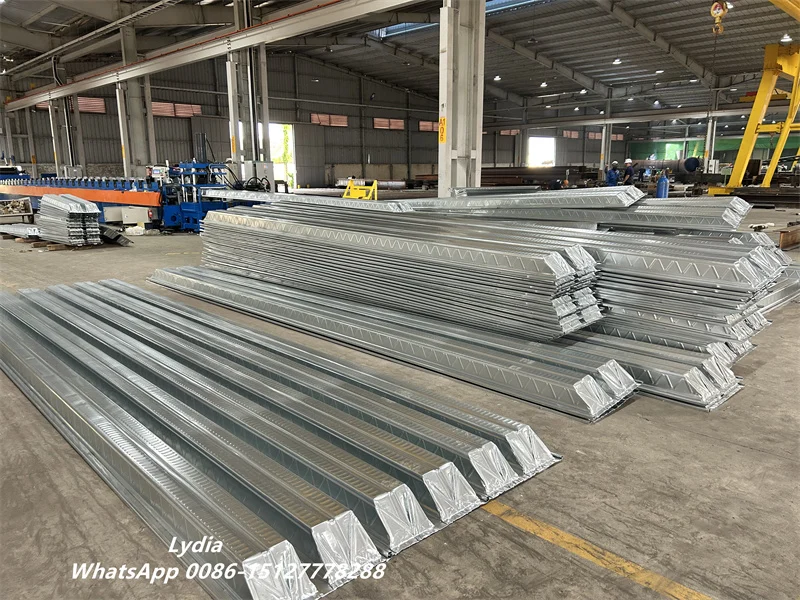
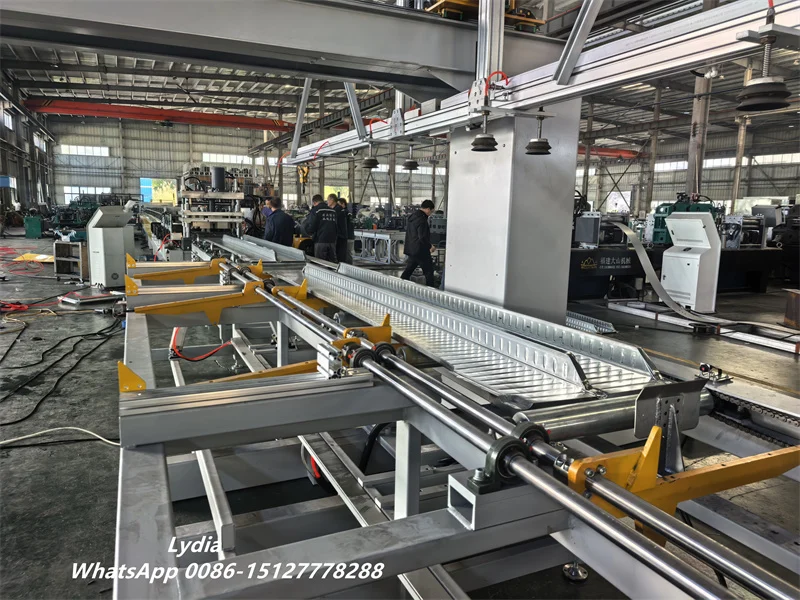
After forming and cutting, the automatic stacking machine organizes the finished panels. It uses a 12 kW servo motor and a Taiwan Fatek control system. Its stacking cycle reaches approximately 4–6 cycles per minute, while the stacking height and width are approximately 800 mm and 550 mm respectively.
The stacking system also includes a roller conveyor to transfer finished products. Its coordinated feeding, lifting, and conveying mechanisms help reduce manual handling and improve the overall production workflow.
The main technical specifications are listed below:
| Component | Technical Parameter | Specification |
|---|---|---|
| Hydraulic Decoiler | Loading Capacity | 10 Tons |
| Maximum Decoiling Width | 1300 mm | |
| Main Motor Power | 7.5 kW | |
| Hydraulic Motor Power | 5.5 kW | |
| Mandrel Expansion Range | 480–630 mm | |
| Configuration | Automatic Loading Trolley and Pressing Arm | |
| Laser Welding System | Applicable Thickness | 0.8–1.2 mm |
| Welding Speed | 0–15 mm/s | |
| Power Supply | 380V | |
| Main Roll Forming Machine | Raw Material | Galvanized Steel |
| Material Thickness | 0.8–1.2 mm | |
| Material Width | 1219 mm | |
| Maximum Material Strength | 550 MPa | |
| Forming Stations | 32 Stations | |
| Forming Speed | 10–15 m/min | |
| Main Motor Power | 30 kW, Hydraulic Motor Drive | |
| PLC Control System | Mitsubishi | |
| Language Options | Chinese / English / Thai | |
| Cutting Tolerance | ±1.5 mm | |
| Roller Material | Cr12 Tool Steel, HRC 58–60 | |
| Shaft Material | 40Cr, 280–320 HB | |
| Automatic Stacking Machine | Main Motor Power | 12 kW Servo Motor |
| Control System | Fatek, Taiwan | |
| Stacking Cycle | 4–6 Cycles/min | |
| Stacking Height | Approximately 800 mm | |
| Maximum Stacking Weight | 140 kg | |
| Auxiliary Equipment | Stacking Width | Approximately 550 mm |
| Air Pressure | 0.55–0.8 MPa | |
| Power Supply | 380V / 50Hz / Three Phase |
Note: The above specifications refer to the supplied machine configuration. Final machine dimensions, forming drawings, and production parameters can be confirmed according to the customer’s requirements.
Customized Steel Deck Production Solutions
In addition to its mechanical configuration, the Automatic Steel Deck Roll Forming Machine offers several practical production advantages. The multi-station forming process helps create consistent profile shapes, while the hydraulic decoiler and automatic stacking system reduce repetitive manual operations.
Furthermore, the PLC control system allows operators to manage production quantities and cutting lengths conveniently. The combination of precision rollers, treated shafts, a reinforced machine frame, and automatic cutting provides a reliable solution for continuous industrial production.
For manufacturers planning to expand their steel decking business, this integrated production line offers an efficient way to manufacture galvanized floor deck profiles with controlled dimensions and organized finished-product handling.
Zhongtuo can customize the Steel Deck Roll Forming Machine according to different profile drawings, material thicknesses, steel grades, and production requirements. Customers can provide their technical drawings or sample profiles so that our engineering team can evaluate the forming process and recommend a suitable machine configuration.
If you are looking for a reliable Steel Deck Roll Forming Machine Manufacturer, contact Zhongtuo to discuss your project requirements and obtain a customized production solution.
Frequently Asked Questions About Steel Deck Roll Forming Machine
1. What materials can the Steel Deck Roll Forming Machine process?
The Steel Deck Roll Forming Machine is designed to process galvanized steel sheets with a material thickness of 0.8–1.2 mm and a maximum material strength of 550 MPa. The standard feeding width is 1219 mm. Other material specifications can be customized according to production requirements.
2. What is the production speed of the automatic floor deck roll forming line?
The automatic floor deck production line operates at a forming speed of approximately 10–15 m/min. It features 32 forming stations and integrates hydraulic decoiling, laser welding, roll forming, precision cutting, and automatic stacking to support continuous production.
3. Does the Steel Deck Roll Forming Machine support automatic cutting and stacking?
Yes. The Steel Deck Roll Forming Machine uses a Mitsubishi PLC control system to manage production quantity and cutting length automatically. Its cutting accuracy can reach ±1.5 mm. In addition, the automatic stacking system collects and stacks finished floor deck panels, helping reduce manual handling and improve production efficiency.

Reviews
There are no reviews yet.