

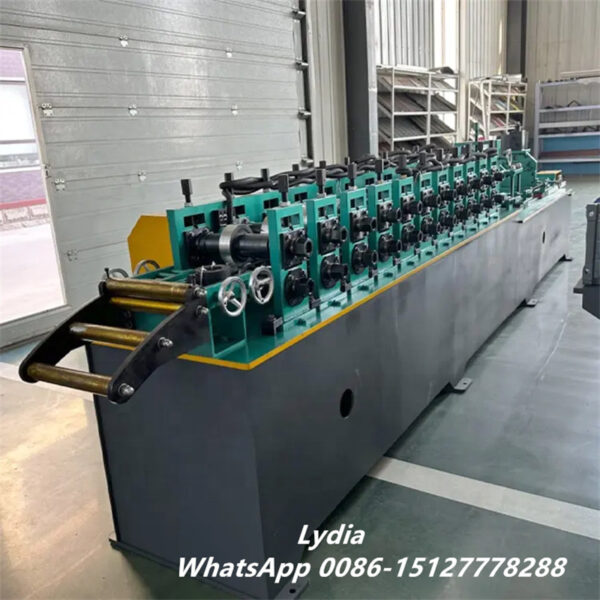
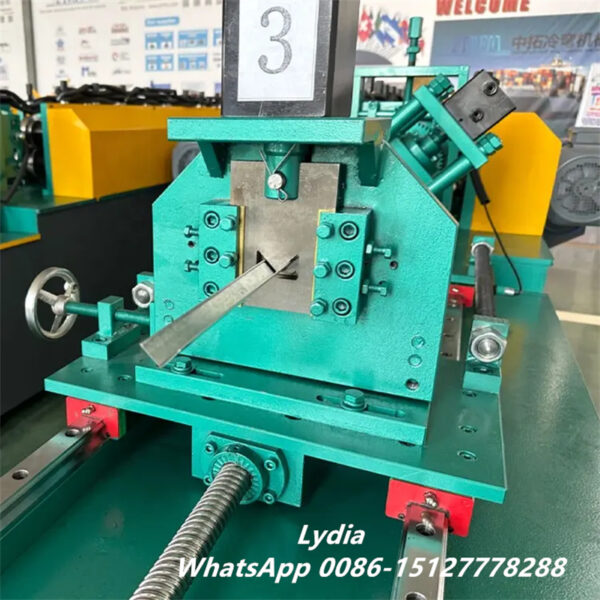
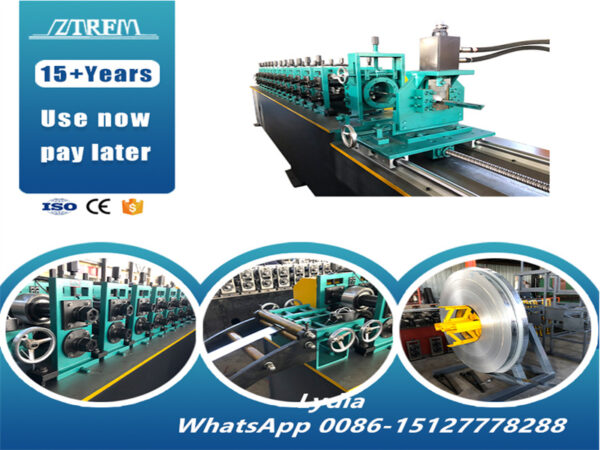

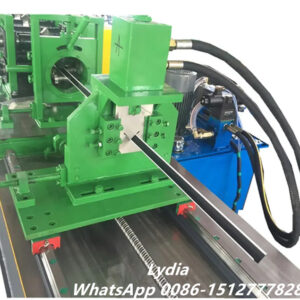
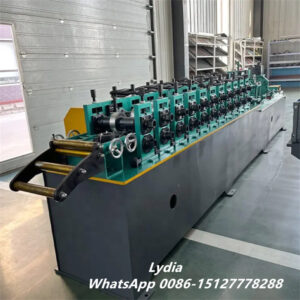
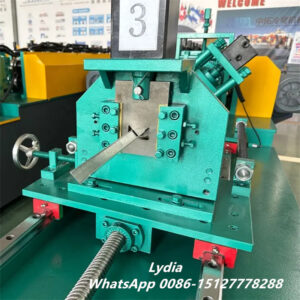
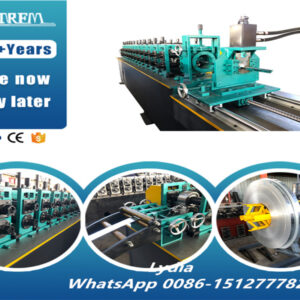
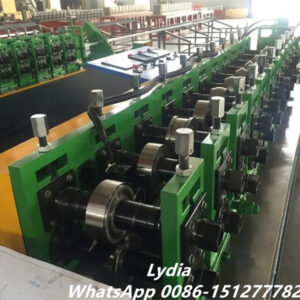

L-Angles / Corner Angles Roll Forming Machine
(As per North American AISI1000 / CSA S136)
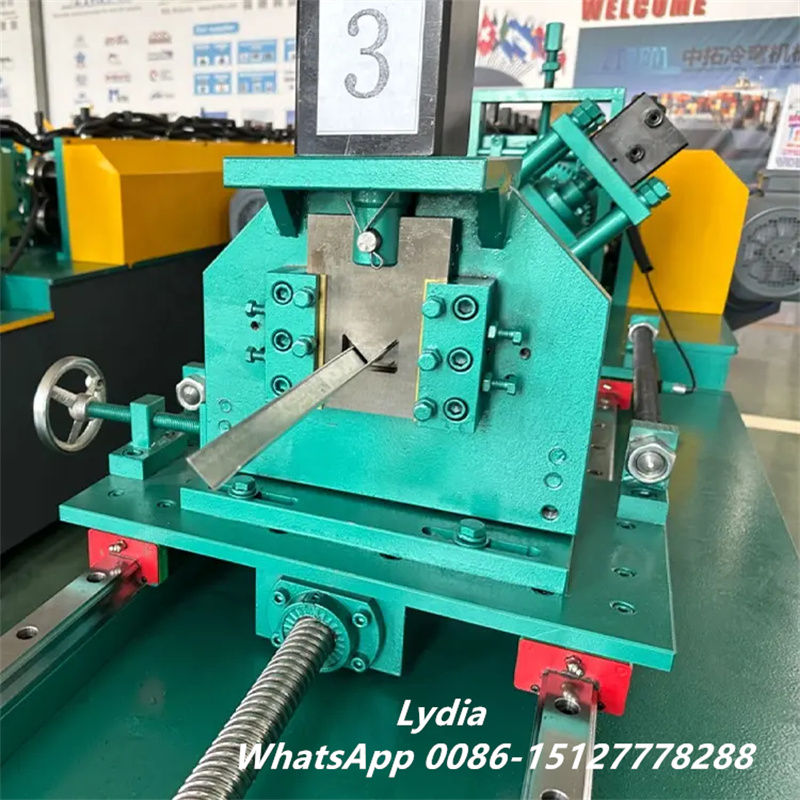
Cold-formed L-Angles, also known as Corner Angles, are widely used in North American construction projects for both non-structural and light structural applications. These profiles play an essential role in edge protection, framing reinforcement, bracing, blocking, and connection support.
To meet these market demands, our L Shape Steel Angle Roll Forming Machine is engineered to produce consistent, high-precision angle profiles in accordance with AISI 1000 and CSA S136 standards. The machine combines high-speed performance, flexible configuration, and reliable automation, making it an ideal solution for modern light-gauge steel production lines.

Standard L-Angle Profile Specifications
The roll forming line supports equal-leg L-shaped profiles, commonly specified in North America.
Material Thickness (Phase 1 – Mandatory Support)
- 20 Gauge → approx. 0.84 mm
- 18 Gauge → approx. 1.09 mm
- 16 Gauge → approx. 1.37 mm
Heavier gauges can be evaluated in later project phases if required.
Standard Equal-Leg Sizes
- 1″ × 1″
- 1-1/2″ × 1-1/2″
- 2″ × 2″
- 2-1/2″ × 2-1/2″
- 3″ × 3″
- 3-1/2″ × 3-1/2″
- 4″ × 4″
Profile Geometry
- Equal-leg L-shaped section
- Sharp external corner for clean appearance
- Controlled internal bend radius
- Typical inside bend radius: ≈ 1.5 × material thickness (t)
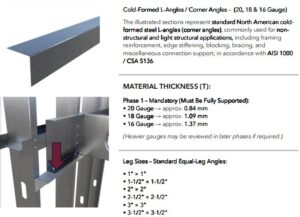
This geometry allows easy fastening to cold-formed studs, tracks, concrete surfaces, and other building elements.
L Shape Steel Angle Roll Forming Machine – Product Introduction
Our company continuously upgrades equipment design to improve operational stability, forming accuracy, and production efficiency. Backed by a complete quality inspection system and advanced testing equipment, each machine is manufactured to meet international standards and customer expectations.
The L-Profile Roll Forming Machine is controlled by a PLC system with a touch screen interface. Operators can easily adjust speed, cutting length, and production parameters, ensuring stable output and reduced labor dependency.

Key Machine Features
To maximize productivity and flexibility, the machine integrates multiple advanced design elements:
- High-Speed Roll Forming
Gear-driven forming stations ensure stable operation at speeds up to70 m/min. - Flexible Profile Production
Optional combi-structure allows multiple profiles (L-angle, Omega, main U channel) to be produced on a single line. - Double-Head Decoiler (Optional)
Enables coil loading without stopping production, significantly improving line efficiency. - Hydraulic Fly Shearing System
Maintains continuous forming speed while delivering clean, accurate cuts. - Perforation Capability
High-speed punching press and servo feeder can be added for perforated wall angle trim production. - CE-Compliant Safety Protection
Aluminum frames with transparent acrylic covers or steel safety fences ensure safe and compliant operation. - Automated Stacking System (Optional)
Reduces manual handling and improves finished product organization. -
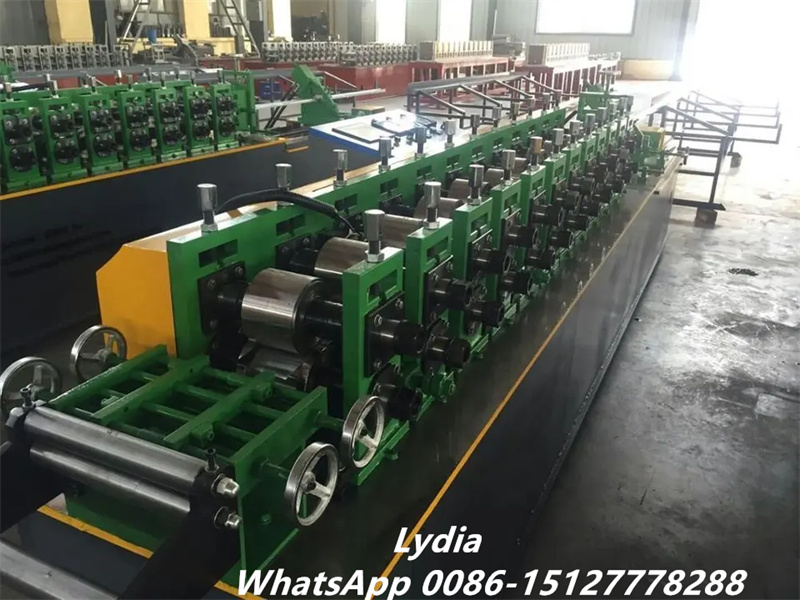
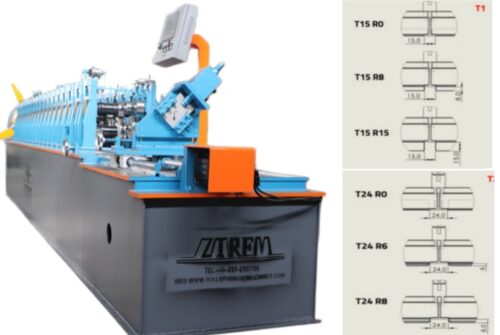
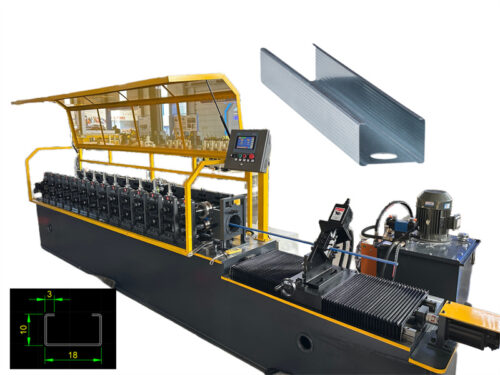
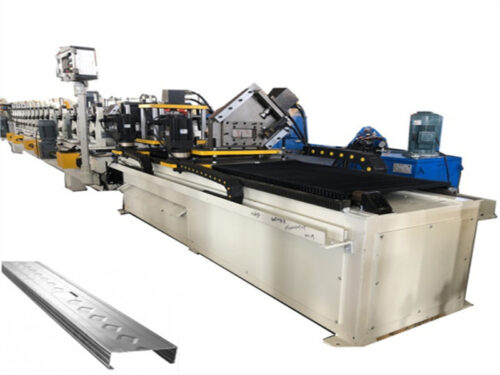
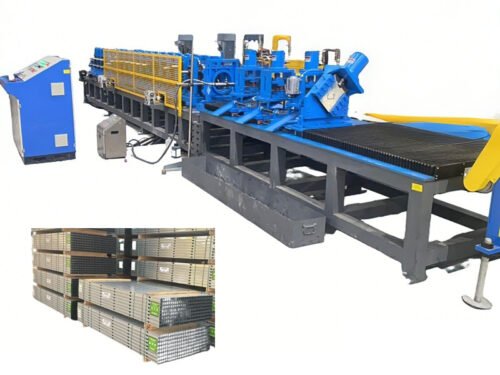
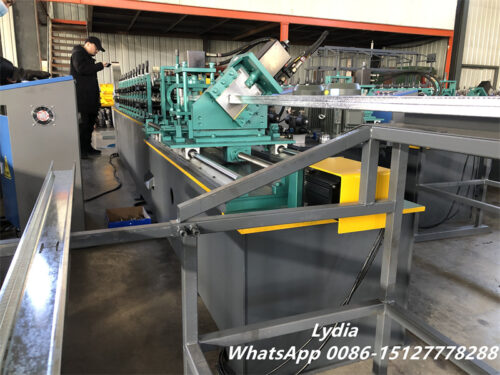
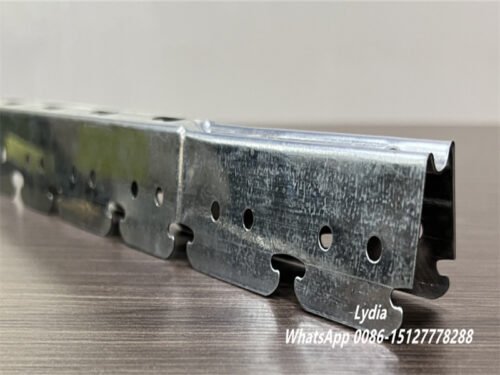
High-speed wall angle roll forming line for gypsum ceiling system
Typical Production Line Configuration
A complete L-angle production line may include:
- Single or double-head decoiler
- High-speed perforation machine (optional)
- NC servo feeder
- Main roll forming machine
- Hydraulic fly shear
- Output table or automatic stacking system
- Electrical and hydraulic control systems
- Full safety protection enclosure
Technical Parameters
| Item | Specification |
|---|---|
| Raw Material | Galvanized steel strip / Stainless steel strip |
| Product Types | L trim, wall angle, L angle channel, angle bead |
| Material Thickness | 0.84 – 1.37 mm (20–16 Gauge) |
| Forming Speed | Up to 70 m/min |
| Roll Forming Stations | 10–12 stations (profile dependent) |
| Drive System | Gear-driven |
| Main Motor Power | Approx. 15 kW |
| Cutting Type | Hydraulic fly shearing |
| Control System | PLC with touch screen |
| Safety Protection | CE-certified protective covers or fences |
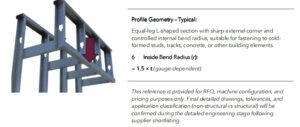
Application Areas
Finished L-angle profiles are widely used in:
- Gypsum ceiling and drywall systems
- Light steel framing reinforcement
- Edge protection and stiffening
- Cable tray and trench supports
- Shelving and storage systems
- Industrial and warehouse construction
Thanks to their clean geometry and dimensional stability, these profiles integrate easily into both residential and commercial building systems.
Engineering & RFQ Notes
This reference is provided for RFQ evaluation, machine configuration, and preliminary pricing. Final profile drawings, tolerances, and structural classification (non-structural or light structural) will be confirmed during the detailed engineering stage after supplier shortlisting.


Reviews
There are no reviews yet.