
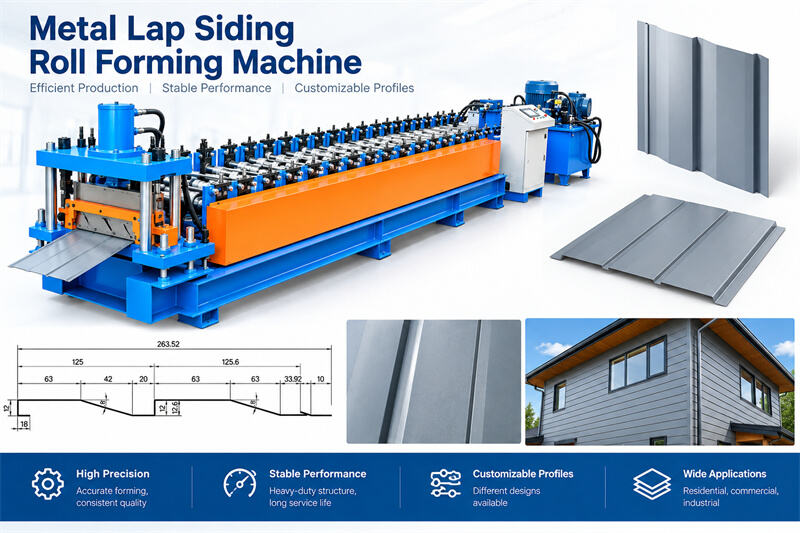
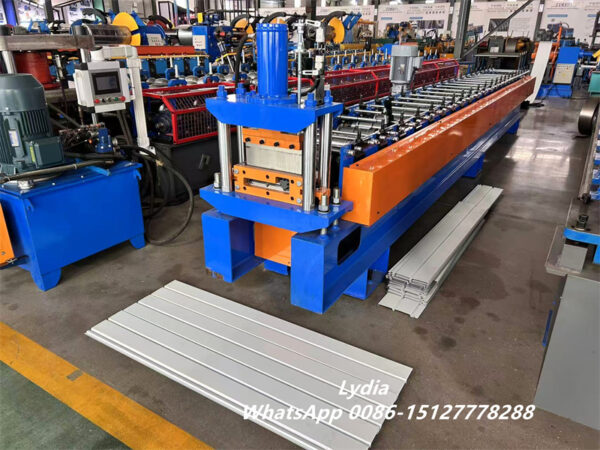
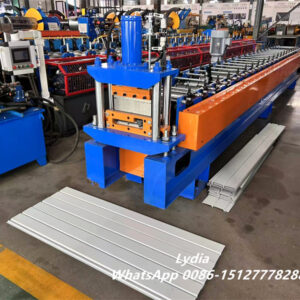
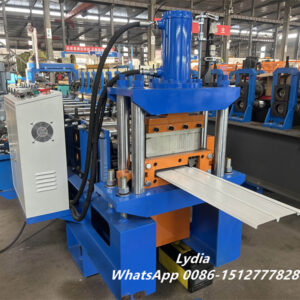
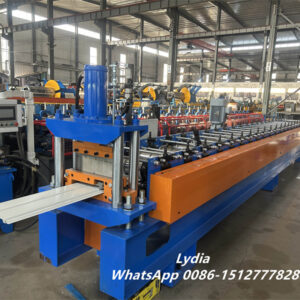

The Metal Lap Siding Roll Forming Machine provides an efficient solution for producing horizontal metal siding panels with consistent dimensions and a clean architectural appearance. Designed for profiles such as ZTLap 200, this Metal Siding Roll Forming Machine gradually forms galvanized or pre-painted steel coil into a double-course lap siding profile.
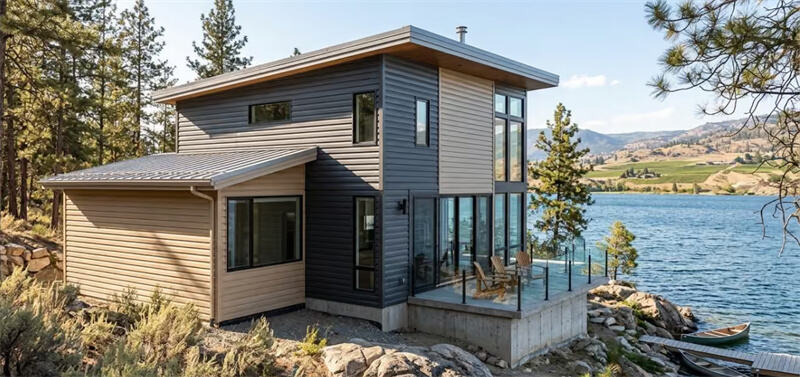
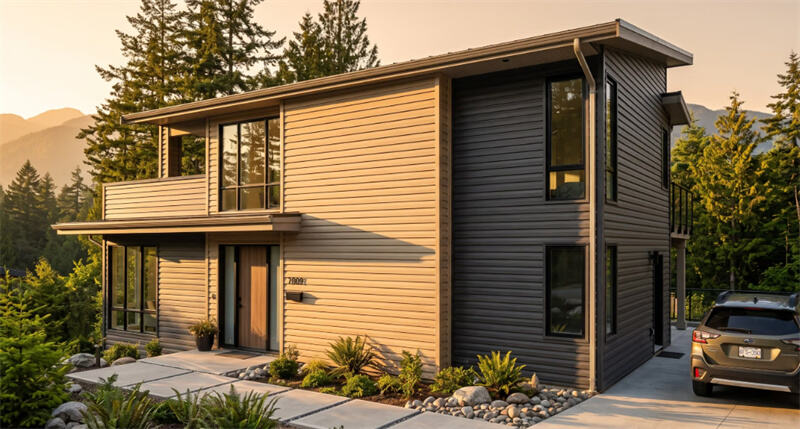
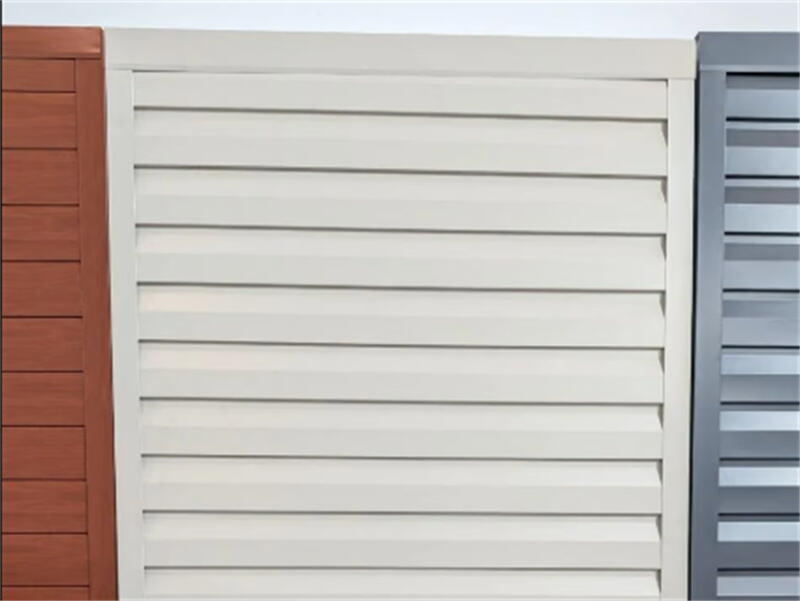
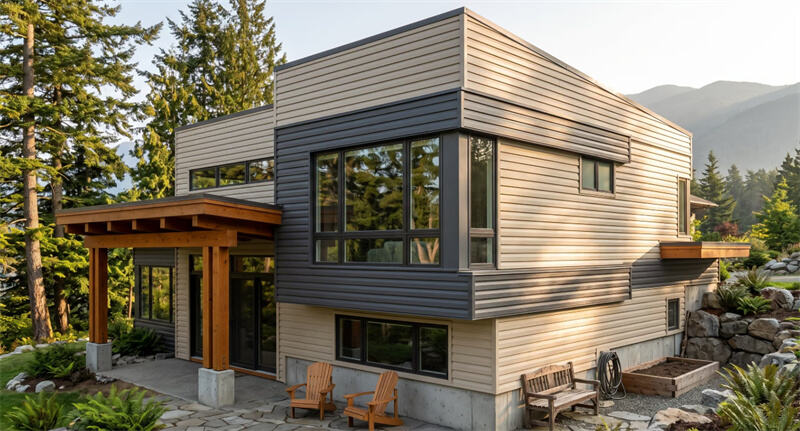
The ZTLap 200 profile features shallow asymmetrical ribs and broad horizontal courses, creating defined shadow lines after installation. Therefore, it works well for residential siding, commercial wall cladding, industrial buildings, and architectural accent walls.
The reference ZTLap 200 profile has a 283.52 mm formed width, 330 mm feed width, and 12 mm profile depth. Common material selections include 24ga and 26ga steel, while other gauges and metal thicknesses can also be reviewed according to the selected material and profile.
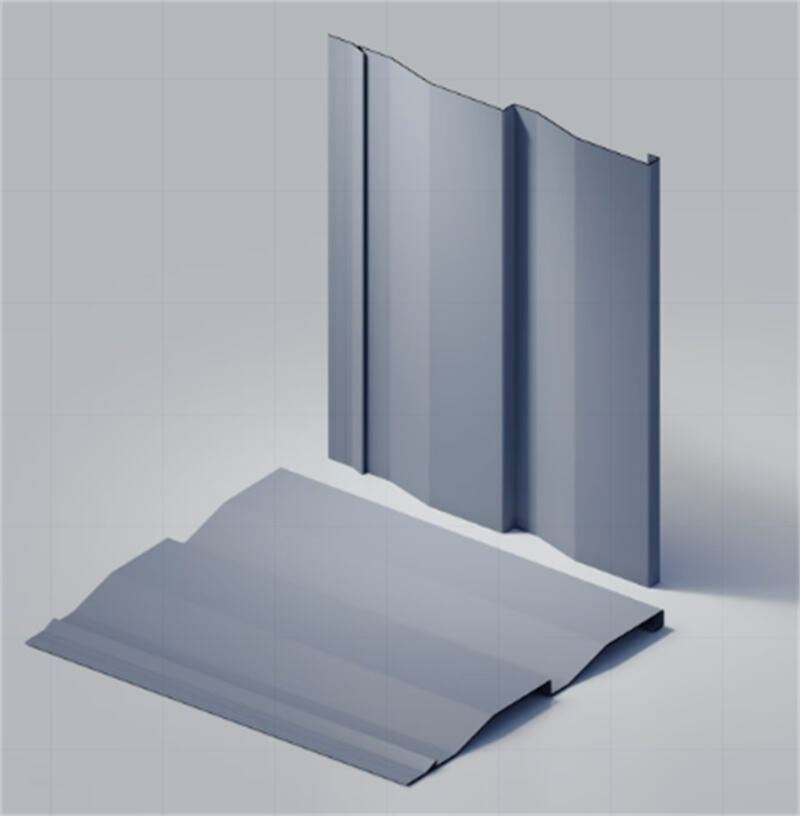
ZTLap 200 Metal Lap Siding Profile
The ZTLap 200 (TS-S200-LP) is a horizontal metal lap siding profile designed for exterior wall applications. Its double-course configuration creates two broad horizontal sections across the panel while shallow asymmetrical ribs provide a clear visual shadow line.
For the reference profile, the formed width is 283.52 mm, while the machine feeding width is 330 mm. The profile depth is 12 mm, and the flat top section measures 63 mm.
The common gauge selections are 24ga and 26ga. For the 26ga reference material, the current stock BMT is approximately 0.48 mm. However, the actual decimal BMT should always be confirmed according to the selected steel material, coating system, and production requirements.
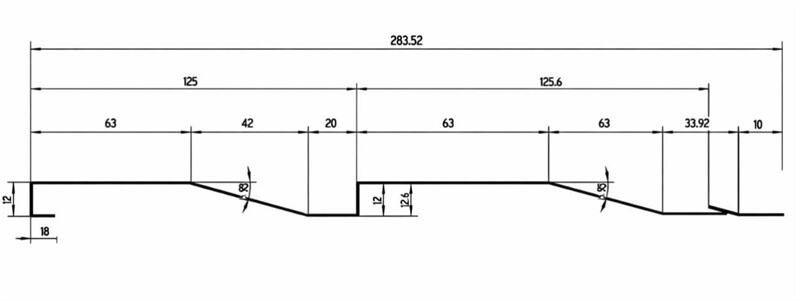
ZTLap 200 Profile Specifications
| Property | Value |
|---|---|
| Profile | ZTLap 200 / TS-S200-LP |
| Formed Width | 283.52 mm |
| Feed Width | 330 mm |
| Profile Depth | 12 mm |
| Common Gauges | 24ga / 26ga |
| Flat Top Width | 63 mm |
| 26ga Stock BMT | Approx. 0.48 mm |
| Slope Angle | 15.95° |
| Profile Type | Double-course metal lap siding |
| Main Application | Horizontal wall cladding |
All dimensions are nominal. In particular, the formed width is not the same as effective installed coverage. Joint and overlap dimensions should therefore be confirmed before using the profile width for material quantity calculations.
The Core reference gauge for this profile is 26ga. Nevertheless, the machine can be reviewed for other gauges and metal thicknesses when the selected material and profile are technically suitable.
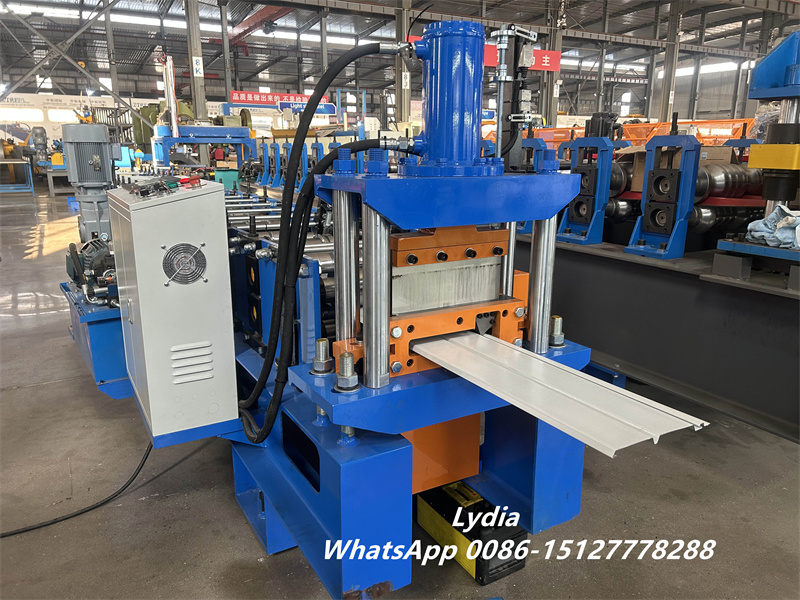
Metal Lap Siding Roll Forming Process
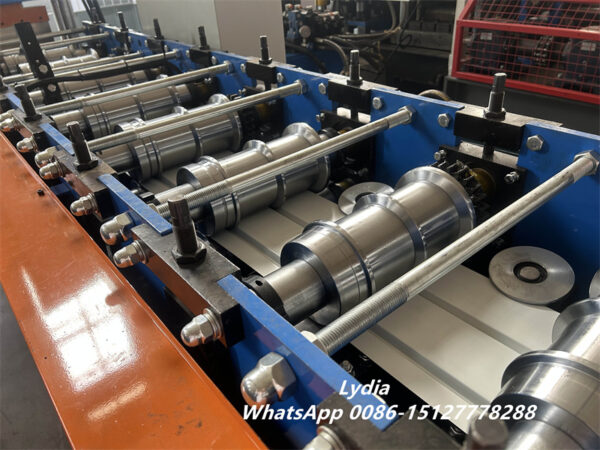
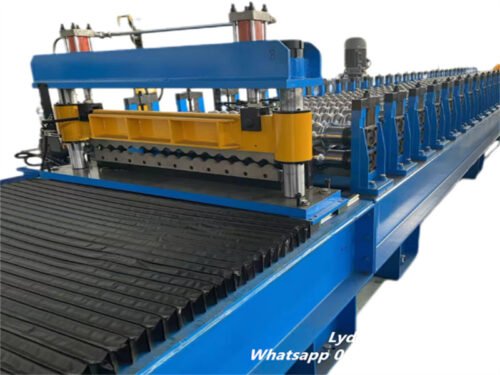
The Metal Lap Siding Roll Forming Machine forms the panel progressively through multiple roller stations. Instead of bending the entire sheet at once, each station performs a controlled forming step. As a result, the machine can gradually create the shallow ribs, flat sections, and horizontal courses required by the metal lap siding profile.
The standard production process is:
Decoiling → Feeding & Guiding → Roll Forming → Length Measuring → Hydraulic Cutting → Product Collection
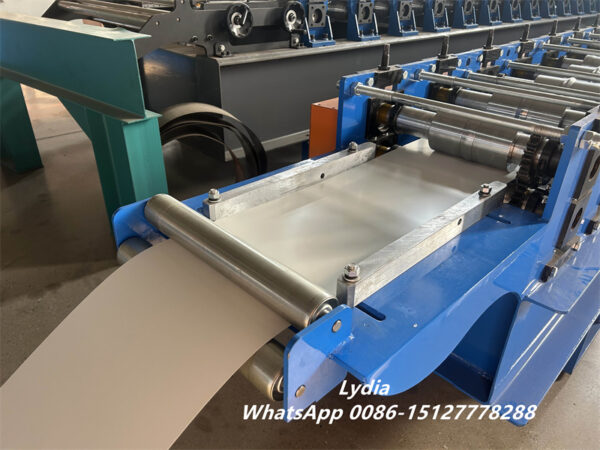
First, the hydraulic decoiler supports the steel coil and feeds the strip into the production line. Next, the feeding and guiding device aligns the material before it enters the forming section.
The 18 forming stations then shape the steel progressively. After forming, the control system measures the programmed length and sends the cutting command. Finally, the hydraulic cutting unit separates the finished panel, and the product table collects the completed metal lap siding panels.
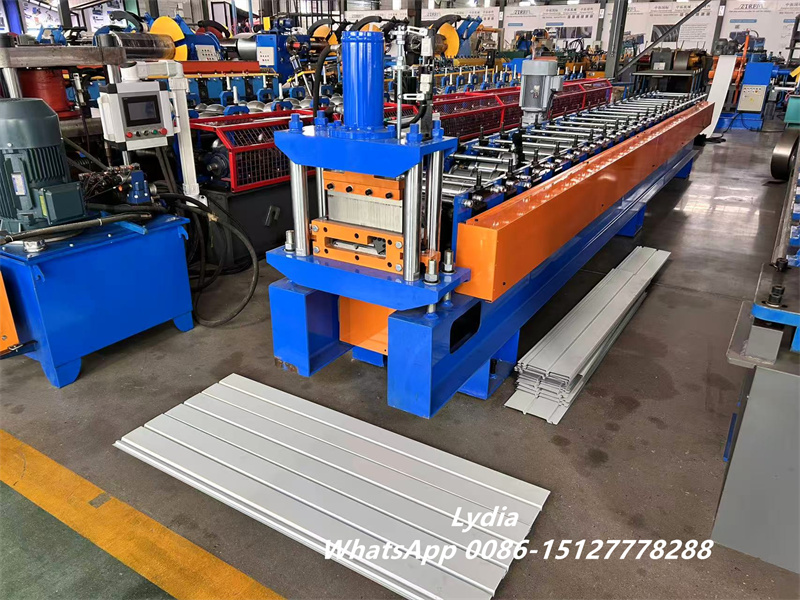
This continuous process helps manufacturers maintain consistent profile geometry while also allowing different finished panel lengths according to project requirements.
Metal Lap Siding Roll Forming Machine Technical Parameters
The machine uses a welded heavy-duty structure and a solid forming shaft to support continuous production. Meanwhile, the forming rollers receive heat treatment and surface protection to improve durability and forming stability.
The reference configuration operates at 0–20 m/min, while the final production speed can be reviewed according to the profile geometry, material thickness, cutting requirements, and desired production capacity.
Machine Technical Parameters
| Item | Specification |
|---|---|
| Machine Type | Metal Lap Siding Roll Forming Machine |
| Forming Stations | 18 stations |
| Forming Speed | 0–20 m/min |
| Main Motor | 7.5 kW |
| Machine Frame | 350# H-beam welded |
| Middle Plate | 18 mm |
| Main Shaft Diameter | 60 mm |
| Shaft Material | 45# steel |
| Shaft Type | Solid shaft |
| Shaft Treatment | Tempering + chrome coating |
| Roller Material | 40Cr |
| Roller Hardness | HRC48–52 |
| Roller Surface | 0.03 mm hard chrome coating |
| Transmission | Chain drive |
| Control System | Delta PLC + inverter |
| Low-Voltage Components | Schneider |
| Encoder | Omron |
| Cutting Type | Hydraulic cutting |
| Cutting Motor | 3 kW |
| Cutting Blade | GB-Cr12 |
| Cutting Tolerance | ±1 mm per 3 m |
| Product Tables | 2 sets |
| Product Table Length | 3 m |
| Product Table Width | 0.5 m |
The machine structure uses 350# H-beam welded construction with an 18 mm middle plate. This design provides a stable foundation for the forming stations and helps reduce unnecessary movement during continuous production.
The main shaft uses 45# steel, with a solid 60 mm diameter design. After tempering treatment and chrome coating, the shaft provides stable support for the forming rollers.
The rollers use 40Cr material with HRC48–52 heat treatment. In addition, the approximately 0.03 mm hard chrome coating protects the roller surface and helps maintain smooth contact with the steel strip.
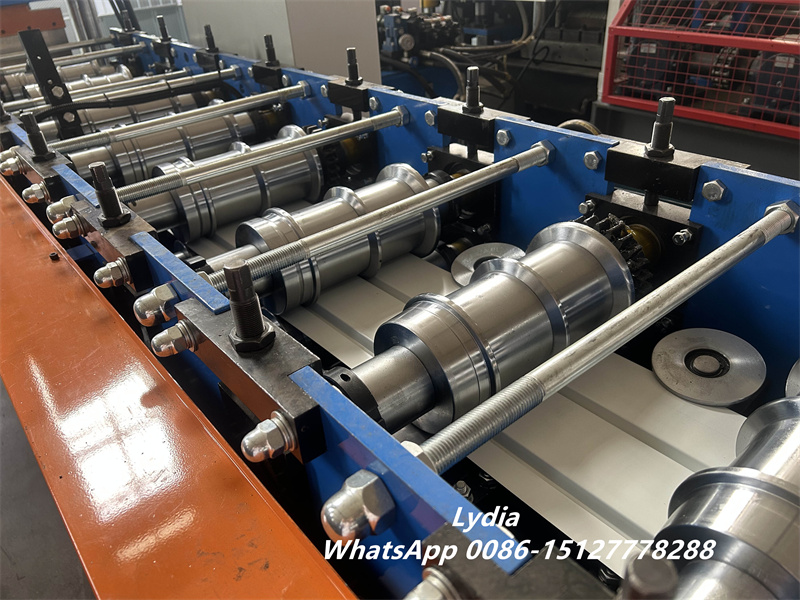
Main Components and Machine Construction
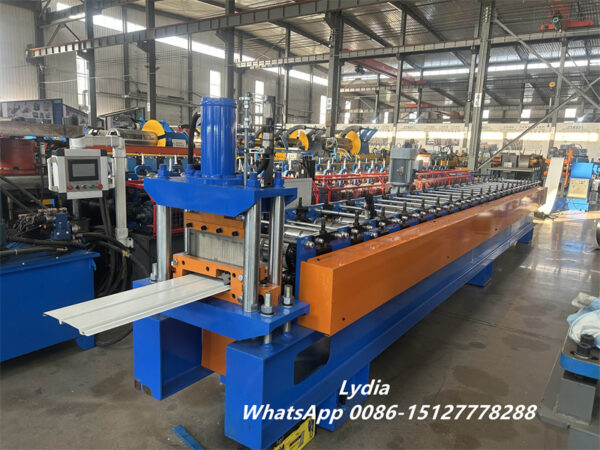
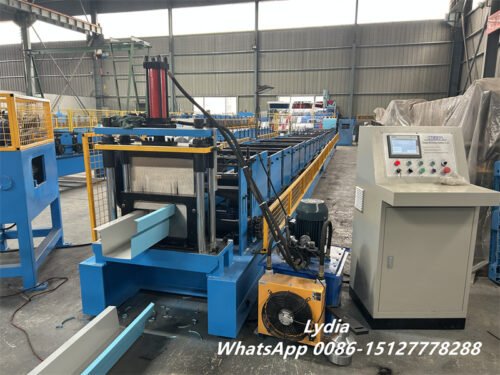
The complete Metal Siding Roll Forming Machine combines decoiling, feeding, forming, control, cutting, and product collection into one production line.
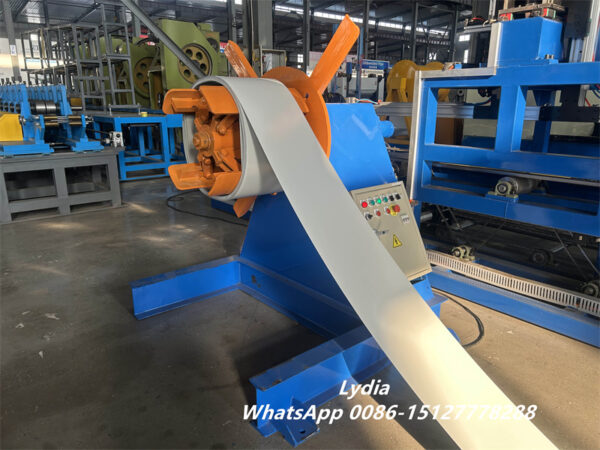
3 Ton Hydraulic Decoiler
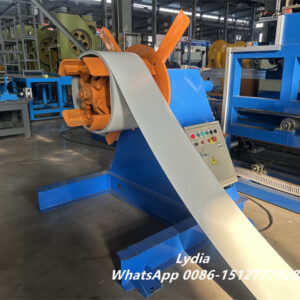
The standard line uses a 3-ton hydraulic decoiler. It uses a passive working configuration with automatic expansion and shrinking.
Its reference specifications include:
- Loading capacity: 3 tons
- Motor power: 2.2 kW
- Hydraulic power: 1.5 kW
- Coil width: 600 mm
- Inner diameter: 450–550 mm
- Frame: welded steel channel
- Inverter-controlled motor
- Forklift or crane required for coil loading
The decoiler supports the coil and maintains stable material feeding as the production line runs.
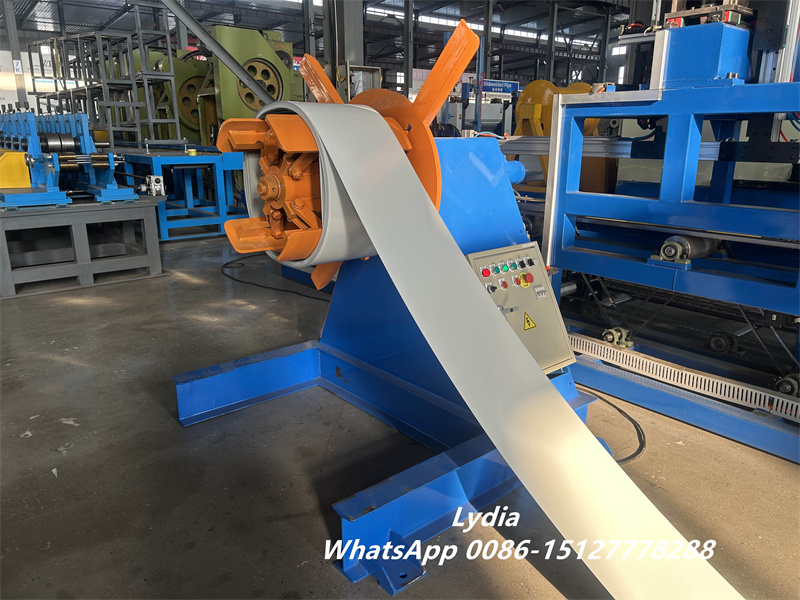
Feeding and Guiding Device
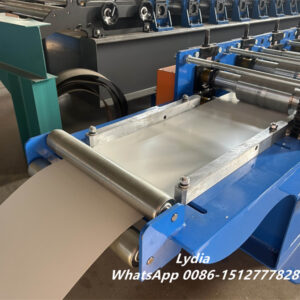
Before forming, the steel strip passes through a welded steel-plate feeding platform.
The feeding section includes:
- 1 set of guiding rollers
- 2–3 guiding strips
- Additional bearings on both sides
- 45# / Cr12MoV-related forming and guiding components according to the configured section
- 2.2 kW feeding motor with inverter
The guiding strips help protect the sheet surface, while the additional side bearings support the material edges and improve feeding stability.
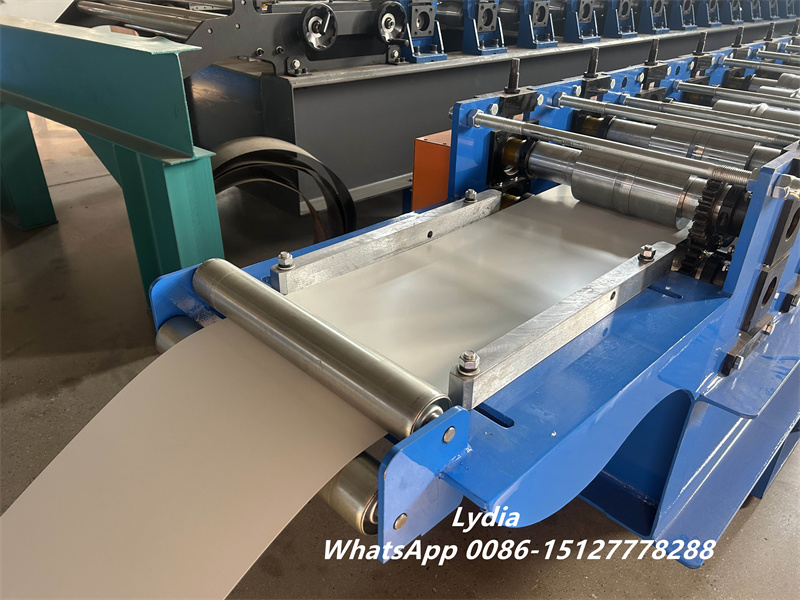
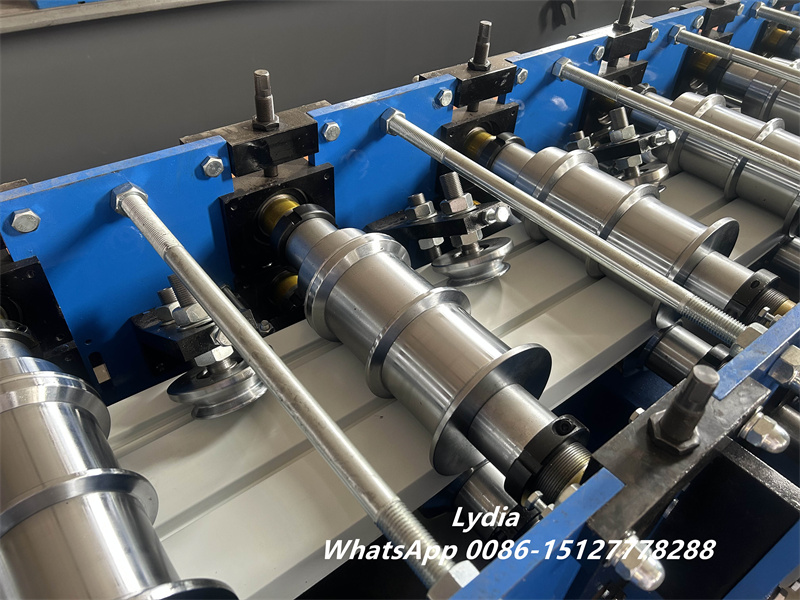
Main Roll Former
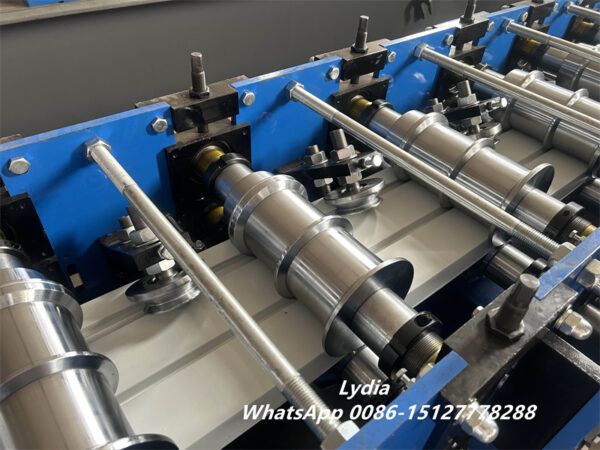
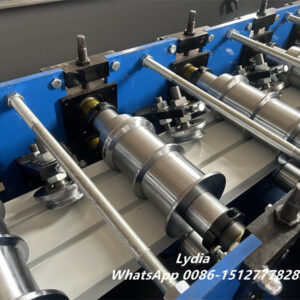
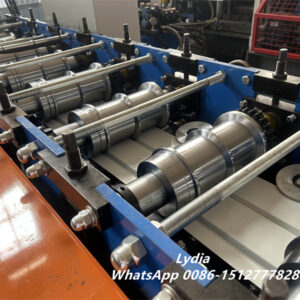
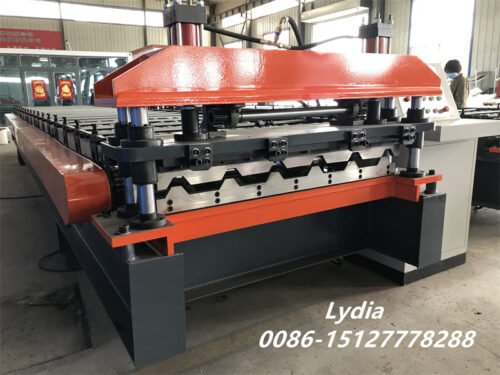
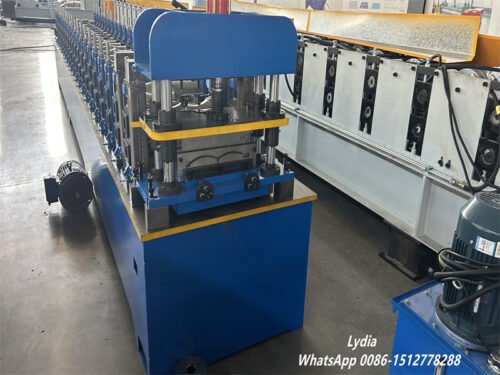
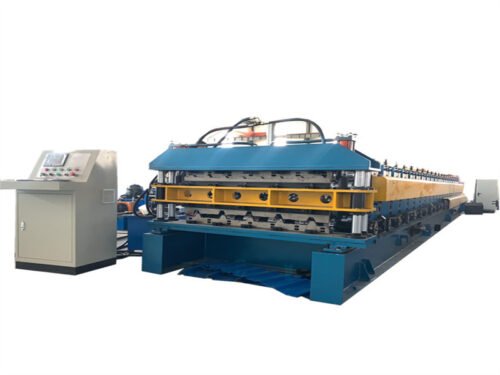
The main roll former contains 18 forming stations. Each station progressively changes the flat strip into the required horizontal metal lap siding profile.
The machine uses a chain transmission system with protective covers. In addition, the rolling spacers and steel bars receive anti-rust treatment.
Zhongtuo also uses an inset nut and cushion groove shaft-fixing design. This structure helps reduce shaft loosening during extended operation and supports stable forming performance.
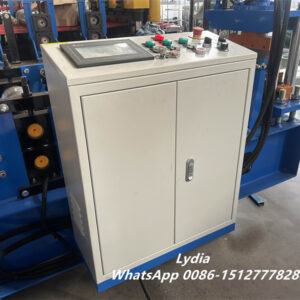
PLC Control System
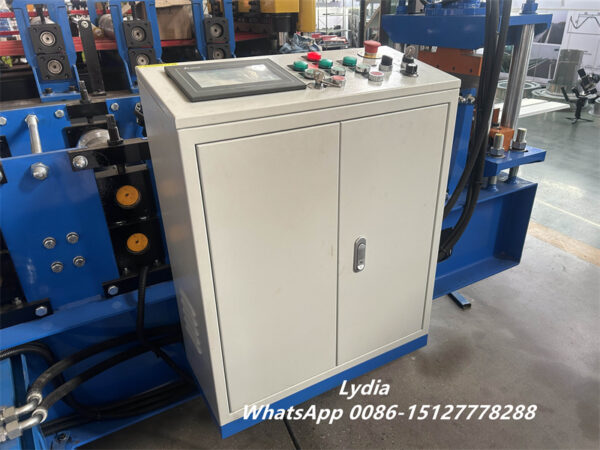
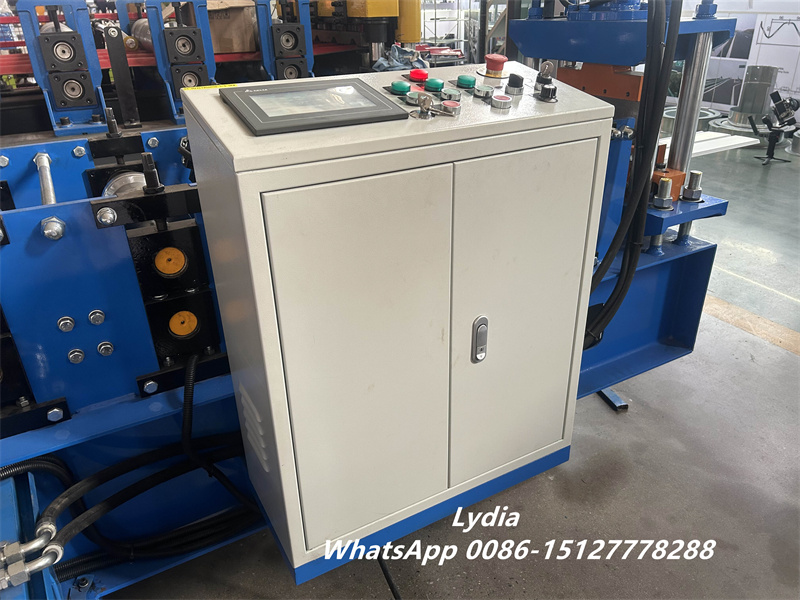
The control cabinet uses a Delta PLC and Delta inverter. Operators can control the production parameters through the touch screen and physical buttons.
The system supports:
- Length setting
- Cutting commands
- Batch quantity setting
- Multi-order input
- Production control
- English / Chinese / Spanish interface
For additional electrical reliability, the machine uses Schneider low-voltage components and an Omron encoder. Aviation plugs and numbered wires also make installation and commissioning more convenient.
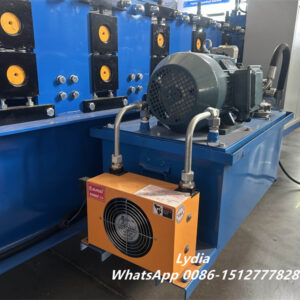
Hydraulic Cutting System
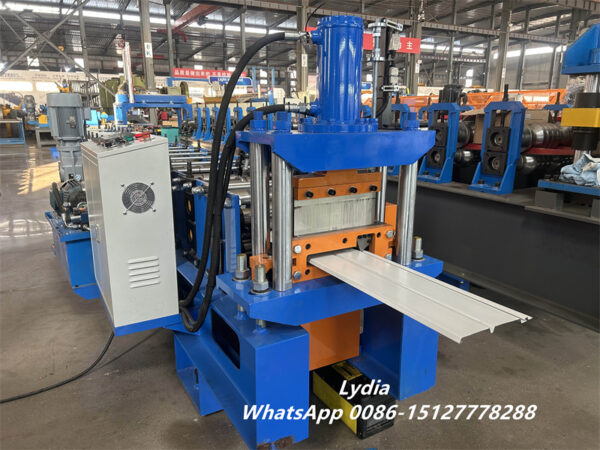
After the profile reaches the preset length, the hydraulic cutting system separates the finished panel.
The cutting section includes:
- Hydraulic cutting
- Pillar-type cylinder
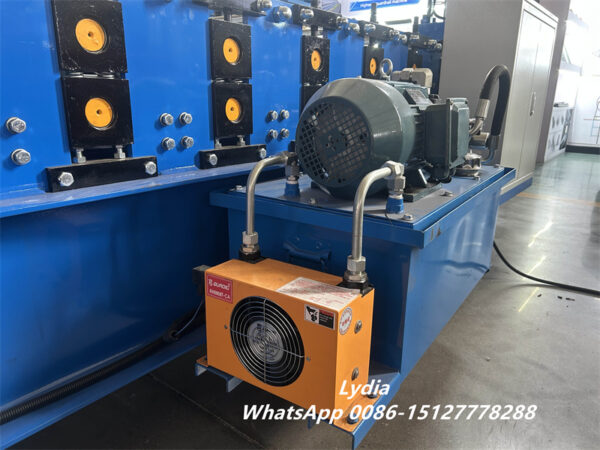
- 3 kW hydraulic motor
- GB-Cr12 cutting blade
- Cutting tolerance of approximately ±1 mm per 3 m
The hydraulic station also includes an oil cooling fan, which helps control oil temperature during continuous operation and supports stable hydraulic performance.
The machine’s tubes and wires use numbered labels, making installation and troubleshooting easier.
Product Collection Tables
The standard configuration includes two manual product tables.
Each table measures approximately:
- Length: 3 m
- Width: 0.5 m
- Structure: square-pipe welded frame
After hydraulic cutting, the finished metal lap siding panels move onto the tables for collection and handling.
Applications of Metal Lap Siding Panels
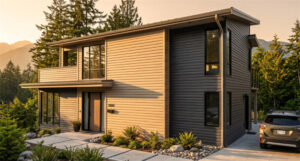
The Metal Lap Siding Roll Forming Machine can produce horizontal siding panels for various building projects. Because the ZTLap 200 profile creates clear horizontal shadow lines, it can combine practical wall protection with an architectural appearance.
Typical applications include:
- Residential metal siding
- Commercial wall cladding
- Industrial buildings
- Warehouses and workshops
- Architectural accent walls
- Exterior building facades
- Horizontal metal siding systems
For project-specific production, customers can provide the required profile drawing, material type, gauge, coating, panel length, and production quantity. The forming tooling can then be reviewed against the approved profile.
For printed finishes, the material and coating should also be confirmed before production. In particular, a physical sample should be reviewed before final approval to ensure that the selected finish is suitable for the forming process.
Frequently Asked Questions
1. What is the formed width of the ZTLap 200 metal siding profile?
The nominal formed width of the ZTLap 200 profile is 283.52 mm, with a 330 mm feed width and 12 mm profile depth. The formed width should not be treated as the effective installed coverage because joints and overlaps must also be considered.
2. What steel gauges can the Metal Lap Siding Roll Forming Machine process?
The common ZTLap 200 selections are 24ga and 26ga. The 26ga reference material has an approximate 0.48 mm BMT. Other gauges and metal thicknesses can be reviewed according to the selected material, coating, and profile.
3. Can the Metal Lap Siding Machine produce different panel lengths?
Yes. The Delta PLC control system allows operators to set the required cutting length and production quantity. Panels can therefore be produced according to approved project lengths, subject to handling, transportation, and supporting trim requirements.
4. Can this machine produce other metal siding profiles?
Yes. The roll forming tooling can be designed or adjusted according to an approved profile drawing. Customers should provide the required profile dimensions, material, thickness, finished width, and other technical requirements for evaluation.
5. Is 283.52 mm the actual installed coverage of each panel?
No. 283.52 mm is the nominal formed width, not necessarily the effective installed coverage. The final coverage depends on the connection, joint, and overlap design. Therefore, customers should confirm the installation details before calculating coil requirements or project quantities.


Reviews
There are no reviews yet.