
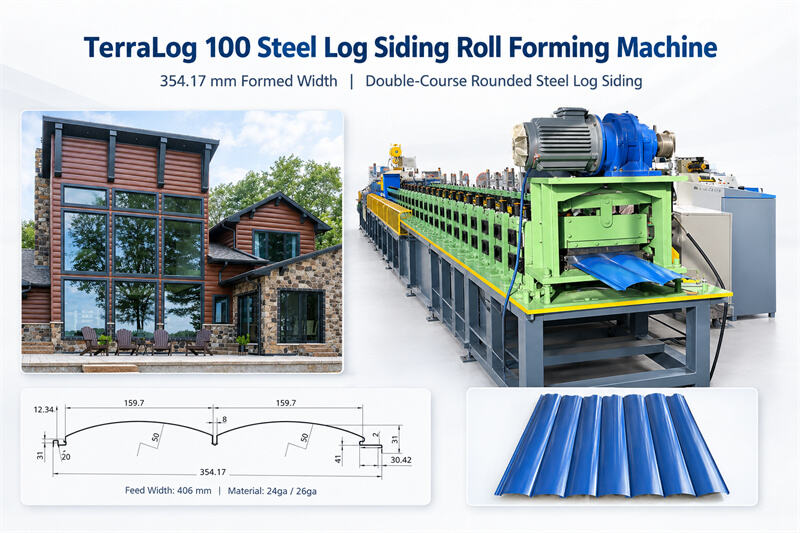
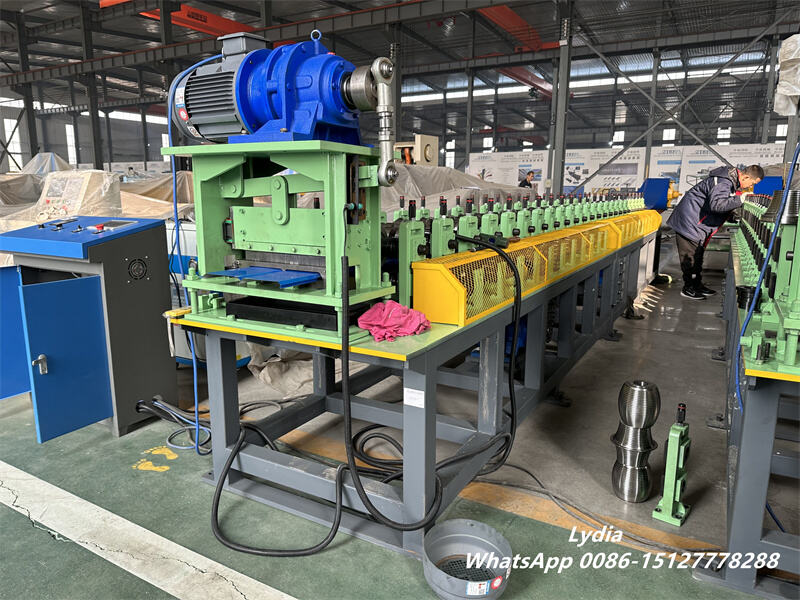

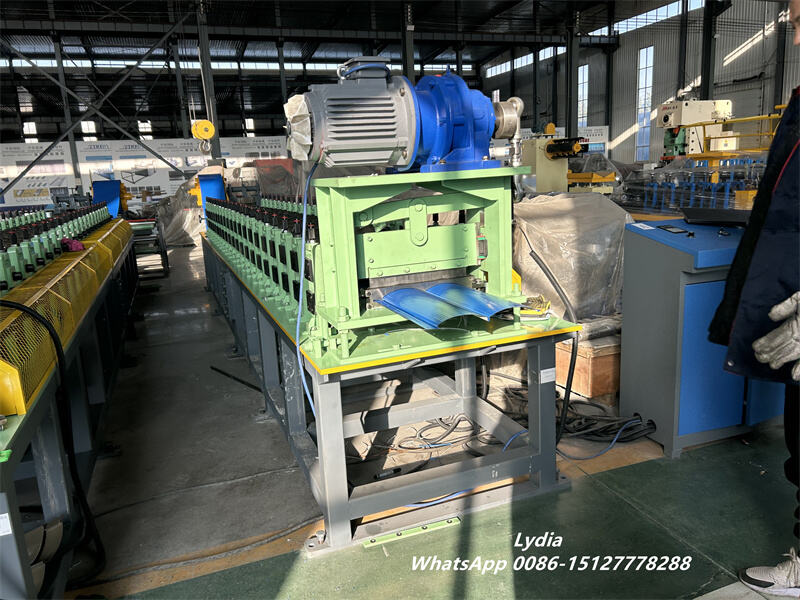
The TerraLog 100 Steel Log Siding Roll Forming Machine provides an efficient solution for producing double-course rounded steel log siding panels. Unlike conventional flat wall cladding profiles, this roll forming line gradually shapes steel coils into two broad curved faces, creating a log-inspired appearance while maintaining the dimensional consistency of roll-formed metal siding.
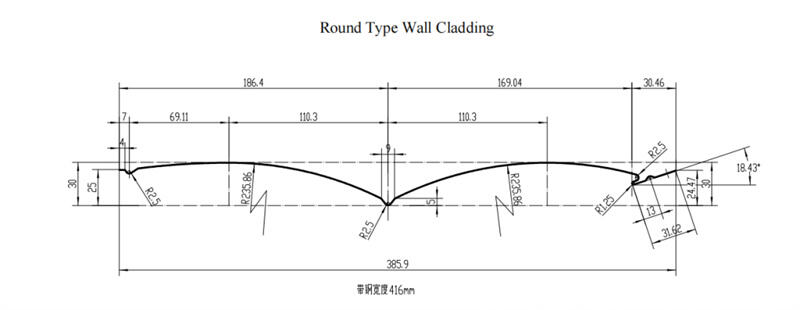
The TerraLog 100 profile features two 159.7 mm rounded faces, a 354.17 mm formed width, and a 31 mm profile depth. The curved sections use an approximately R160 radius, giving the finished panel a deep, rounded appearance similar to traditional log siding. In addition, the profile incorporates formed edge connections that allow the panels to interlock during installation.
The machine processes commonly selected 24ga and 26ga steel, which correspond to approximately 0.6 mm and 0.48 mm respectively, depending on the actual material standard and coating system. With progressive roller forming, the line transforms flat coil stock into the required double-course log siding profile while maintaining a consistent surface finish.
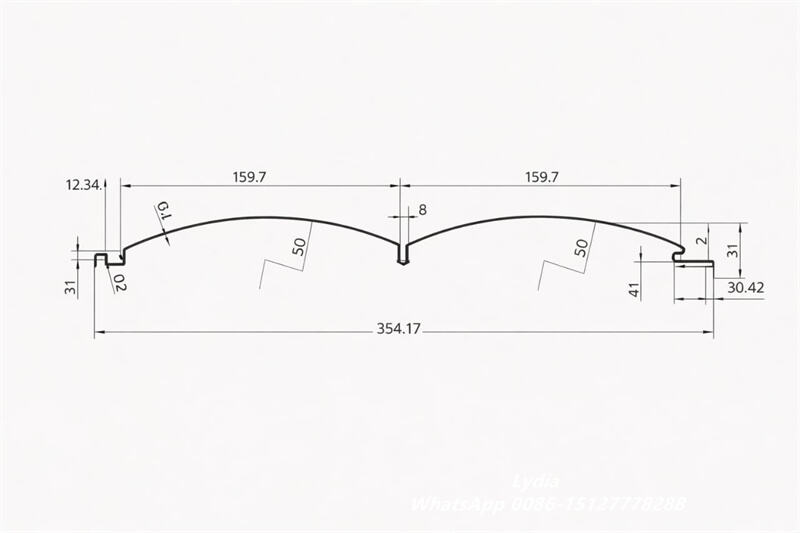
TerraLog 100 Profile and Material Requirements
The TerraLog 100 Steel Log Siding profile uses a specialized cross-section rather than a conventional flat or V-groove wall panel. The two large curved sections form the main visual surface of the panel, while the center groove and side connection areas provide the required profile geometry.
The nominal formed width is 354.17 mm, while the corresponding feed width is 406 mm. Each curved face measures approximately 159.7 mm, and the profile depth reaches approximately 31 mm. The large R160 curves require controlled progressive forming because the machine must develop the curvature gradually instead of forcing the flat strip into its final shape in a single forming pass.
Therefore, the roller stations must match the supplied profile drawing accurately. The forming tools should progressively increase the curvature while controlling material movement around the center groove and both edge-locking sections. This approach helps reduce surface marks, profile distortion, and dimensional variation during continuous production.
The machine can be configured for galvanized or pre-painted steel coils according to the customer’s project requirements. For TerraLog 100 production, 24ga and 26ga materials represent the common gauge selections. The actual base-metal thickness, coating, finish, and coil specifications should be confirmed before manufacturing the forming rollers.
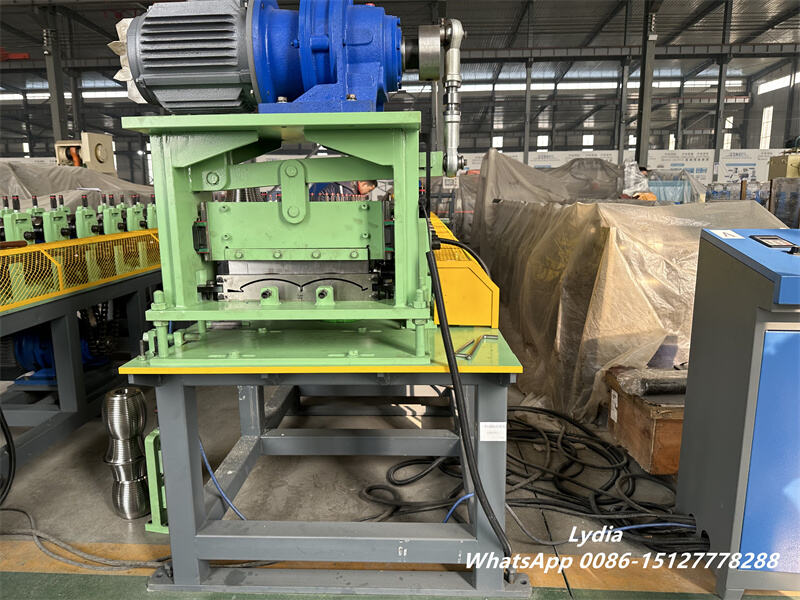
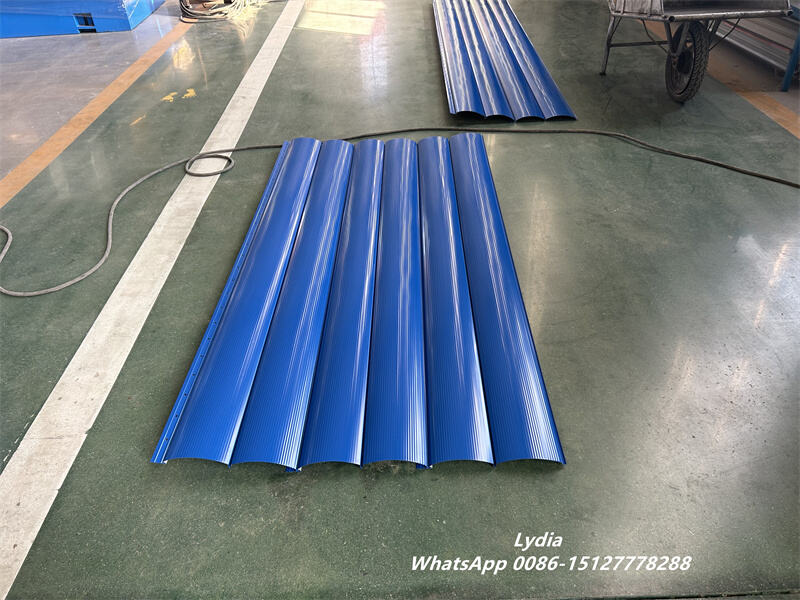
Continuous TerraLog 100 Roll Forming Process
The production line uses a continuous workflow:
Decoiling → Feeding & Guiding → Progressive Roll Forming → Hydraulic Cutting → Finished Panel Receiving
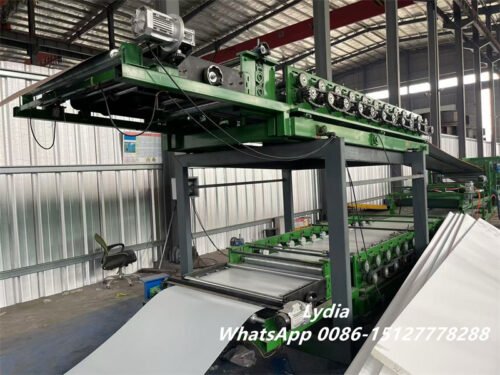
First, the decoiler supports the steel coil and supplies material continuously to the production line. The feeding and guiding system then aligns the strip before it enters the forming section. This alignment is particularly important for TerraLog 100 because even a small deviation at the entry can affect the symmetry of the two large curved faces.
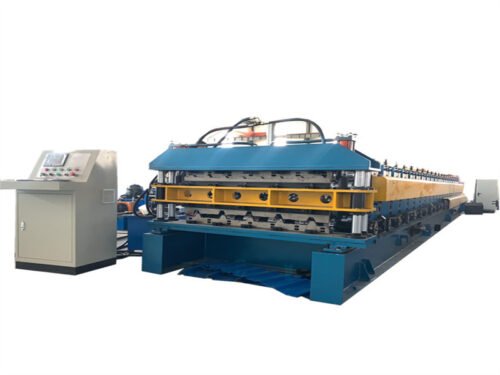
Next, multiple forming stations gradually shape the flat strip. Instead of creating the R160 curves immediately, the rollers progressively bend the material until it reaches the final double-course geometry. At the same time, dedicated stations develop the center groove and edge connection details.
After the profile reaches its final shape, the hydraulic cutting system cuts the continuous siding panel according to the preset length. Finally, the finished panels move onto the receiving table for collection, inspection, and packaging.
This continuous production method allows manufacturers to produce long steel log siding panels efficiently. Moreover, the PLC-controlled system coordinates feeding, forming, length measurement, and cutting, reducing unnecessary manual operations.
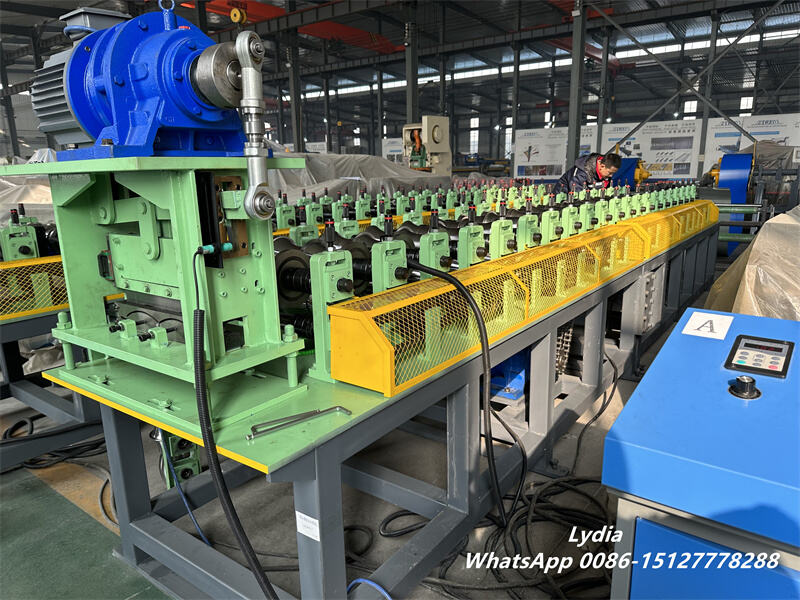
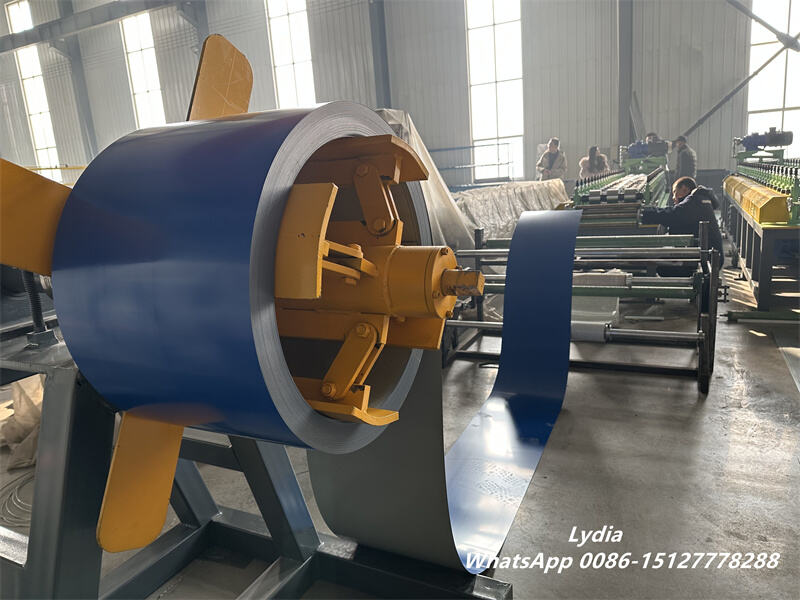
Stable Machine Structure and Forming Components
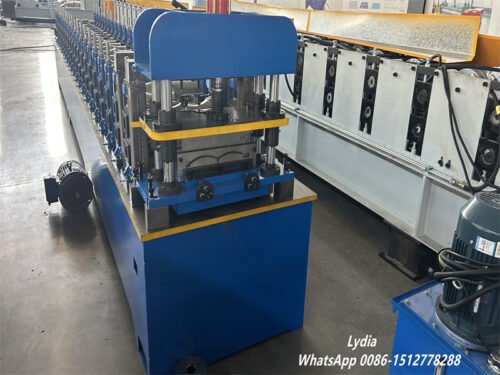
The TerraLog 100 Steel Log Siding Roll Forming Machine uses a 350H steel main frame to support the forming stations and transmission system. A rigid frame helps maintain alignment between the upper and lower rollers, which becomes especially important when forming large-radius curved sections.
The forming shafts use 45# steel with a 50 mm diameter, while the forming rollers use 45# steel with chrome treatment. These components provide the mechanical strength required for continuous production and help improve roller wear resistance and corrosion resistance.
Depending on the final machine configuration, the forming section can include approximately 14–18 forming stations. The roller arrangement can be designed specifically around the TerraLog 100 profile drawing so that the two 159.7 mm curved faces, 8 mm center groove, side locks, and 31 mm profile depth develop progressively through the forming process.
In addition, the machine can use chain or gear transmission according to the selected configuration. Anti-rust treatment on spacers and pull rods further supports long-term operation in the forming section.
| Item | TerraLog 100 Roll Forming Machine Specification |
|---|---|
| Machine Type | TerraLog 100 Steel Log Siding Roll Forming Machine |
| Profile Type | Double-Course Rounded Steel Log Siding |
| Formed Width | 354.17 mm |
| Feed Width | 406 mm |
| Pan Width | 159.7 mm × 2 |
| Curve Radius | R160 |
| Profile Depth | 31 mm |
| Common Material | Galvanized / Color-Coated Steel |
| Common Gauges | 24ga / 26ga |
| Approx. Material Thickness | 0.48–0.60 mm, depending on gauge standard |
| Main Frame | 350H Steel |
| Shaft Diameter | 50 mm |
| Shaft Material | 45# Steel |
| Roller Material | 45# Steel, Chrome Treated |
| Forming Stations | 14–18 Rows |
| Forming Speed | 15–22 m/min |
| Main Motor | 11 kW |
| Hydraulic Power | 5.5 kW |
| Cutting Method | Hydraulic Cutting |
| Cutter Material | Cr12 Quenched |
| PLC | Delta |
| Frequency Converter | Delta |
| Encoder | Omron |
| Voltage | 380 V |
| Certification | ISO / CE |
Automatic Control and Precision Cutting
The electrical control system coordinates the main forming and cutting operations. The standard configuration uses a Delta PLC and Delta frequency converter, while an Omron encoder monitors the production length. As a result, operators can enter the required production parameters through the touch screen and manage the forming line from the electrical control cabinet.
The control interface supports Chinese and English, while other languages can be customized when required. Furthermore, the PLC system synchronizes the forming and cutting operations to maintain stable production and reduce manual intervention.
The hydraulic cutting unit uses a four-guide-pillar structure, which improves cutting stability during continuous production. The Cr12 quenched cutter provides good hardness and wear resistance. Under suitable operating conditions, the cutting tolerance can reach approximately ±1.5 mm.
Because TerraLog 100 has a distinctive curved profile and formed edge geometry, accurate length control becomes important when manufacturers prepare panels for installation. The encoder measures the running length, and the PLC uses the preset value to coordinate the cutting operation.
For customers searching for a metal sheet cladding machine or cladding sheet bending machine, this equipment provides a more integrated solution. Instead of manually bending and cutting individual sheets, the roll forming line continuously converts steel coils into finished rounded siding panels.
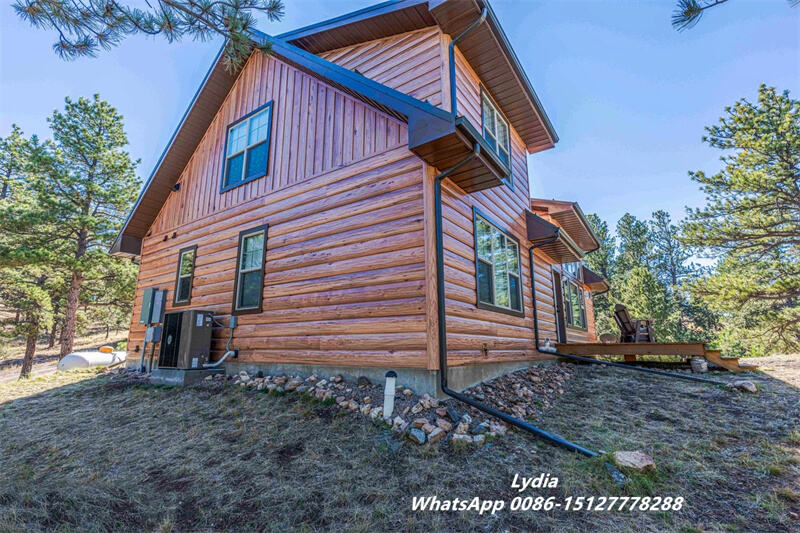
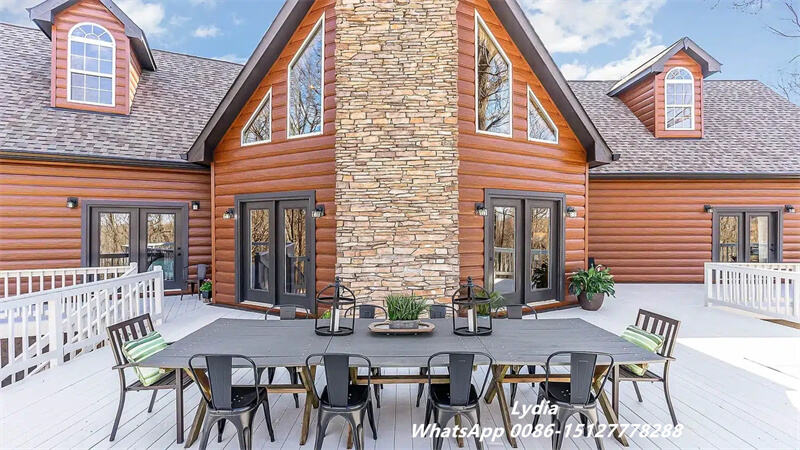
Applications of TerraLog 100 Steel Log Siding
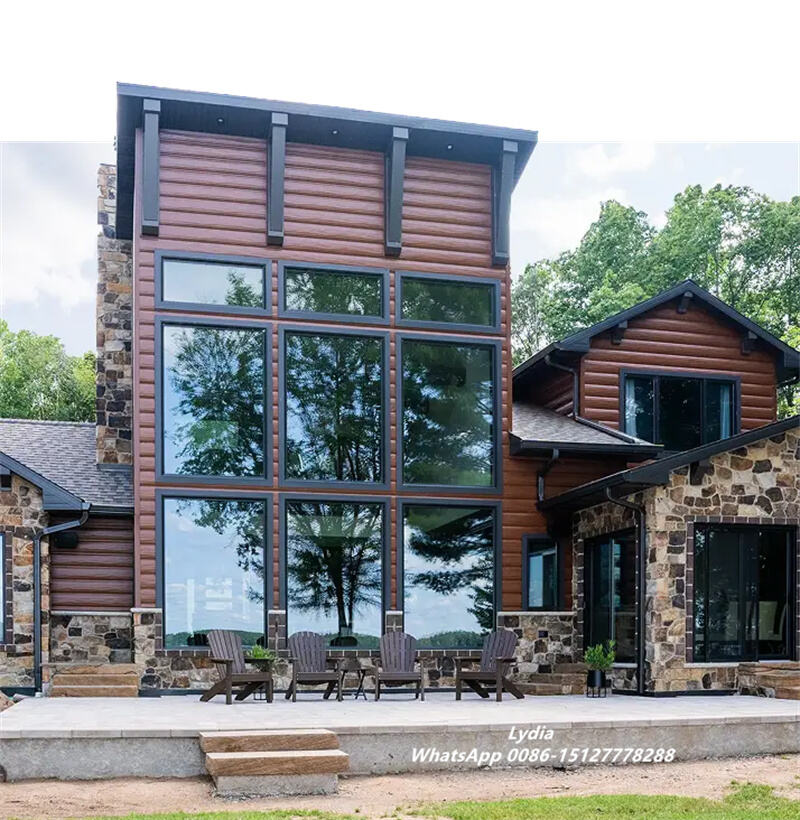
The finished TerraLog 100 panels are designed for applications where manufacturers want the appearance of traditional log siding while using a roll-formed steel construction system. The broad rounded faces create visual depth and shadow lines across the exterior, while the steel substrate provides a consistent industrial production method.
Typical applications include residential exteriors, architectural facades, commercial cladding, feature walls, cabins, recreational buildings, and modern rustic-style projects. The double-course geometry can also create a wood-inspired appearance when manufacturers apply a suitable printed grain or decorative finish.
Moreover, the profile’s two broad curved faces allow light and shadow to move across the wall surface, giving the finished building a more dimensional appearance than a conventional flat metal siding panel.
The TerraLog 100 Steel Log Siding Roll Forming Machine therefore combines specialized profile forming with automatic feeding, continuous roll forming, hydraulic cutting, and PLC control. By designing the roller stations around the 354.17 mm formed width, 406 mm feed width, 31 mm profile depth, two 159.7 mm curved faces, and R160 radius, manufacturers can establish a dedicated production line for this distinctive rounded steel log siding profile.
FAQ
1. What material can the TerraLog 100 Steel Log Siding Roll Forming Machine process?
The machine is designed for galvanized or color-coated steel coils. 24ga and 26ga are common material selections for the TerraLog 100 profile. The actual base-metal thickness, coating, and material specification should be confirmed according to the customer’s requirements before production.
2. What is the formed width of the TerraLog 100 steel log siding profile?
The TerraLog 100 profile has a 354.17 mm formed width and a 406 mm feed width. The profile contains two 159.7 mm curved faces, with an approximately R160 curve radius and a 31 mm profile depth.
3. How does the machine form the rounded TerraLog 100 profile?
The machine uses multiple forming stations to gradually shape the steel strip. The rollers progressively develop the two large R160 curved sections while simultaneously forming the center groove and side connection details. This gradual process helps maintain the required profile geometry and reduces deformation during production.
4. What is the production speed of the TerraLog 100 roll forming machine?
The standard machine configuration can operate at approximately 15–22 m/min, depending on the material, profile requirements, cutting length, and final machine configuration. The actual production speed should be confirmed during machine design and testing.
5. Can the TerraLog 100 machine cut panels to a specific length automatically?
Yes. The machine uses an Omron encoder, Delta PLC, and hydraulic cutting system to measure and control the panel length automatically. The four-guide-pillar cutting structure and Cr12 quenched cutter provide stable cutting performance, with a cutting tolerance of approximately ±1.5 mm under suitable operating conditions.


Reviews
There are no reviews yet.