
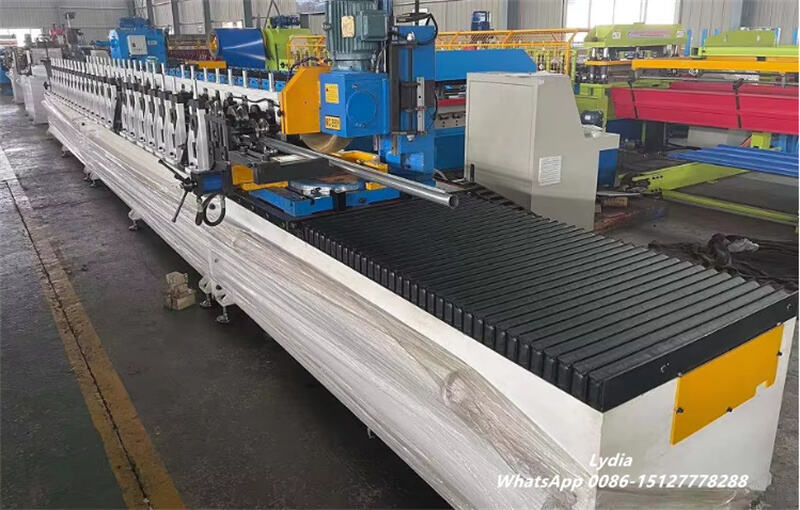

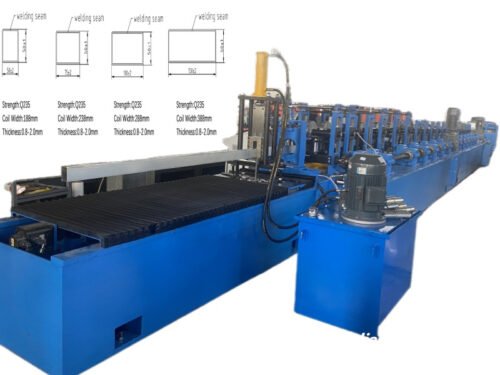
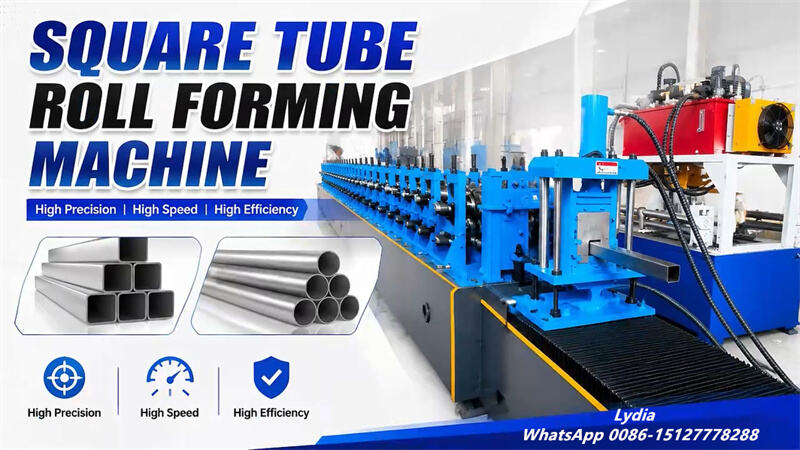
ZTRFM’s Welded Pipe Cold Roll Forming Machine provides a continuous solution for producing galvanized steel tubes, welded pipes, interlock pipes, and customized tubular profiles. The production line gradually forms GI steel strip through multiple forming stations. In addition, the line can integrate leveling, high-frequency welding, sizing, straightening, and automatic cutting according to the final production requirements.
With a 3-ton decoiler, 15 leveling rollers, 120 mm shafts, GCr15 forming rollers, a 400 H steel frame, Siemens motors, automatic Cr12MoV cutting, and PLC control, this metal tube making machine delivers stable and efficient tube production.
The standard configuration handles GI material from 0.4 to 1.2 mm thick. Meanwhile, the forming speed can reach 25 m/min, depending on the tube profile and material thickness.
What Is a Welded Pipe Cold Roll Forming Machine?
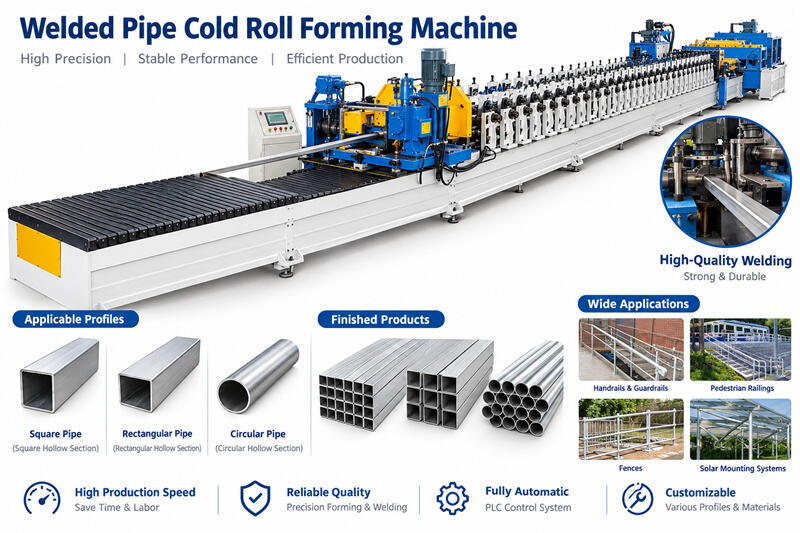
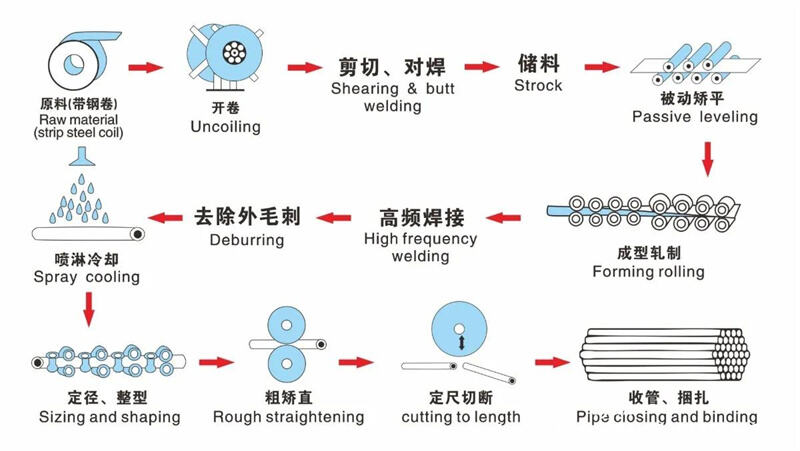
A welded pipe cold roll forming machine continuously feeds steel coil through multiple forming stations. First, the decoiler supplies the GI strip. Next, the leveling section improves material flatness. Then, the forming rollers gradually bend the strip into the required tubular shape.
For a complete welded tube production line, the production process can include:
GI Coil → Uncoiling → Leveling → Roll Forming → High-Frequency Welding → Deburring → Sizing → Straightening → Cutting → Finished Pipe
This continuous process allows manufacturers to produce long lengths of steel tube efficiently. Furthermore, automatic cutting reduces manual handling and helps maintain consistent production lengths.
As a result, manufacturers can improve production efficiency while reducing unnecessary manual operations.
Customized Tube Profiles for Different Applications
Different applications require different tube shapes. Therefore, ZTRFM develops the forming rollers according to the customer’s specific profile drawing.
For example, the machine can produce different tubular or special-shaped profiles, including:
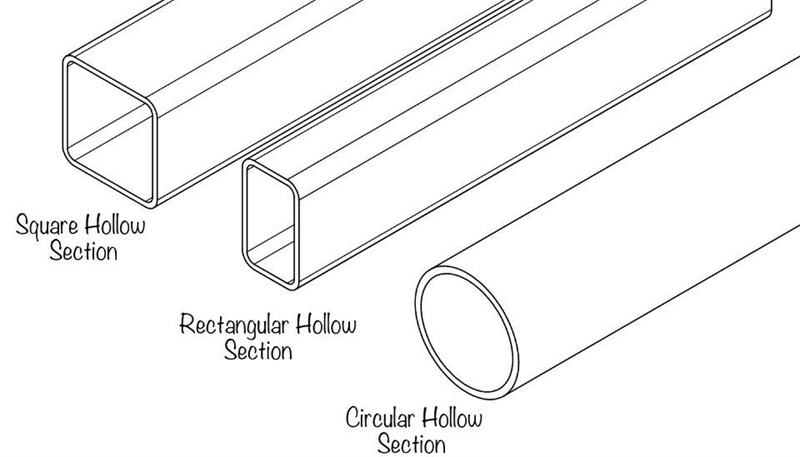
- Round tubes
- Square tubes
- Rectangular tubes
- Oval tubes
- Interlock pipes
- Special-shaped tubes
- Customized structural profiles
The final roller design depends on the tube width, height, diameter, corner radius, material thickness, and forming requirements.
In addition, customers can send ZTRFM their tube profile drawing before placing an order. Our engineers can then evaluate the profile and recommend a suitable forming process.
For customized projects, this step helps prevent unnecessary tooling changes later. Therefore, we recommend confirming the tube drawing before machine production.
3-Ton Decoiler for Continuous Coil Feeding
The production line uses a 3-ton decoiler to feed GI steel coil continuously.
First, the operator loads the coil onto the decoiler. Then, the decoiler releases the strip at a controlled rate. The material subsequently enters the leveling and forming sections.
Stable coil feeding plays an important role in continuous production. If the material feeds unevenly, the forming section may experience alignment problems. Therefore, a properly matched decoiler helps maintain stable material flow.
According to the confirmed configuration, ZTRFM can also provide a 3-ton manual decoiler as a supporting unit.
Before production, customers should confirm the coil weight, inner diameter, outer diameter, and strip width. In this way, we can match the decoiler with the customer’s raw material.
15 Leveling Rollers for Stable Material Feeding
Before the GI strip enters the forming section, it passes through 15 leveling rollers.
The leveling rollers gradually correct coil curvature and improve the flatness of the material. Consequently, the forming section receives a more stable strip.
This step becomes particularly important when manufacturers process thinner GI material. For material between 0.4 and 1.2 mm, controlled feeding can help reduce unwanted deformation during forming.
Moreover, stable material preparation improves the consistency of the finished tube.
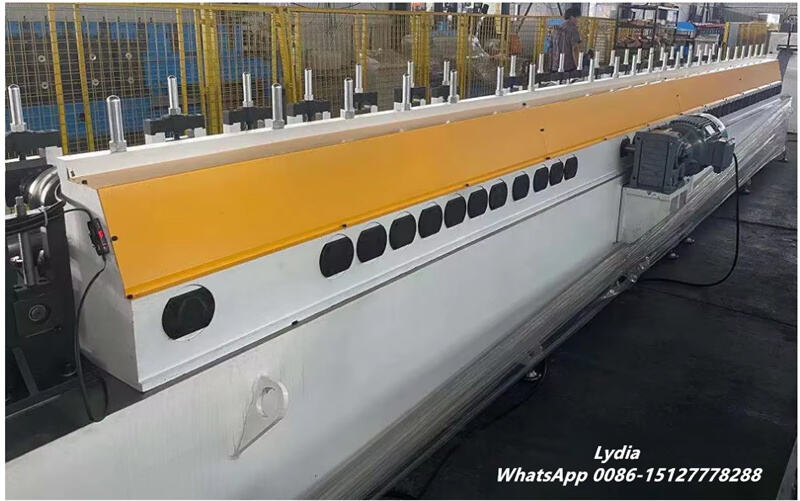
GCr15 Forming Rollers and 120 mm Shafts
The main forming section uses GCr15 forming rollers and 120 mm shafts.
During cold roll forming, the machine does not force the strip into its final shape in one step. Instead, each roller station gradually bends the material. As the strip moves forward, the profile slowly approaches its final dimensions.
GCr15 provides good hardness and wear resistance for repeated forming operations. Meanwhile, the 120 mm shafts provide strong support for the forming rollers.
Therefore, the combination of GCr15 rollers and large-diameter shafts helps the machine maintain stable forming performance during continuous production.
[Insert Forming Roller Close-Up Here]
Heavy-Duty 400 H Steel Machine Frame
ZTRFM builds the main machine frame with 400 H steel.
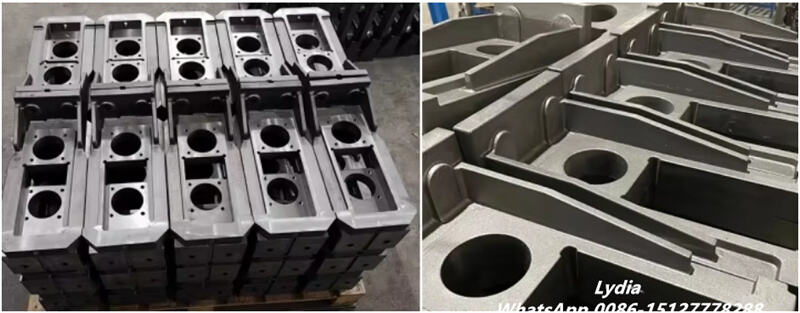
This heavy-duty structure supports the forming stations and helps the machine remain stable during continuous operation. In addition, the rigid frame reduces unnecessary movement between the forming components.
The standard machine has an approximate dimension of:
15,000 × 1,800 × 1,600 mm
The total machine weight reaches approximately 5 tons.
However, ZTRFM can adjust the machine dimensions according to the final tube profile, production configuration, and available factory space.
Gear and Chain Transmission System
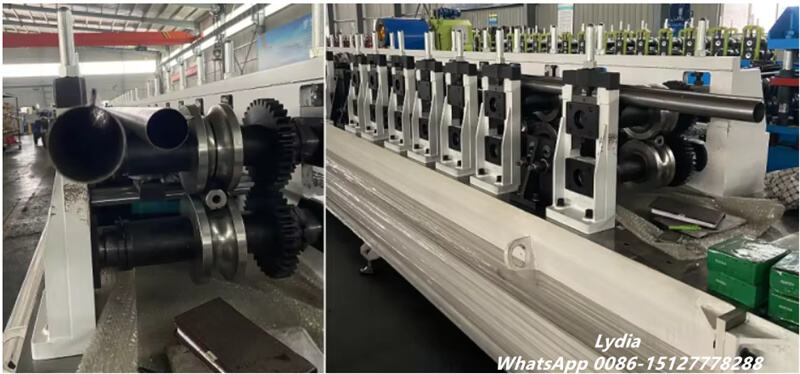
The Welded Pipe Cold Roll Forming Machine uses a gear and chain transmission system to transfer power through the forming section.
The main drive system includes:
- 7.5 kW × 2 main motors
- Siemens motor brand
- Gear and chain transmission
- 120 mm forming shafts
The motors drive the forming system through the transmission components. As a result, the machine can maintain stable power delivery throughout the forming process.
At the same time, the heavy-duty frame and large shafts support the transmission system during continuous production.
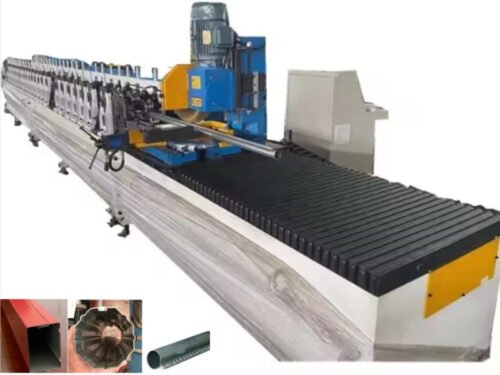
Automatic Cr12MoV Cutting System
After the tube reaches the preset length, the automatic cutting system separates the finished product.
ZTRFM uses Cr12MoV for the cutter because this material offers good hardness and wear resistance.
The PLC control system allows operators to enter the required tube length and production quantity. The machine then performs the cutting operation automatically.
As a result, operators spend less time measuring and manually cutting finished tubes.
The cutting system also helps maintain a clean cutting surface while reducing unnecessary scratches and profile deformation.
Siemens Motor and 15 kW Hydraulic System
The main forming system uses two 7.5 kW Siemens motors.
Therefore, the total main motor power reaches:
7.5 kW × 2 = 15 kW
In addition, the machine uses a separate 15 kW hydraulic system for the relevant hydraulic operations.
Together, these systems provide the power required for continuous forming and automatic production.
Furthermore, customers can discuss electrical requirements with ZTRFM before production. We can then configure the machine according to the customer’s factory power standard.
Up to 25 m/min Forming Speed
The designed forming speed can reach 25 m/min.
However, the actual production speed depends on several factors. These include:
- Material thickness
- Tube dimensions
- Profile shape
- Forming complexity
- Welding requirements
- Cutting length
- Required production accuracy
For example, a simple profile may run faster than a complicated profile with multiple forming steps. Similarly, thicker material may require a lower production speed.
Therefore, ZTRFM recommends confirming the final tube drawing before determining the actual production speed.
Applications of GI Welded Tubes
- GI welded tubes serve many construction, industrial, and fabrication applications. Moreover, manufacturers can customize the tube profile according to different end uses.
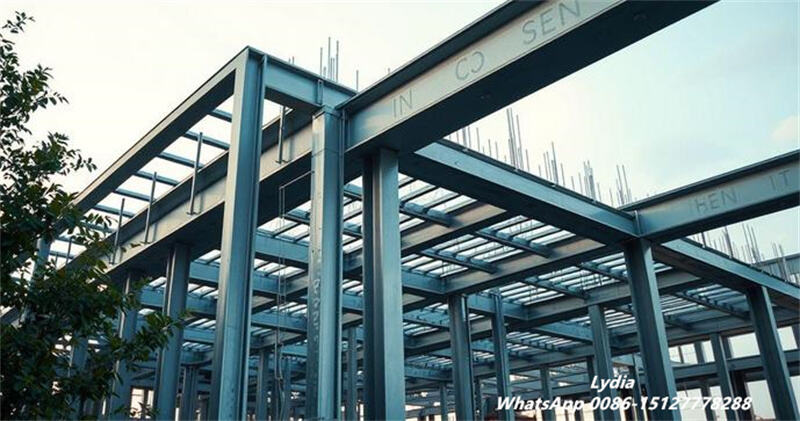
- Construction Structures: Square and rectangular steel tubes provide practical solutions for structural frames, supports, steel buildings, and fabricated construction components.
- Their consistent dimensions also make them convenient for cutting, welding, and assembly.
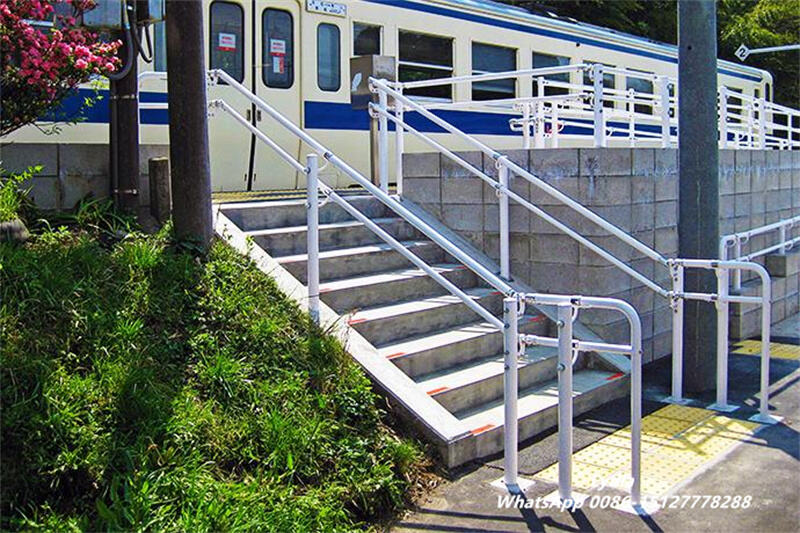
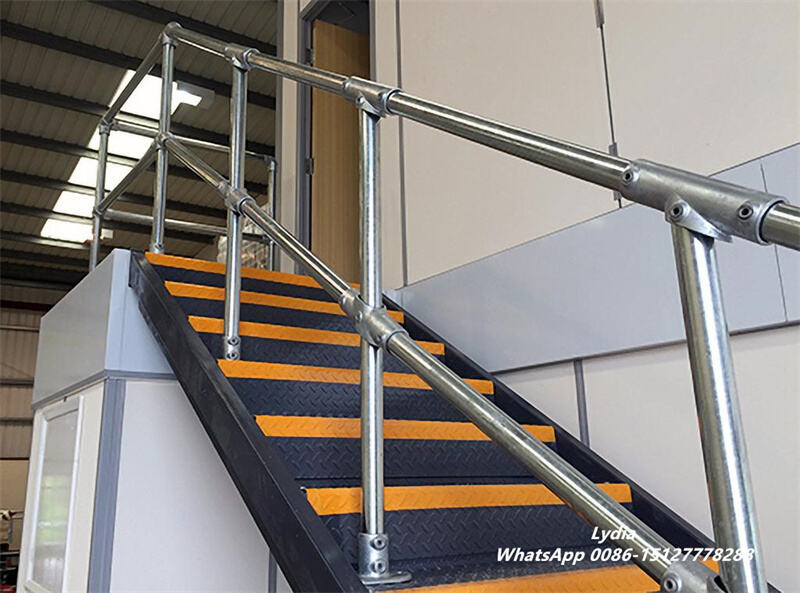
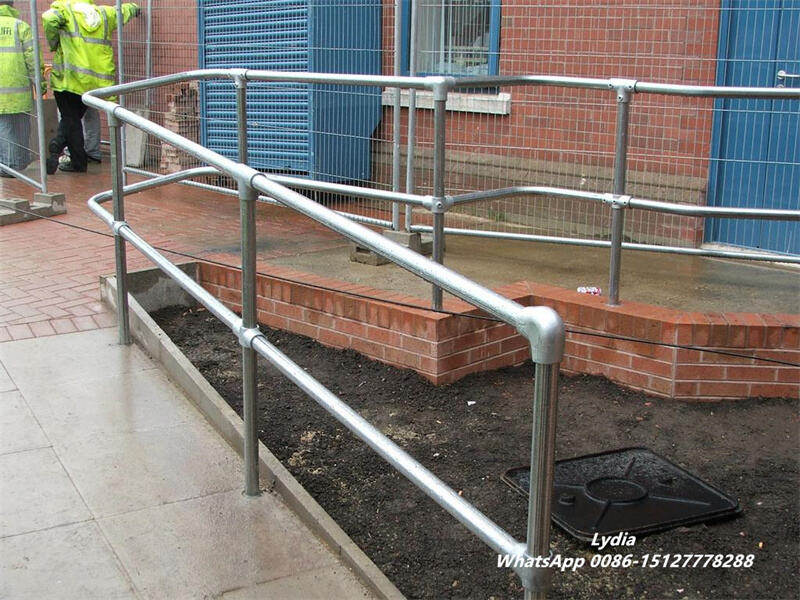
- Railings and Handrails:GI steel tubes work well for stair railings, pedestrian barriers, balcony railings, ramps, and safety handrails.
- For example, tubular profiles can provide both structural support and a clean finished appearance.
- In addition, galvanized surfaces offer useful corrosion resistance for many outdoor applications.
- Greenhouse Structures:Manufacturers also use galvanized tubes for greenhouse frames and agricultural structures.
- The tubular structure provides the required framework, while the galvanized surface helps protect the steel against corrosion.
- Consequently, GI tubes offer a practical option for many outdoor agricultural structures.
- Industrial Equipment and Frames:Customized steel tubes can also form part of machine frames, equipment supports, industrial structures, storage systems, and fabricated components.
- Moreover, manufacturers can design special profiles for applications that require specific dimensions or cross-sectional shapes.
Technical Specifications
| Item | Specification |
|---|---|
| Machine Type | Welded Pipe Cold Roll Forming Machine |
| Formed Material | GI |
| Material Thickness | 0.4–1.2 mm |
| Decoiler | 3 Tons |
| Manual Decoiler | 3 Tons |
| Leveling Rollers | 15 |
| Shaft Diameter | 120 mm |
| Roller Material | GCr15 |
| Machine Frame | 400 H Steel |
| Transmission | Gear and Chain |
| Machine Dimension | 15000 × 1800 × 1600 mm |
| Machine Weight | Approx. 5 Tons |
| Main Motor | 7.5 kW × 2 |
| Motor Brand | Siemens |
| Hydraulic System | 15 kW |
| Cutter | Automatic |
| Cutter Material | Cr12MoV |
| Forming Speed | Up to 25 m/min |
| Standard Voltage | 380V / 50Hz / 3 Phase |
| Control System | PLC |
| Operation Language | English |
| Language Options | Multiple Languages Supported |
FAQ About Welded Pipe Cold Roll Forming Machine
1. What material can this machine process?
The standard configuration processes GI galvanized steel with a thickness range of 0.4–1.2 mm.
2. What is the maximum forming speed?
The designed forming speed can reach 25 m/min. However, the actual speed depends on the tube profile and material thickness.
3. What is the shaft diameter?
The main forming shafts have a diameter of 120 mm.
4. What material do the forming rollers use?
The forming rollers use GCr15 material.
5. What is the main motor power?
The machine uses two 7.5 kW Siemens motors, providing a total main motor power of 15 kW.
Get a Customized Welded Pipe Roll Forming Machine
ZTRFM provides customized Welded Pipe Cold Roll Forming Machines, Metal Tube Making Machines, and GI Tube Roll Forming Machines for different tubular profiles and production requirements.
With 120 mm forming shafts, GCr15 rollers, a 400 H steel frame, 3-ton decoiling, Siemens motors, automatic Cr12MoV cutting, and PLC control, the production line provides a practical solution for continuous GI tube manufacturing.
Furthermore, ZTRFM can customize the forming system according to the customer’s tube profile, material thickness, production speed, and factory requirements.
Send us your tube profile drawing and material specifications. Our engineers can evaluate the profile and recommend a suitable welded pipe roll forming solution for your factory.


Reviews
There are no reviews yet.