
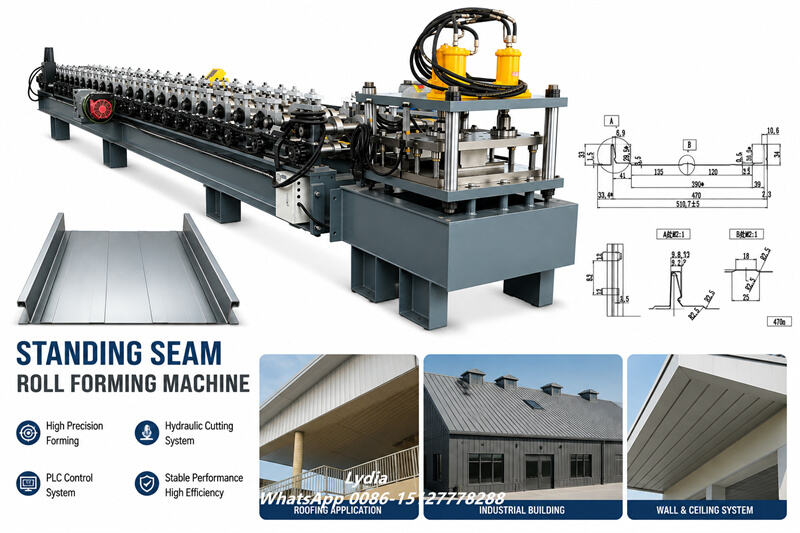

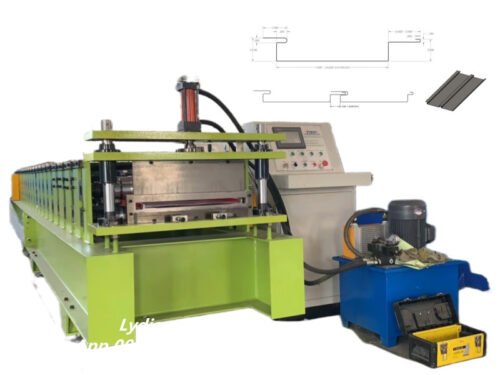
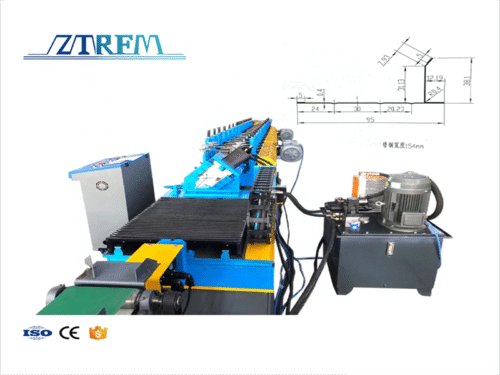
The 12/16 Snap Lock Roof Panel Machine is a specialized roll forming system for manufacturing architectural snap lock metal roofing panels in 12-inch and 16-inch panel widths. It creates continuous panels with an integrated snap-locking edge, allowing installers to connect adjacent panels without seam-closing tools.
Designed for residential buildings, garages, extensions, garden structures, and light commercial projects, this snap lock roof panel machine can process steel, aluminum, and copper. Meanwhile, automatic length control, PLC operation, hydraulic cutting, and precision roll forming help manufacturers achieve consistent panel dimensions and reliable production.
What Is a Snap Lock Roof Panel?
A snap lock roof panel uses an interlocking edge design that allows one panel to snap directly into the next. Unlike traditional mechanically seamed standing seam systems, installers do not need specialized seam-closing equipment to lock the panels together.
The system combines a clean architectural appearance with practical installation. As a result, snap lock roofing works well for homes, commercial buildings, garages, extensions, workshops, and other low- to medium-scale construction projects.
The 12/16 snap lock roofing machine produces panels for eave-to-ridge installation while maintaining the designed profile geometry. Depending on the selected tooling, the machine can manufacture 12-inch or 16-inch wide snap lock panels.
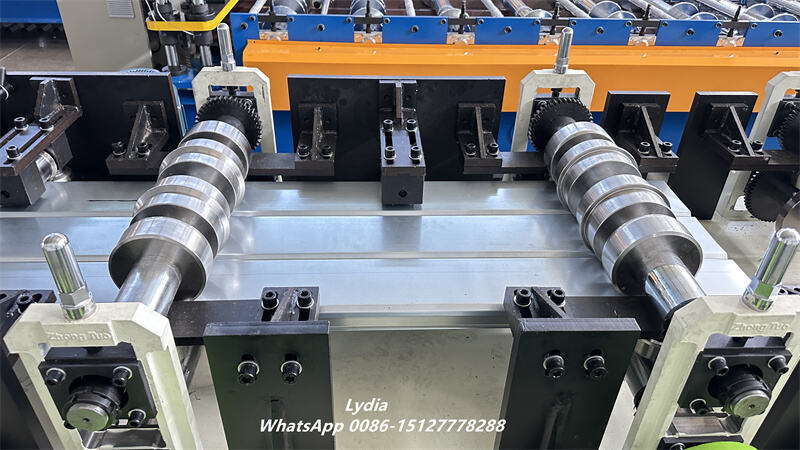
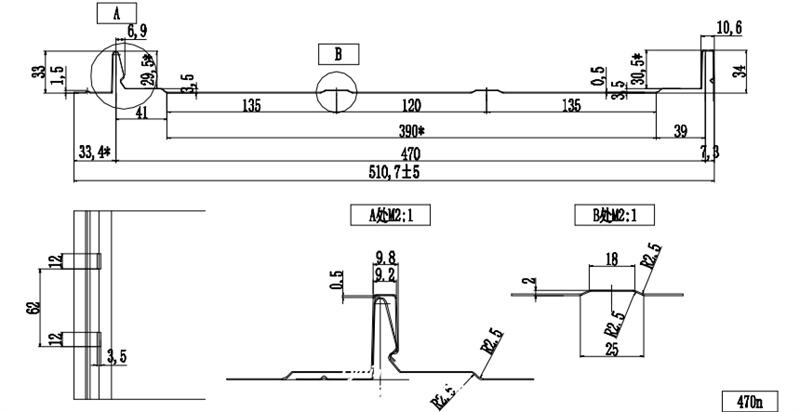
12/16 Snap Lock Roll Forming Machine Production
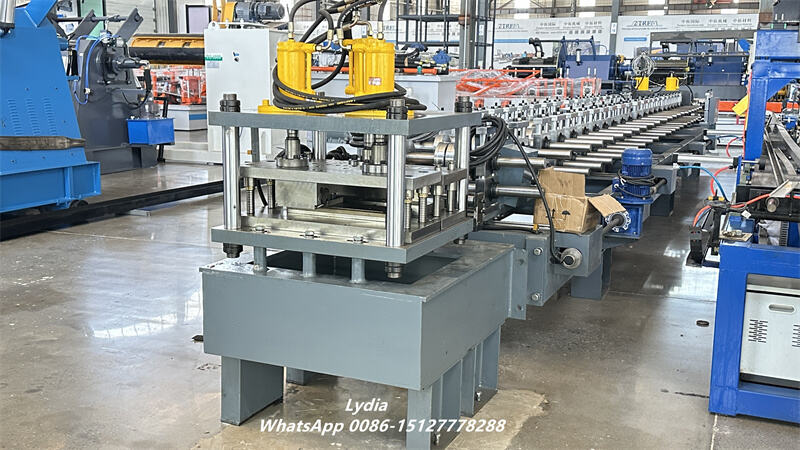
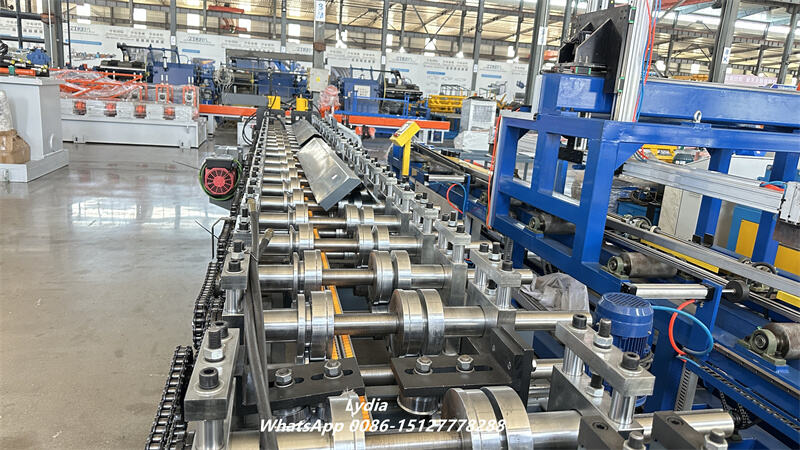
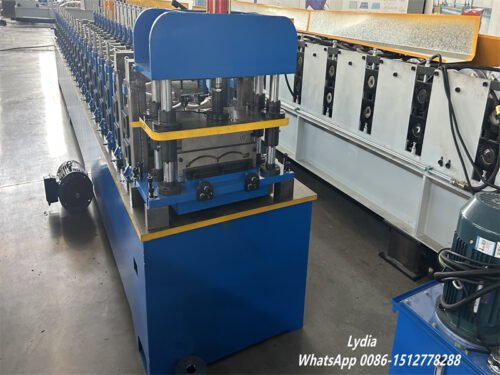
The machine feeds metal coil through a series of forming stations, gradually shaping the flat strip into the finished snap-lock profile. Instead of making the profile in a single operation, each forming roller performs a controlled deformation, which improves dimensional consistency and reduces unnecessary stress on the material.
For greater flexibility, the machine can work with 24–26 gauge steel, 0.027-inch aluminum, and 16 oz copper. The standard configuration also supports coil widths of approximately 16 and 20 inches, depending on the final panel profile.
The production line combines roll forming and cutting functions, while the control system lets operators enter the required panel length through the HMI. The length control system then coordinates the forming and cutting process to produce repeatable panels.
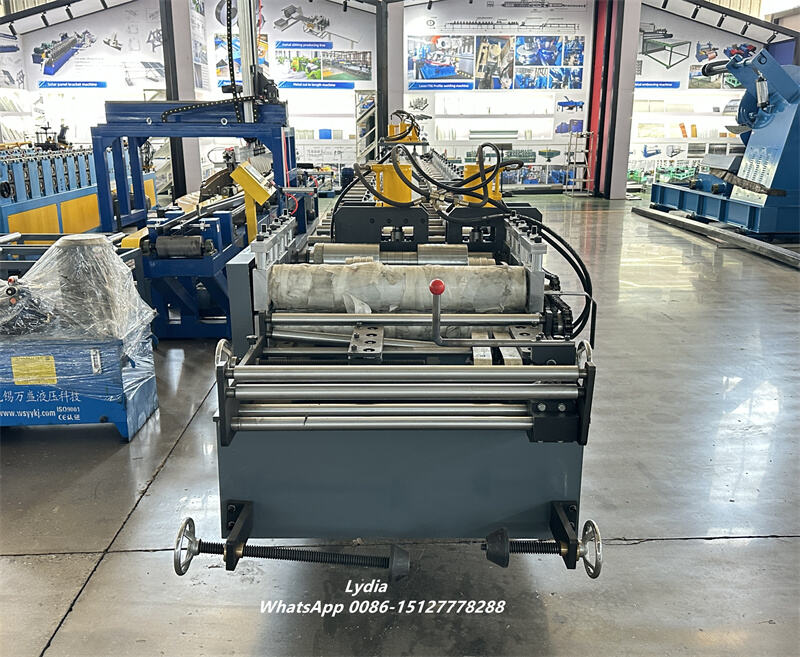
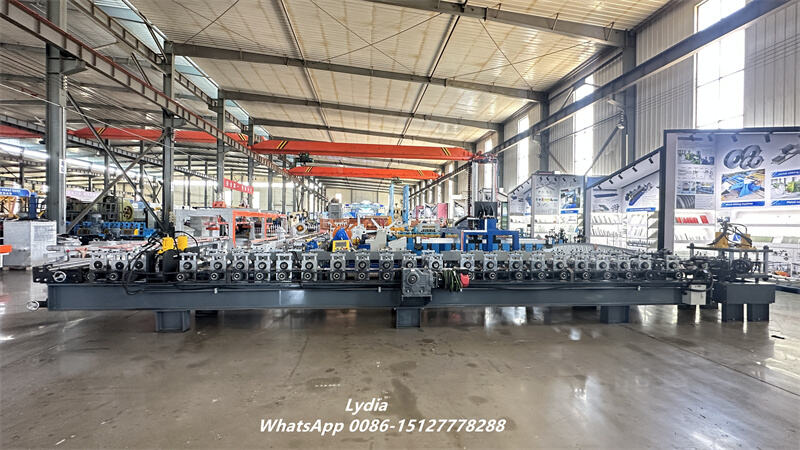
Main Specifications and Configuration
The following specifications combine the key parameters of the 12/16 snap lock machine and a heavier automatic configuration. Exact dimensions, station numbers, power, and coil width can be customized according to the required profile and production speed.
| Item | 12/16 Snap Lock Roof Panel Machine |
|---|---|
| Panel Width | 12 / 16 inches |
| Applicable Materials | Steel, Aluminum, Copper |
| Steel Thickness | 24–26 gauge |
| Aluminum | 0.027 inch |
| Copper | 16 oz |
| Coil Width | 16 / 20 inches, according to profile |
| Forming Stations | 10–15 stations |
| Production Speed | Up to 10.7 m/min for portable configuration; 20–24 m/min for automatic configuration |
| Main Motor Power | 1 HP for portable configuration; approximately 5.5–7.5 kW for automatic configuration |
| Control System | PLC + HMI + Inverter / Servo |
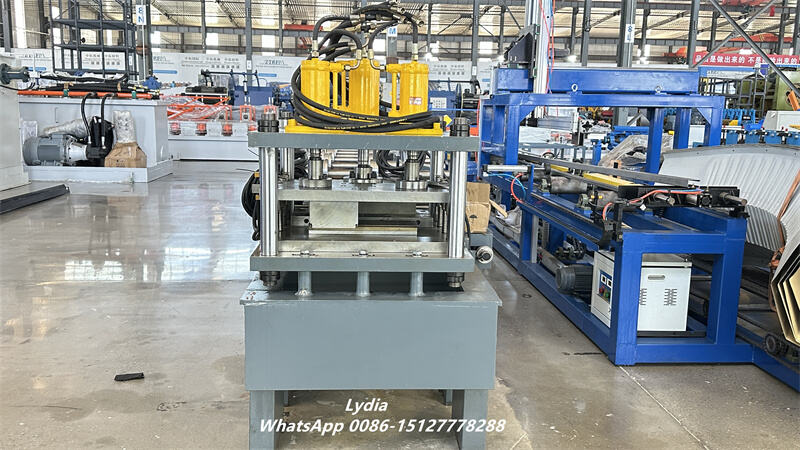
| Cutting | Manual shear or hydraulic automatic cutting |
| Decoiler Capacity | Up to 3,000 lb (1,360 kg) |
| Frame | Heavy-duty steel frame / I-beam structure |
| Machine Length | Approx. 2.39 m for portable configuration; 6.5 m for automatic configuration |
| Machine Width | Approx. 1.04 m for portable configuration; 1.3 m for automatic configuration |
The portable version provides a compact solution for roofing contractors who need to manufacture panels close to the job site. On the other hand, a fully automatic configuration offers higher production efficiency for professional roofing manufacturers and larger projects.
Key Features for Stable Panel Production
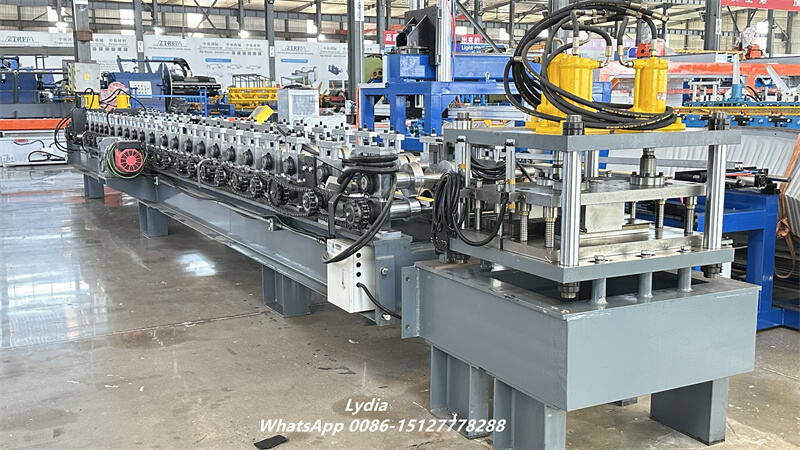
The snap lock roll forming machine uses precision forming rollers to progressively create the required interlocking edges. Industrial hard-chrome-plated rollers improve surface durability and help maintain stable forming performance during continuous operation.
Furthermore, the automatic configuration integrates PLC, HMI, inverter, servo control, and hydraulic cutting. Operators can set the required panel length directly through the touch screen, while the control system manages the production sequence.
The cutting system can use an alloy/SKD11 blade with high hardness for clean and repeatable cutting. Hydraulic components, electrical controls, motors, encoders, and other core components can also be configured with internationally recognized brands according to customer requirements.
For the portable version, the standard configuration includes a manually operated E-Z cut shear, two-reel decoiler with friction brake, automatic screw/nail hole slotter, 10 forming stations, length-control limit switch, and a 40-foot run-out table. Additional options include extra spools, hydraulic shear, cut-to-length control, 220V wiring, 50-cycle wiring, and overseas electrical configurations.
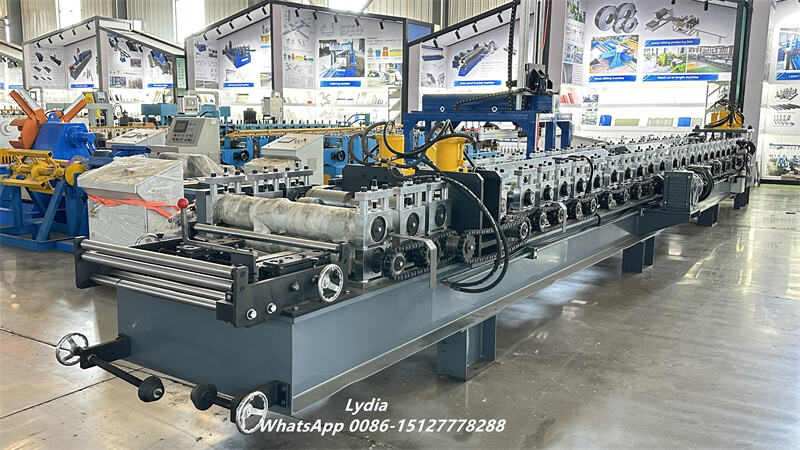
Why Choose a Snap Lock Roofing Machine?
Snap lock roofing provides a practical alternative to traditional standing seam systems because the panels connect through their specially formed edges rather than requiring a separate mechanical seaming operation. Therefore, manufacturers and installers can simplify the installation process while maintaining a clean architectural finish.
At the same time, roll forming allows the machine to produce long, continuous panels that reduce the number of horizontal joints on the roof. This approach works particularly well for eave-to-ridge applications where consistent panel geometry matters.
The 12/16 Snap Lock Roof Panel Machine also gives manufacturers greater product flexibility. By changing or customizing the forming tooling, the equipment can be adapted to different panel profiles, dimensions, materials, and locking configurations. This makes it suitable for roofing companies serving different architectural and construction requirements.
Applications and Customization Options
Snap lock panels produced by this machine can serve a wide range of construction applications, including residential roofs, light commercial buildings, garages, workshops, garden buildings, extensions, and architectural roofing projects.
Zhongtuo can customize the machine according to the customer’s profile drawing, material, thickness, panel width, punching requirements, production speed, and automation level. For projects that require screw or nail holes, an automatic slotting system can be integrated into the production line. For higher-output applications, manufacturers can select automatic hydraulic cutting, servo feeding, programmable length control, and other upgraded functions.
Overall, the 12/16 Snap Lock Roof Panel Machine combines accurate profile forming, flexible material compatibility, programmable control, and practical snap-lock panel production. Whether you need a portable machine for on-site roofing work or a fully automatic production line for factory manufacturing, Zhongtuo can develop a configuration around your required snap lock roof profile.

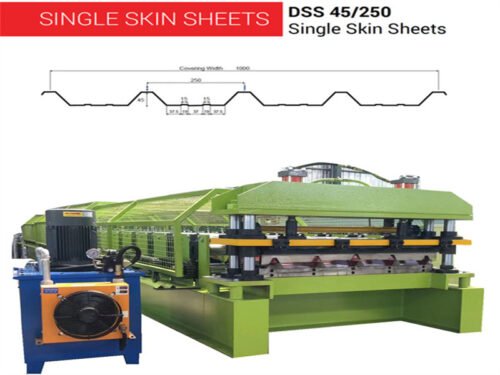
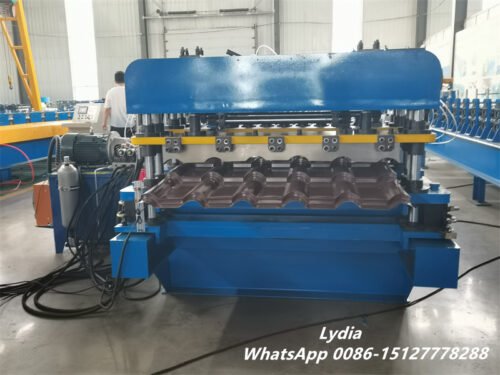
For manufacturers looking to expand their metal roofing product range, the 12/16 Snap Lock Roof Panel Machine can be combined with other roofing roll forming solutions. For example, a Standing Seam Roof Panel Machine is suitable for producing concealed-fastener standing seam panels, while a Roofing Sheet Roll Forming Machine can manufacture traditional corrugated and trapezoidal roof sheets for residential and commercial buildings. In addition, a Metal Roof Tile Roll Forming Machine provides an efficient solution for producing tile-shaped roofing profiles with an architectural appearance.
For projects requiring integrated roof accessories, manufacturers can also consider a Ridge Cap Roll Forming Machine, Roof Flashing Roll Forming Machine, or Roof Drip Edge Roll Forming Machine. These machines help complete the roofing profile range and allow customers to build a more comprehensive metal roofing production line.


Reviews
There are no reviews yet.