
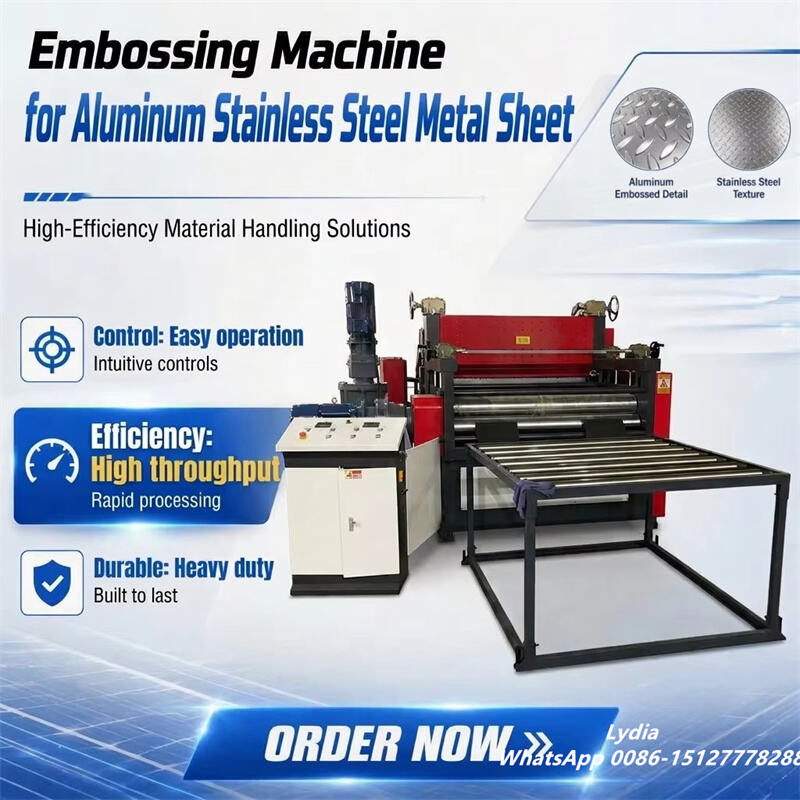

The Heavy Duty Coil Embossing Machine from Zhongtuo is an integrated production line for continuously embossing, leveling, cutting, conveying, and stacking thick metal sheets. It is designed for carbon steel, hot rolled steel, cold rolled steel, and HDG sheets, with a profile capacity of up to 3 mm × 1600 mm.
Unlike a basic standalone embossing machine, this complete line combines a hydraulic uncoiler, heavy-duty embossing unit, leveler, side guide system, servo fixed-length device, cut-to-length shear, conveyor, and automatic stacker. As a result, manufacturers can move from coil loading to finished sheet stacking through one continuous workflow.
The embossing section uses integrally forged 42CrMo rollers with CNC-engraved patterns and HRC58–60 hardness. The roller gap and embossing pressure can be adjusted according to the material and required pattern depth, while the frequency-controlled 15 kW drive provides stable forming performance at 3–6 m/min.
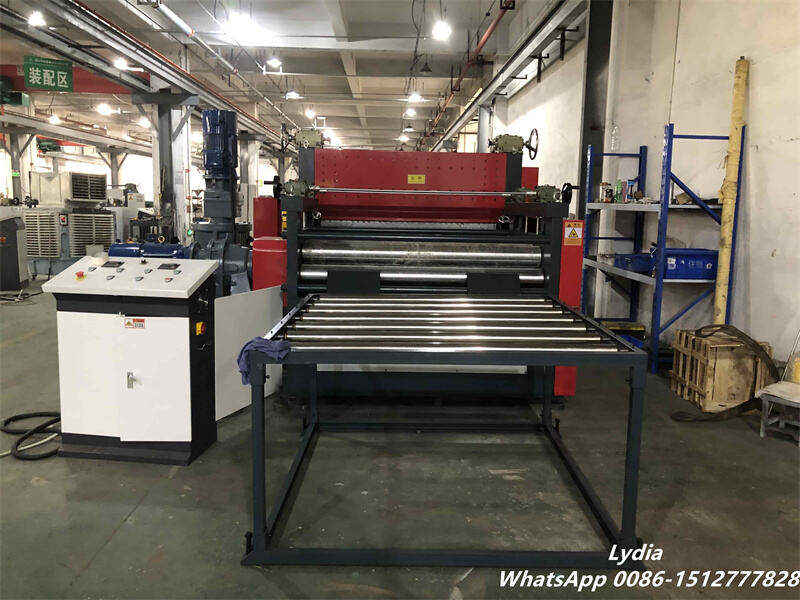
Heavy-Duty Coil Embossing Line for Continuous Sheet Production
This production line is developed for customers who need to convert wide steel coils into textured, leveled, and accurately cut sheets. The standard working sequence is:
Decoiler → Embossing Machine → Leveling Machine → Side Guide → Fixed-Length System → Cut-to-Length Shear → Conveyor → Stacker
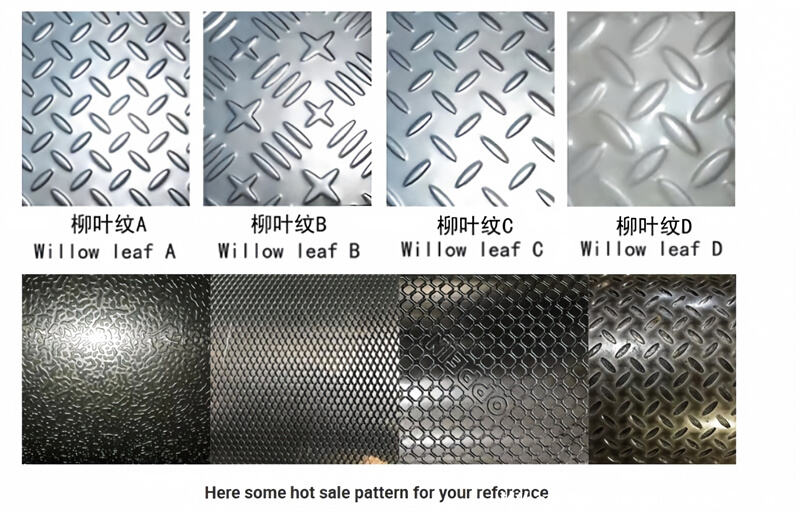
The line accepts material widths from the uncoiler within its designed range and forms sheets up to 1600 mm wide. During production, the embossing rollers create the required willow leaf pattern before the leveling section corrects deformation and improves sheet flatness.
Next, the servo-driven fixed-length system positions the sheet for cutting. The gate-type mechanical shear then cuts each sheet to the specified length. Finally, the conveyor transfers the finished sheets to the stacking unit, which arranges them into an orderly pile for easy handling and transportation.
This integrated configuration reduces manual material handling and creates a smoother transition between each processing stage.
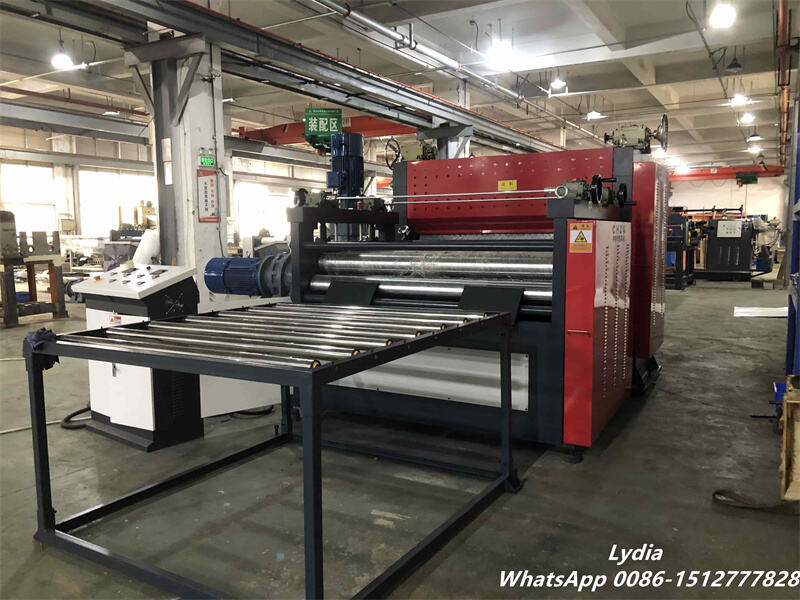
Technical Specifications of the Embossing Production Line
The following specifications summarize the main production capabilities and equipment configuration.
| Item | Specification |
|---|---|
| Profile Dimension | 3 mm × 1600 mm |
| Applicable Material | Carbon steel, hot rolled steel sheet, HR, CR, HDG |
| Embossing Material Thickness | 0.8–3.0 mm |
| Maximum Sheet Width | 1600 mm |
| Productivity | 3–6 m/min |
| Embossing Pattern | Willow leaf pattern |
| Pattern Depth | 1–2 mm, adjustable |
| Embossing Roller | Ø500 × 1600 mm |
| Roller Material | 42CrMo |
| Roller Hardness | HRC58–60 |
| Embossing Drive | 15 kW / 380 V / 50 Hz |
| Leveling Rollers | 9 × Ø120 × 1600 mm |
| Stacker Range | 1–4 m |
| Stacker Maximum Load | 5 tons |
| Working Flow | Decoiler → Embossing → Leveling → CTL → Conveyor → Stacker |
The line can also be configured for different electrical standards and production requirements. For example, the embossing drive voltage can be customized according to the installation location.
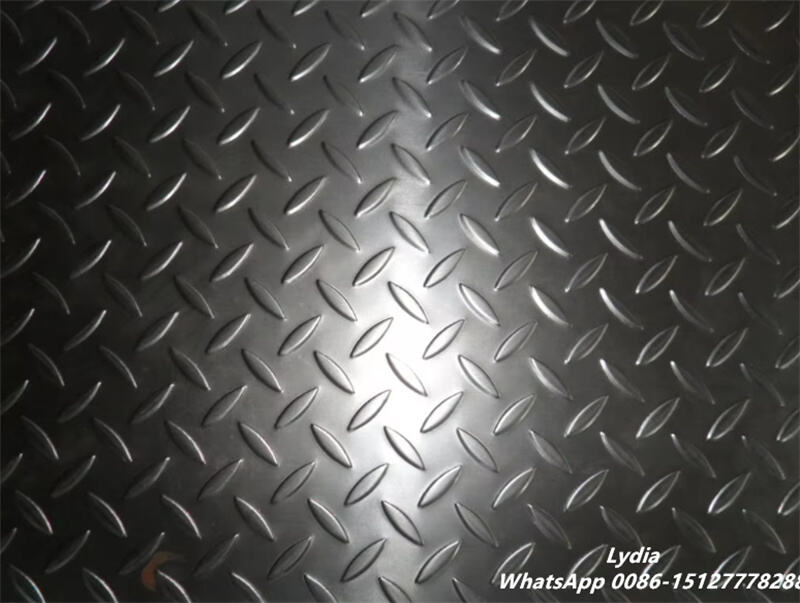
Hydraulic Uncoiler and Heavy-Duty Embossing System
At the front of the line, the hydraulic loading trolley makes coil handling safer and more convenient. Its V-shaped support securely holds the coil while two hydraulic cylinders lift it into alignment with the uncoiler spindle. A hydraulic motor then moves the trolley along its 2.5 m rail and positions the coil for feeding.
The cantilever hydraulic uncoiler uses an expanding and shrinking mandrel with a hydraulic expansion mechanism. It accommodates coils with an inner diameter of 508 mm and an outer diameter of up to 1800 mm, while the rated loading capacity reaches 15 tons. The applicable coil width is 800–1600 mm. A swing-arm press roller and hydraulic support arm help maintain stable material feeding.
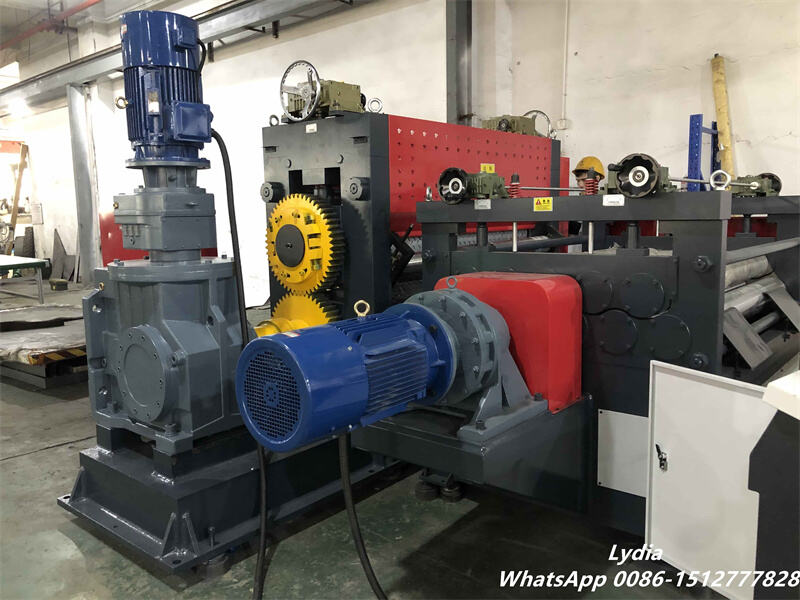
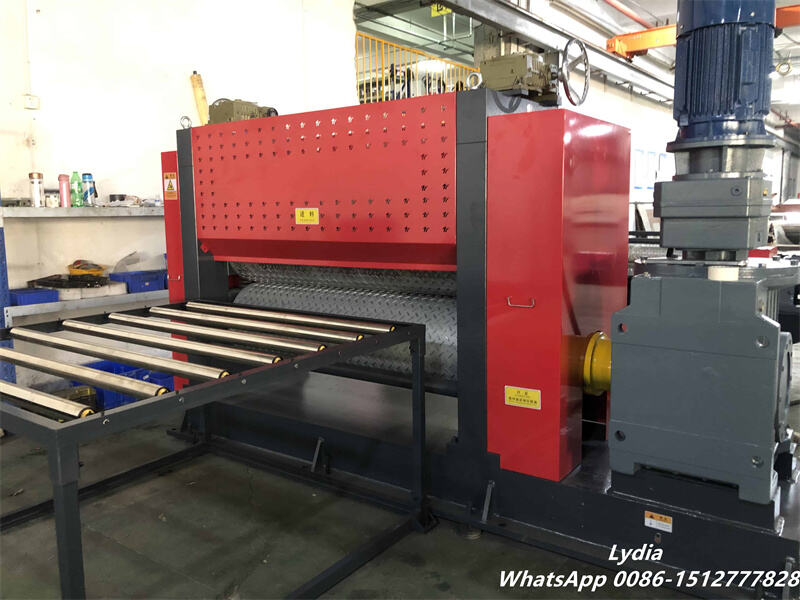
After decoiling, the sheet enters the main embossing unit. The machine uses Ø500 × 1600 mm integral-forged 42CrMo embossing rollers. The roller bodies undergo intermediate-frequency quenching, reaching HRC58–60 hardness for improved wear resistance during continuous operation. Zhongtuo can also manufacture the roller pattern according to customer drawings using CNC engraving.
The embossing gap is adjustable, and the detachable flower roller design allows the roller to be replaced when customers require another pattern. A 15 kW frequency-conversion motor and cycloid reducer provide the torque required for embossing thicker steel sheets. Meanwhile, frequency conversion allows operators to adjust the production speed within the working range of 3–6 m/min.
Leveling, Cut-to-Length and Automatic Stacking
After embossing, the sheet passes through the 9-roll leveling machine. Its Ø120 × 1600 mm leveling rollers use forged 45# steel and chrome-plated surfaces. The 15 kW drive works with the rigid steel-plate frame to provide stable sheet correction after embossing.
The vertical side guide rollers then keep the strip aligned with the reference position. Operators can adjust the guide width from 100 to 1600 mm through the screw-and-handwheel mechanism, helping prevent lateral deviation during subsequent processing.
For length control, the fixed-length rubber roller uses an AC servo motor and a nylon-rubber-covered roller surface. The increased friction between the roller and sheet helps reduce slipping during positioning. The system therefore provides more consistent sheet positioning before cutting.
The down-cutting gate-type mechanical shear uses a 7.5 kW drive motor together with adjustable blade clearance. Its cutting structure helps keep the cutting burr on the upper side, reducing the possibility of the burr scratching previously cut sheets when they are stacked.
Finally, the 4000 × 1600 mm conveyor transfers the cut sheets toward the stacking section. The automatic stacker combines a stacking platform, pneumatic pushing mechanism, width adjustment system, moving motor, and track. It can handle sheets from 1 to 4 m and supports a maximum stacking load of 5 tons. The stacking system can operate at 15–20 m/min without embossing, providing an efficient solution for organizing finished sheets.
Why Choose This Heavy Duty Coil Embossing Machine?
This complete embossing and cut-to-length line combines heavy-duty forming capability with automated material handling. The 42CrMo integral-forged embossing rollers, hardened to HRC58–60, provide the durability required for repeated processing. At the same time, adjustable roller gaps and embossing depth allow manufacturers to adapt the forming conditions to different steel specifications.
Furthermore, the production line does more than create a surface pattern. The integrated leveling, guiding, length positioning, cutting, conveying, and stacking systems help transform steel coils into finished sheets with fewer manual handling steps.
The machine is suitable for manufacturers producing embossed steel panels, textured metal sheets, industrial flooring, construction components, decorative panels, and other fabricated steel products. Zhongtuo can also customize the embossing roller pattern and electrical configuration according to the customer’s drawings, material, sheet width, thickness, and production requirements.
For a complete production solution, this heavy-duty coil embossing machine provides a practical combination of continuous embossing, accurate leveling, cut-to-length processing, and automatic stacking.
Frequently Asked Questions
1. What materials can the heavy duty coil embossing machine process?
The machine is designed for carbon steel, hot rolled steel, cold rolled steel, and HDG sheets. The embossing section can process material from 0.8 to 3.0 mm thick and up to 1600 mm wide.
2. What is the production speed of the coil embossing machine?
The standard embossing speed is 3–6 m/min, depending on the material thickness, embossing depth, pattern, and production requirements. The speed can be adjusted through the frequency conversion system.
3. What embossing patterns can the machine produce?
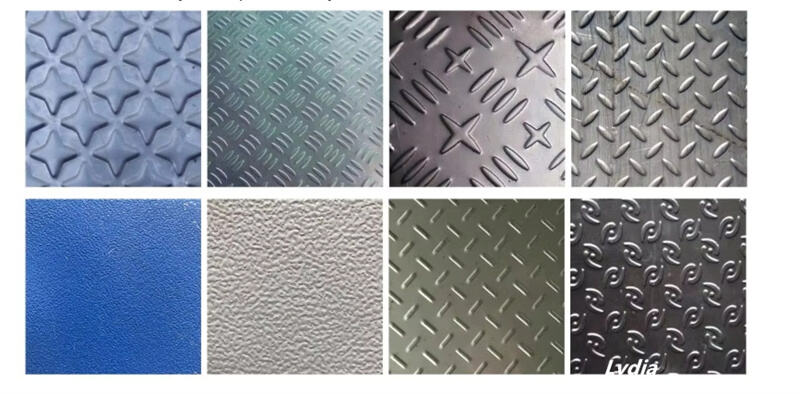
The standard configuration uses a willow leaf pattern with an adjustable embossing depth of approximately 1–2 mm. Zhongtuo can manufacture the embossing rollers according to the customer’s drawings and required pattern.
4. How durable are the embossing rollers?
The embossing rollers are made from integrally forged 42CrMo alloy steel. After intermediate-frequency quenching, the roller hardness reaches HRC58–60. CNC engraving and the heavy-duty roller construction help maintain consistent patterns during continuous production.
5. Can the machine automatically cut and stack the embossed sheets?
Yes. The complete line integrates leveling, side guiding, fixed-length positioning, cut-to-length shearing, conveying, and stacking after embossing. The stacker can handle finished sheets from 1–4 m and has a maximum load capacity of 5 tons, reducing manual handling during production.

Reviews
There are no reviews yet.