
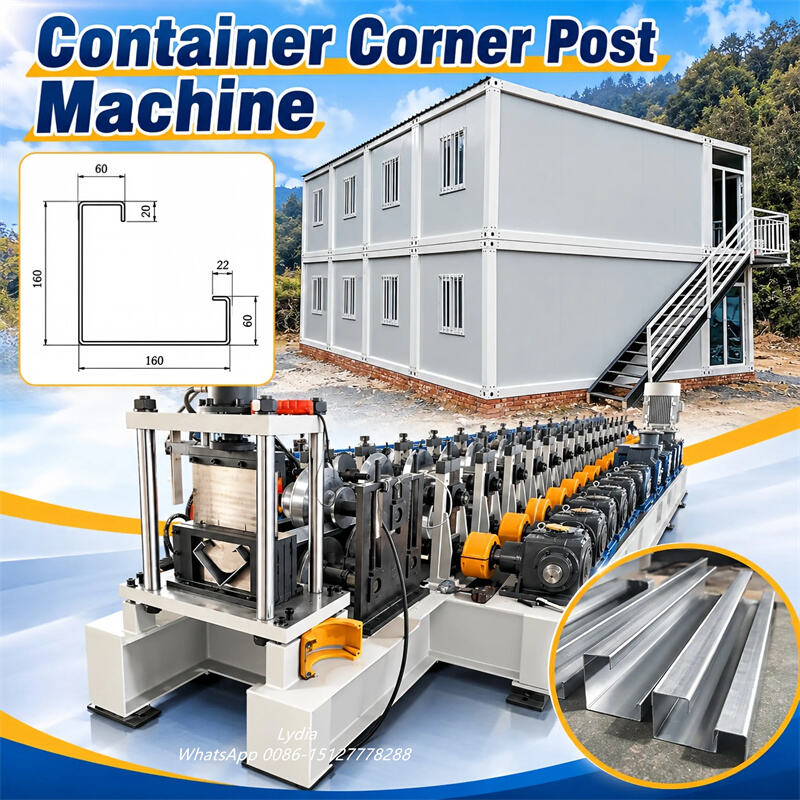
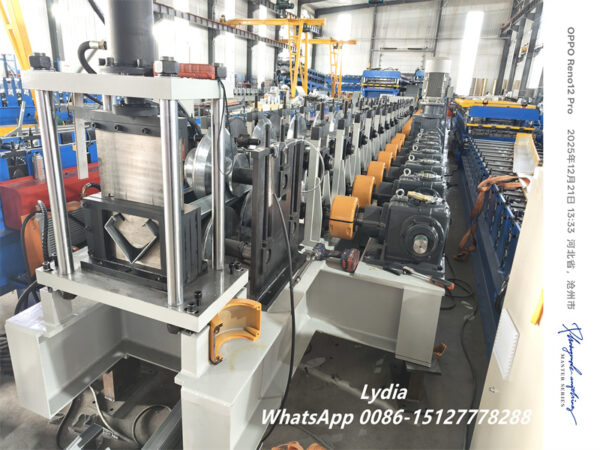
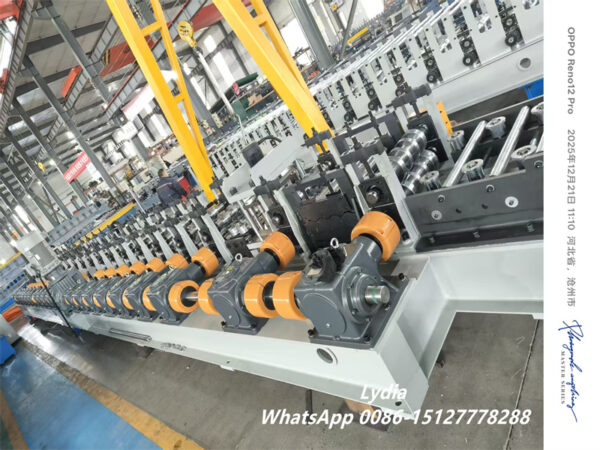
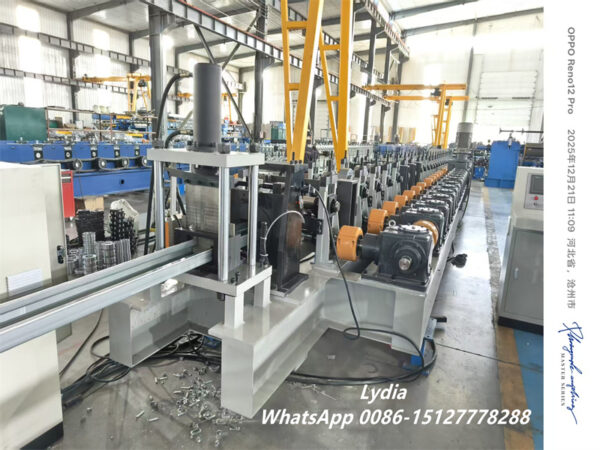
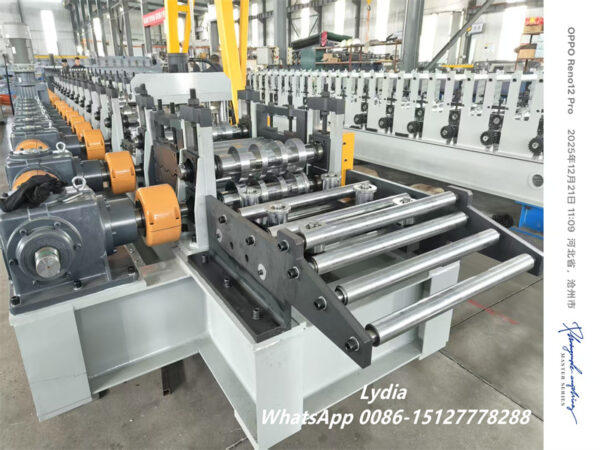
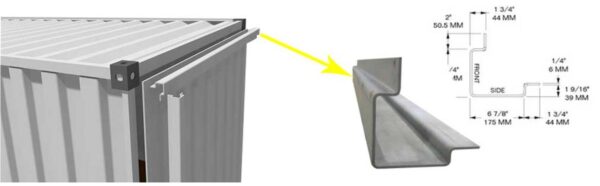
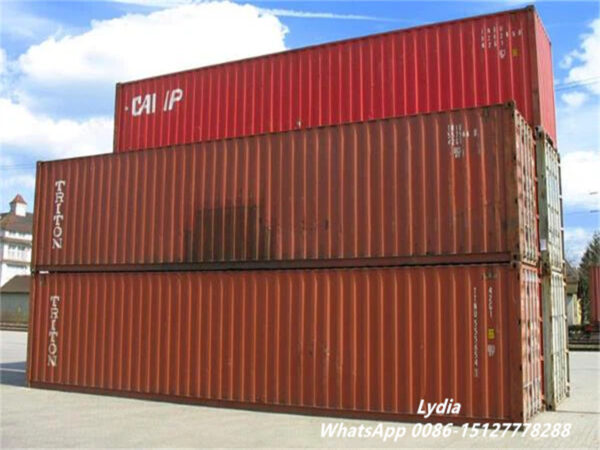
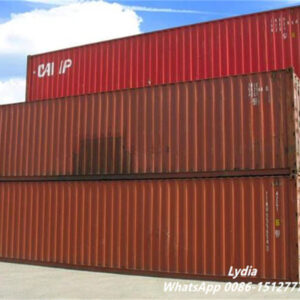

A container corner post is one of the most important structural components in a shipping container. It connects the corner fittings with the container frame and helps the container withstand stacking, lifting, securing, and transportation loads. Because manufacturers need these profiles to maintain strict dimensional accuracy and consistent strength, a dedicated Container Corner Post Roll Forming Machine provides an efficient way to produce them continuously.
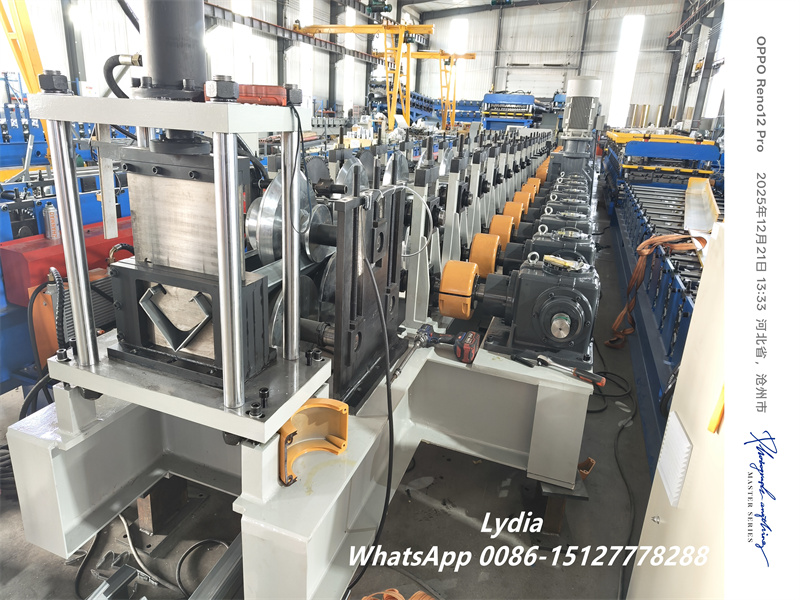
ZTRFM designs container corner post roll forming lines for manufacturers, container repair companies, and steel fabrication facilities. The production line combines decoiling, roll forming, hydraulic cutting, and electrical control into one streamlined system. As a result, operators can produce consistent corner post profiles while reducing manual fabrication work.
What Is a Container Corner Post?
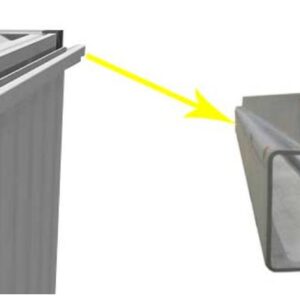
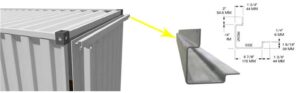
The container corner post is a vertical steel member positioned at each corner of a shipping container. Together with the top and bottom rails and corner fittings, it forms an important part of the container’s structural framework.
During transportation, the posts perform several critical functions. They transfer loads when containers are stacked, provide structural support during lifting, and help maintain the overall shape of the container. In addition, corner fittings connected to the posts allow cranes, twist locks, trailers, railway equipment, and other handling systems to securely move and position containers.
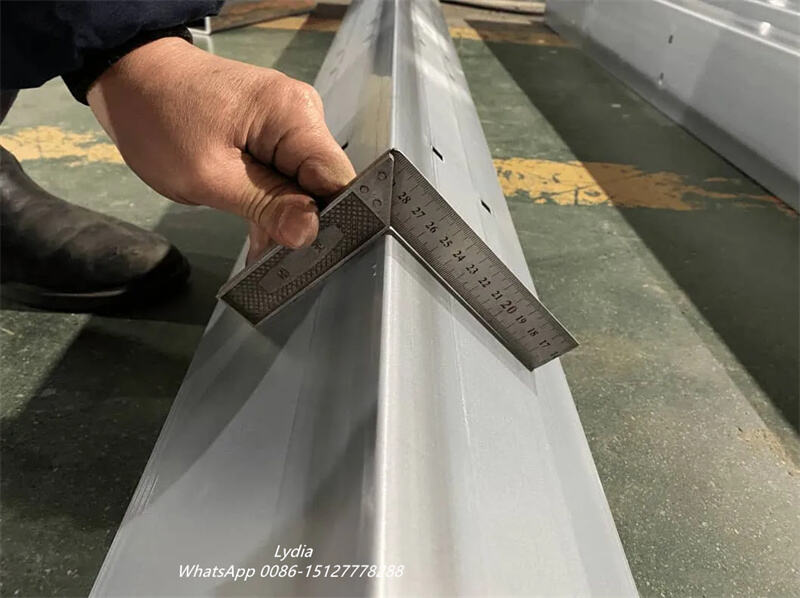
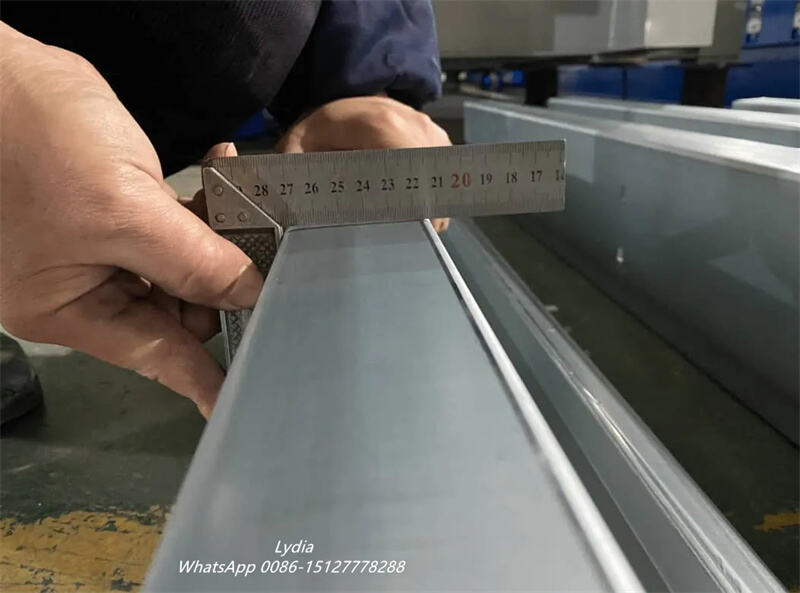
For this reason, corner posts require more than simple dimensional consistency. The finished profile must have a stable cross-section, accurate forming angles, and sufficient structural strength for demanding container applications.
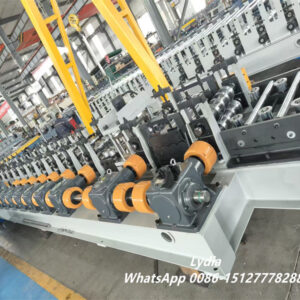
The Container Corner Post Roll Forming Machine continuously forms galvanized or carbon steel strips into the required profile. Compared with conventional cutting and welding methods, roll forming offers a more consistent production process and can significantly improve repeatability.
High-Strength Steel Forming for Container Applications
Container corner posts commonly use steel with a relatively high strength and require reliable dimensional control. The machine can be configured according to the customer’s material specification, profile geometry, thickness, and production requirements.
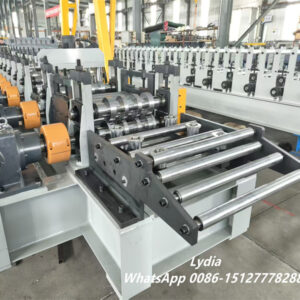
For example, a typical production configuration can use 2.0 mm galvanized steel or carbon steel and operate at approximately 10–15 m/min. The forming section gradually bends the strip through multiple roller stations instead of creating the final shape in a single operation. Therefore, the machine can achieve a controlled forming process while minimizing unnecessary deformation.
For container manufacturing and maintenance applications, the production line can also be customized for different post lengths and profile designs. This flexibility makes the equipment suitable not only for new container production but also for container repair and replacement operations.
Typical Machine Specifications
| Item | Specification |
|---|---|
| Product | Container Corner Post |
| Raw Material | Galvanized Steel / Carbon Steel |
| Material Thickness | Approx. 2.0 mm |
| Working Speed | 10–15 m/min |
| Roller Stations | 20 stations |
| Roller Material | GCr15, heat treated, HRC58–62 |
| Roller Shaft Diameter | Φ75 mm |
| Shaft Material | 45# steel, quenched and tempered |
| Main Motor | 15 kW |
| Transmission | Chain transmission |
| Machine Frame | Welded steel plate |
| Roller Support | Wall-panel structure |
| Working Area | Approx. 15,000 × 1,200 mm |
Actual specifications can be adjusted according to the required corner post profile, material, production speed, and container design.
How the Container Corner Post Roll Forming Line Works
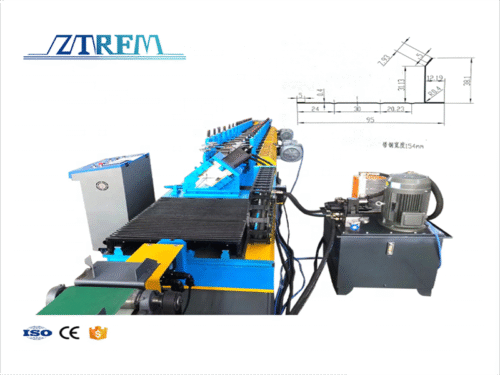
The production process begins with the steel coil. A manual decoiler holds and feeds the raw material into the forming section. After entering the machine, the strip passes through a series of precision rollers. Each roller station performs a controlled forming step, gradually developing the required corner post geometry.
Next, the hydraulic cutting system cuts the formed profile to the programmed length. Depending on the final design, manufacturers can also integrate punching or other processing equipment into the production line.
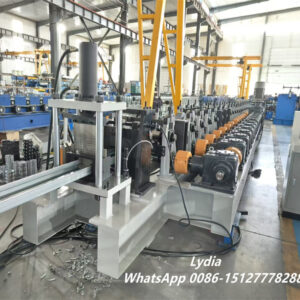
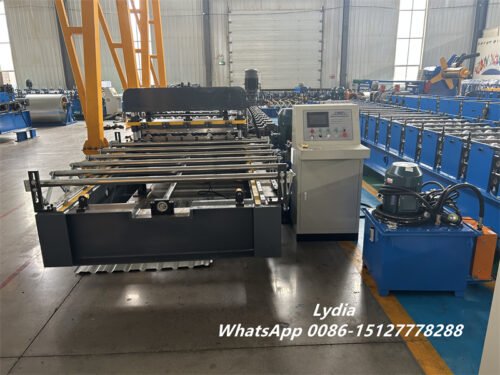
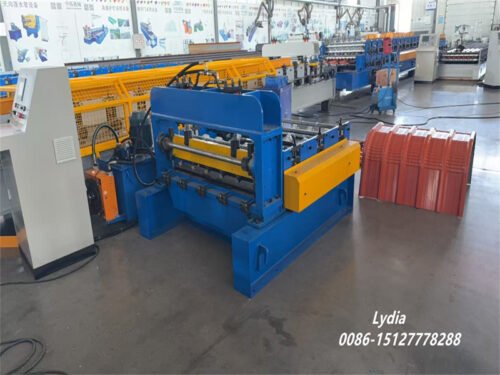
The complete line can include a hydraulic decoiler, roll forming machine, hydraulic cutting unit, output table, hydraulic oil pump, and electrical control cabinet. By connecting these components into one production system, the operator can reduce repeated handling between individual machines.
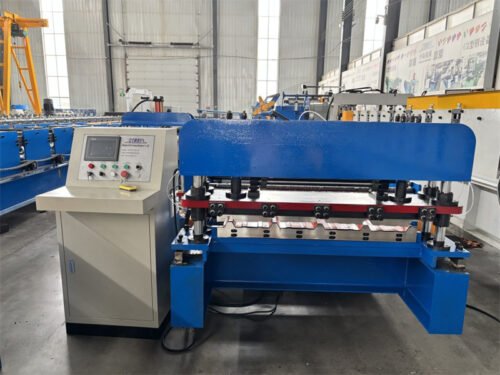
Moreover, the PLC-based control system can coordinate production parameters such as forming speed and cutting length. This makes daily operation easier and helps maintain consistent product dimensions throughout a production batch.
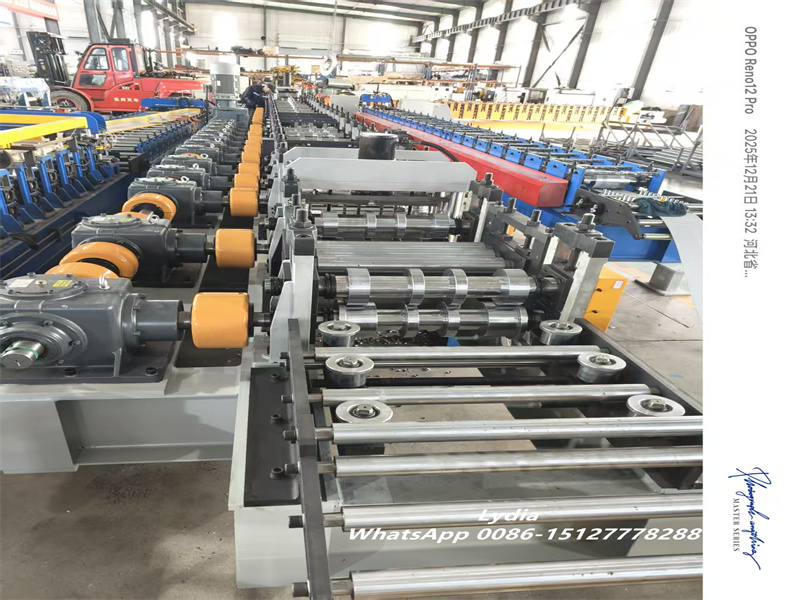
Durable Roll Forming System for Continuous Production
The forming section directly determines the quality and stability of the finished corner post. Therefore, ZTRFM uses a multi-station roller configuration to progressively shape the steel strip.
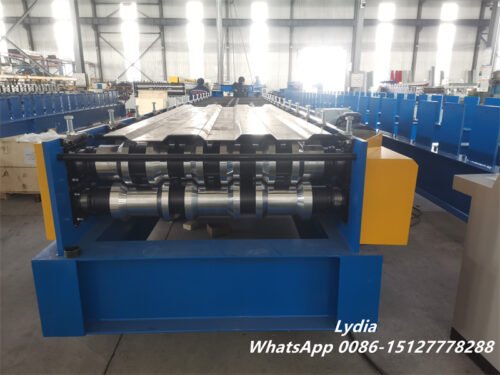
The machine can be equipped with 20 forming stations, while the rollers use heat-treated GCr15 material with a hardness of approximately HRC58–62. The Φ75 mm roller shafts use 45# steel with quenching and tempering treatment. Meanwhile, the welded machine frame provides a rigid foundation for the forming system.
The 15 kW main motor and chain transmission system provide stable power transfer between the drive components. As a result, the machine can maintain smooth operation during continuous production.
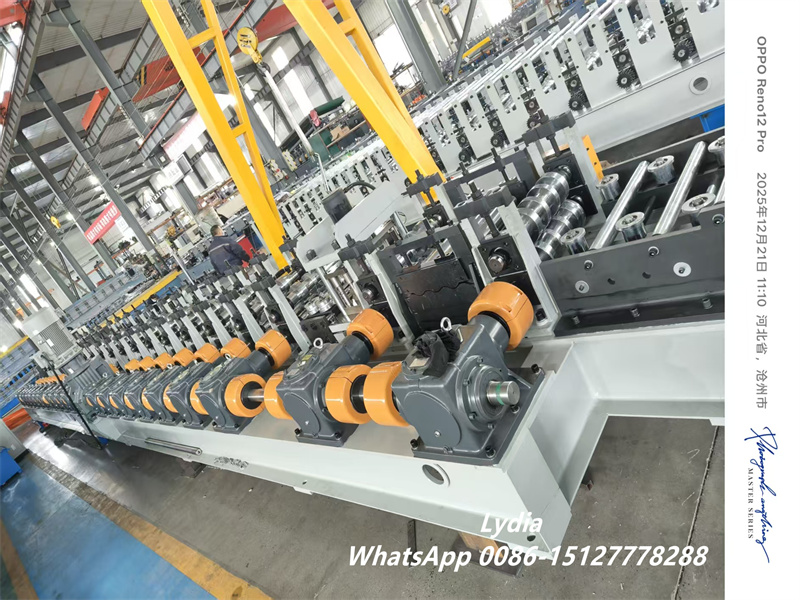
For manufacturers producing container components in large quantities, this configuration helps create a repeatable production process. It also reduces dependence on manual bending and fabrication, which can otherwise introduce dimensional variations between individual posts.
Customized Corner Post Production for Different Containers
Not every container manufacturer uses exactly the same corner post profile. Container dimensions, structural requirements, repair specifications, and customer standards can all influence the final design.
For this reason, the roll forming tooling can be customized according to the customer’s drawings and profile dimensions. The production line can also be configured for different post lengths and processing requirements.
The equipment can therefore support applications such as 20 ft containers, 40 ft containers, high-cube containers, container houses, and replacement corner posts. For container maintenance and repair companies, the machine can also provide a practical way to manufacture replacement profiles for damaged or corroded posts.
If the finished corner post requires additional holes or specific connection points, a hydraulic or servo-controlled punching system can be integrated into the line. This allows forming and secondary processing to work together rather than requiring separate manual operations.
Why Choose a Container Corner Post Roll Forming Machine?
Producing corner posts with conventional fabrication methods can involve multiple steps, including cutting, bending, welding, and dimensional adjustment. However, a dedicated roll forming line combines the main forming processes into a continuous workflow.
First, the machine improves profile consistency because every strip passes through the same forming stations. Second, continuous roll forming supports faster production compared with repeated manual bending. Third, the automated cutting system helps maintain consistent product lengths.
Furthermore, the machine can reduce labor requirements and improve material utilization. Once the tooling and production parameters have been correctly configured, operators can run repeated production batches with fewer manual adjustments.
For container manufacturers, steel fabrication companies, and container repair facilities, this combination of continuous forming, stable production, customizable tooling, and automated cutting makes the corner post roll forming machine a practical solution for long-term production.
FAQ
1. Can the machine produce different container corner post profiles?
Yes. ZTRFM can customize the forming rollers according to the customer’s drawings, profile dimensions, material thickness, and production requirements. Different tooling configurations can be developed for different container designs.
2. What materials can the machine process?
The machine can be configured for materials such as galvanized steel and carbon steel. A typical configuration uses approximately 2.0 mm material, although the actual thickness depends on the required corner post specification.
3. Can punching equipment be added to the production line?
Yes. Hydraulic or servo-controlled punching equipment can be integrated when the finished corner post requires mounting or connection holes. The punching pattern can be designed according to the customer’s drawings.
4. Is the Container Corner Post Roll Forming Machine automatic?
The production line can use a PLC and HMI control system to manage forming, cutting, production length, and other operating parameters. The specific automation level can be configured according to the customer’s production requirements.
5. Can ZTRFM provide customized tooling and technical support?
Yes. ZTRFM can customize the roll forming tooling and production line according to the customer’s profile drawings. Technical guidance, installation support, commissioning, and operator training can also be provided for the complete production line.


Reviews
There are no reviews yet.