

As the global solar industry continues to expand, manufacturers need reliable equipment to produce accurate and durable steel mounting components. Solar support structures rely on various cold-formed profiles, including purlins, rails, C channels, U channels, posts, and connecting members. Therefore, choosing the right Solar Channel Roll Forming Machine directly affects production efficiency, product quality, and manufacturing costs.
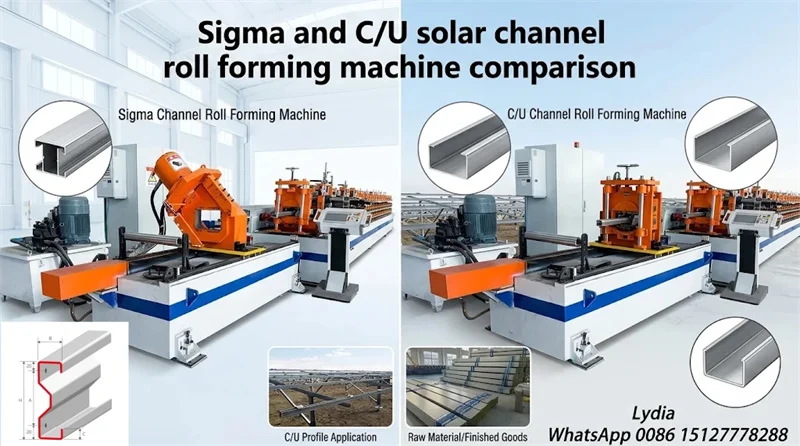
Among the most widely used profile designs, sigma channels and C/U channels play important but different roles in solar mounting structures. Although both profiles use cold roll forming technology, their cross-sectional designs require different forming processes, roller configurations, and production line layouts.
At ZTRFM (Cangzhou Zhongtuo Roll Forming Machinery), we provide customized roll forming equipment for solar mounting systems and structural steel applications. This article compares sigma and C/U production lines, explains their manufacturing characteristics, and introduces our heavy-duty C channel roll forming solution to help manufacturers select suitable equipment for their production requirements.
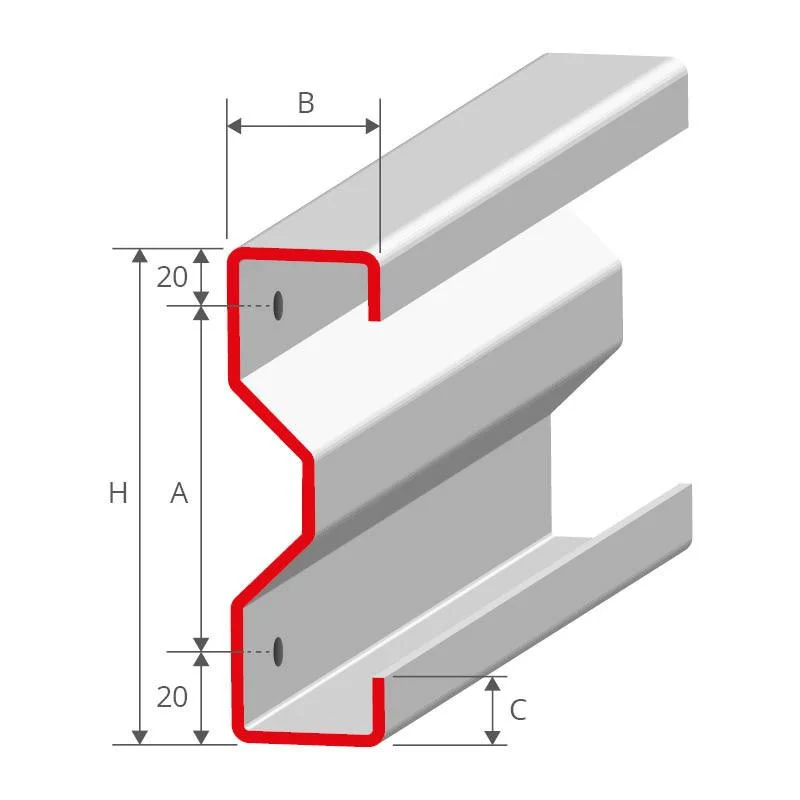
1. Understanding Sigma and C/U Steel Profiles for Solar Structures
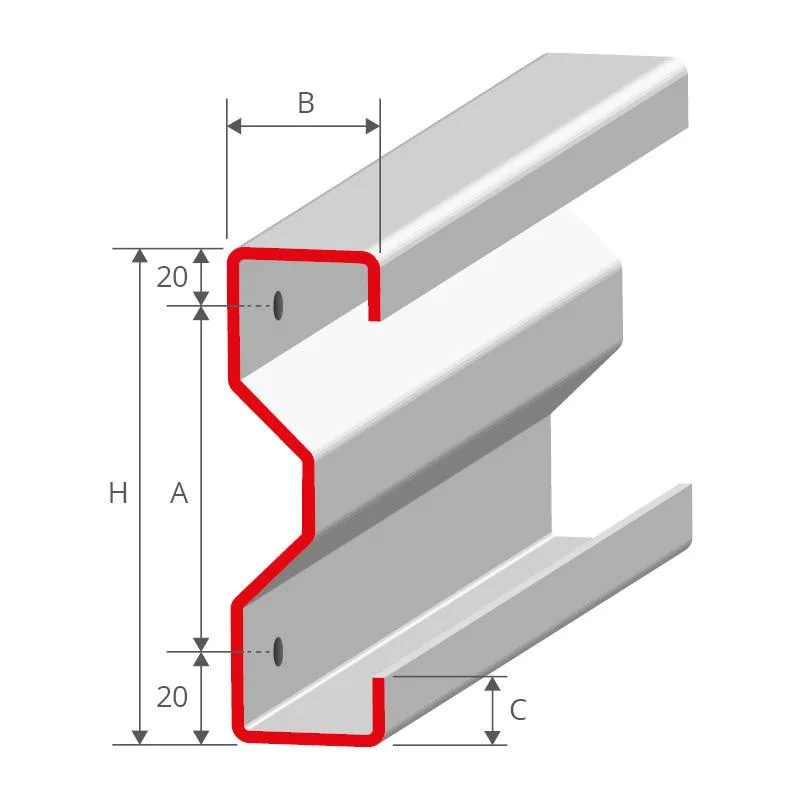
Sigma channels feature a distinctive cross-section with additional folds along the web. These reinforced bends create a profile that resembles the Greek letter Σ. Compared with a conventional flat-web channel, the additional forming sections improve structural stiffness and help the profile resist local deformation under specific loading conditions.
Consequently, manufacturers often use Sigma Purlin Roll Forming Machines to produce structural members for ground-mounted solar installations, long-span support systems, and light steel buildings. Engineers can also optimize the profile dimensions to achieve a suitable balance between structural performance and material consumption.
In contrast, C and U channels feature simpler geometries. A C channel normally includes a flat web, two side flanges, and return lips, while a U channel generally has two flanges without inward return lips. Because of their straightforward design, these profiles work well as solar mounting rails, support posts, diagonal braces, and connecting components.
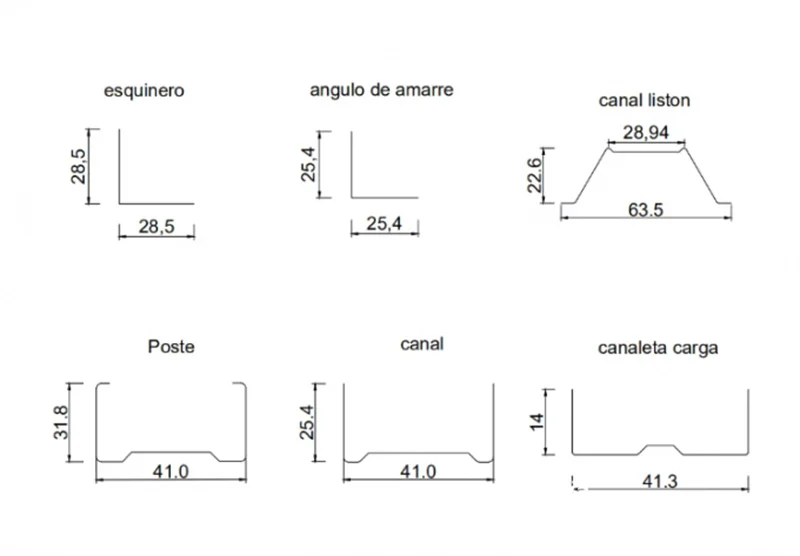
Furthermore, C/U profiles offer considerable flexibility in mounting system design. Manufacturers can integrate round holes, elongated slots, and other connection features to accommodate different installation requirements.
For factories producing multiple types of solar mounting components, a C/U Solar Channel Roll Forming Line provides a practical solution for manufacturing standardized structural members in large quantities.
2. Key Differences Between Sigma and C/U Roll Forming Production Lines
Although both machines use progressive cold forming technology, their tooling and production configurations differ considerably. In particular, profile geometry determines the forming station arrangement, roller design, punching method, and cutting system.
Forming stations and roller design
A sigma profile requires more forming operations because its web contains additional bends. Therefore, engineers must distribute the forming pressure across multiple roller stations to prevent twisting, surface damage, and dimensional deviations. The roller tooling also needs to control the web folds and flange positions throughout the forming process.
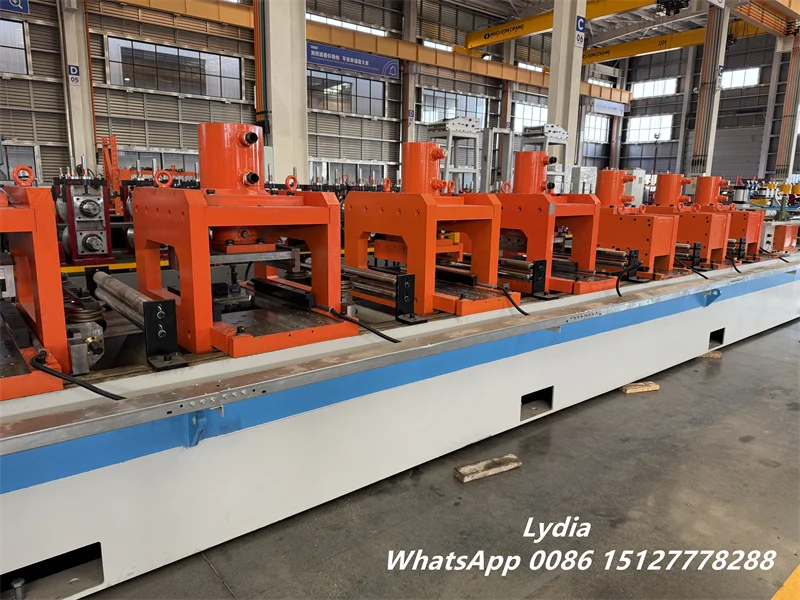
By comparison, C/U profiles generally require fewer forming stages. Their simpler cross-sections make roller design more straightforward, which can reduce tooling complexity and simplify machine maintenance.
Size adjustment and production flexibility
Solar mounting projects often require different profile heights, flange widths, lip dimensions, and steel thicknesses. To accommodate these requirements, manufacturers can choose fixed-size equipment or multi-size production lines.
For example, an automatic size-adjustable C/U roll forming machine can reposition its forming stations through a motorized adjustment system. This configuration helps reduce manual adjustments and shortens changeover time.
However, sigma profiles require more careful coordination because changing the profile dimensions also affects the folded web geometry. Consequently, the adjustment mechanism must maintain accurate alignment across all forming stations.
Punching and cutting configuration
Most solar mounting components require holes or slots for bolts and structural connections. Manufacturers can install pre-punching equipment before the forming section or use post-punching equipment after the profile takes shape.
Pre-punching works particularly well for repetitive hole patterns, while post-punching provides greater flexibility when the final hole positions depend on the formed profile geometry.
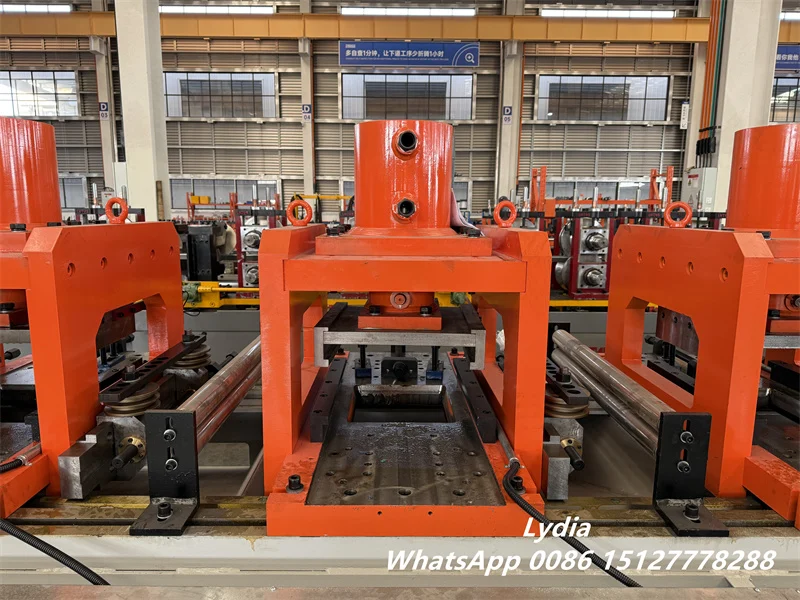
Meanwhile, both production lines can use hydraulic cutting, stop-to-cut systems, or flying cut-off technology. The cutting blade or die must match the finished cross-section to ensure clean edges and accurate product lengths.
Technical Comparison of the Two Production Lines
| Comparison | Sigma Channel Line | C/U Solar Channel Line |
|---|---|---|
| Profile structure | Reinforced folded web | Flat web with flanges |
| Main applications | Long-span purlins and beams | Rails, posts and braces |
| Structural characteristics | High web stiffness | Versatile structural design |
| Forming stations | Generally more | Generally fewer |
| Roller tooling | More complex | Relatively simple |
| Size adjustment | More complicated | Easier to configure |
| Punching requirements | Often project-specific | Often repetitive |
| Cutting die | Complex profile geometry | Simpler profile geometry |
| Machine footprint | Generally larger | More compact |
| Investment | Generally higher | Generally lower |
Therefore, manufacturers should evaluate the required finished profiles before selecting a production line. The most suitable machine is the one that matches the actual product drawings, material specifications, and expected production volume.
3. ZTRFM Heavy Duty C Channel Roll Forming Machine
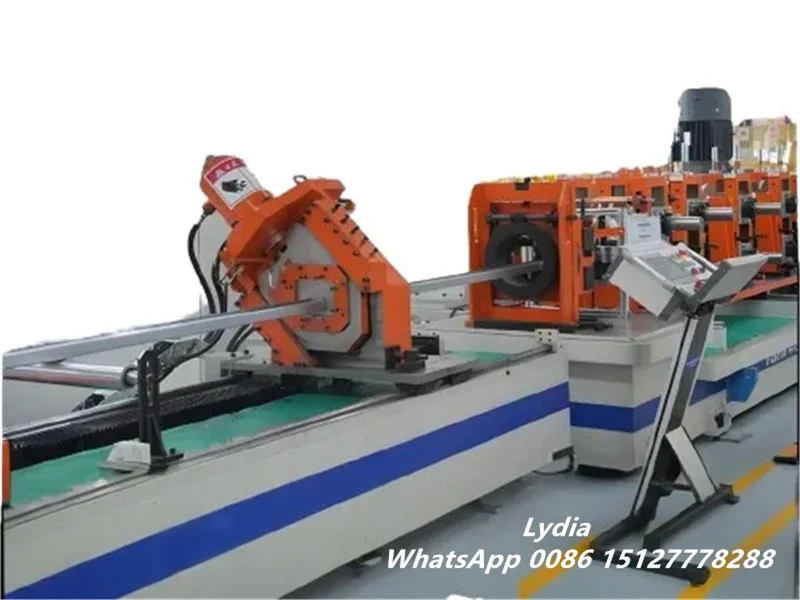
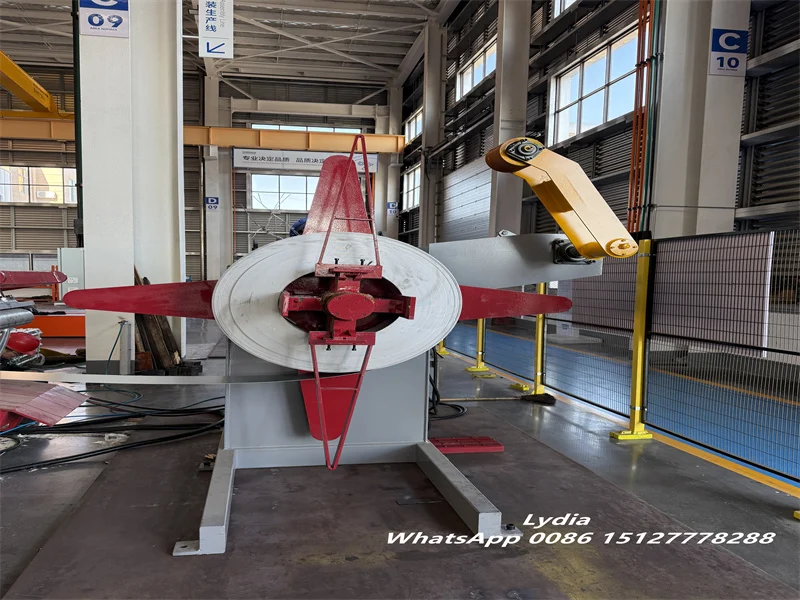
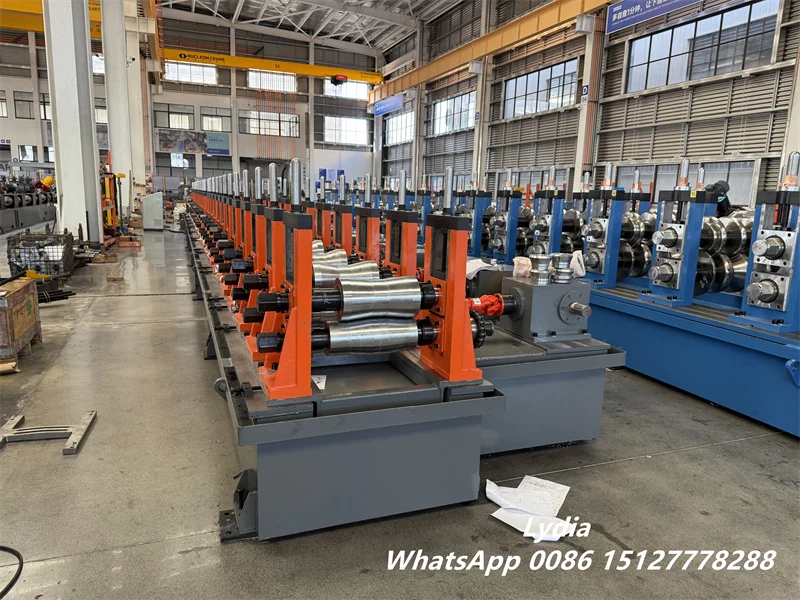
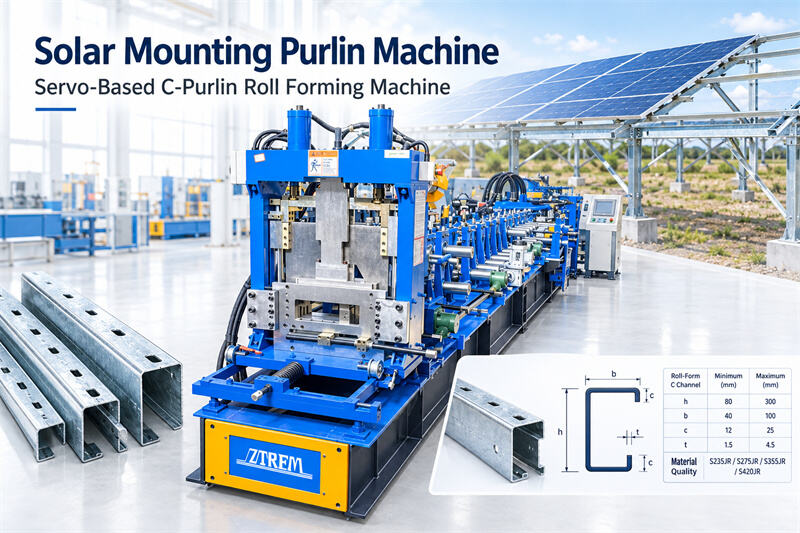
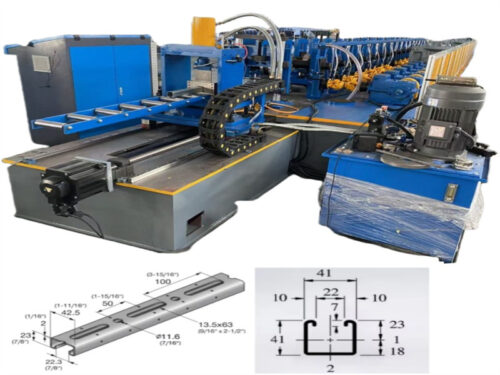
For manufacturers who need to process thicker steel materials and produce high-strength structural profiles, ZTRFM Heavy Duty C Channel Roll Forming Machine offers a robust and reliable production solution.
Unlike conventional light-gauge roll forming equipment, this machine features a reinforced mechanical structure designed for demanding industrial applications. It processes hot-rolled and cold-rolled steel strips while maintaining consistent forming accuracy throughout continuous production.
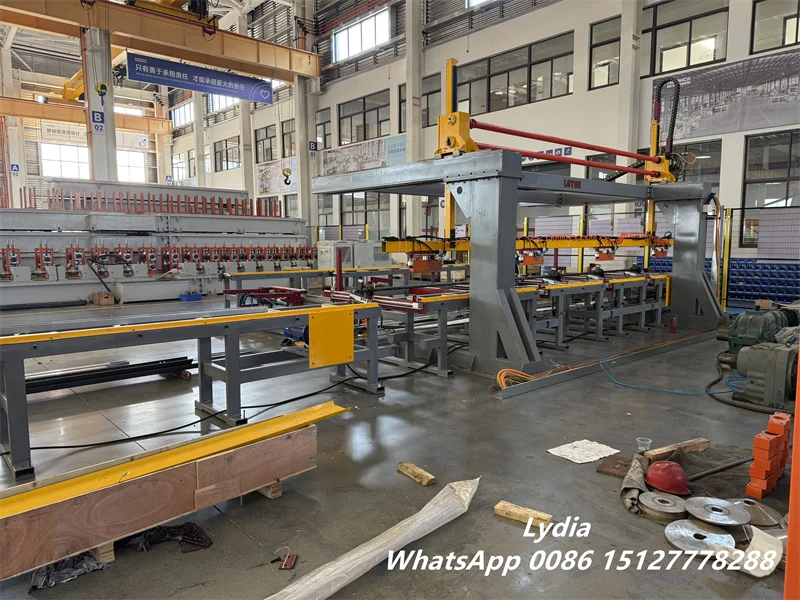
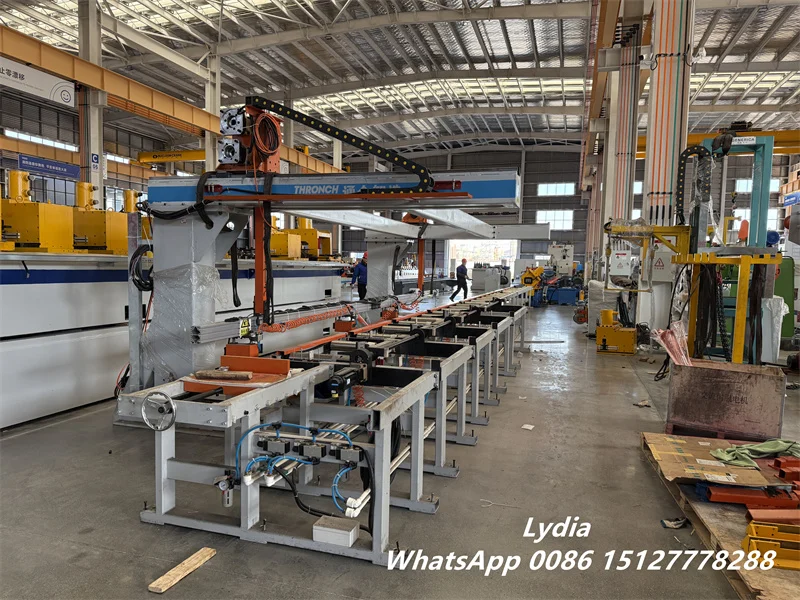
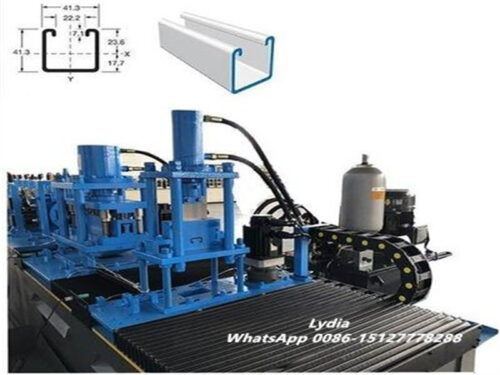
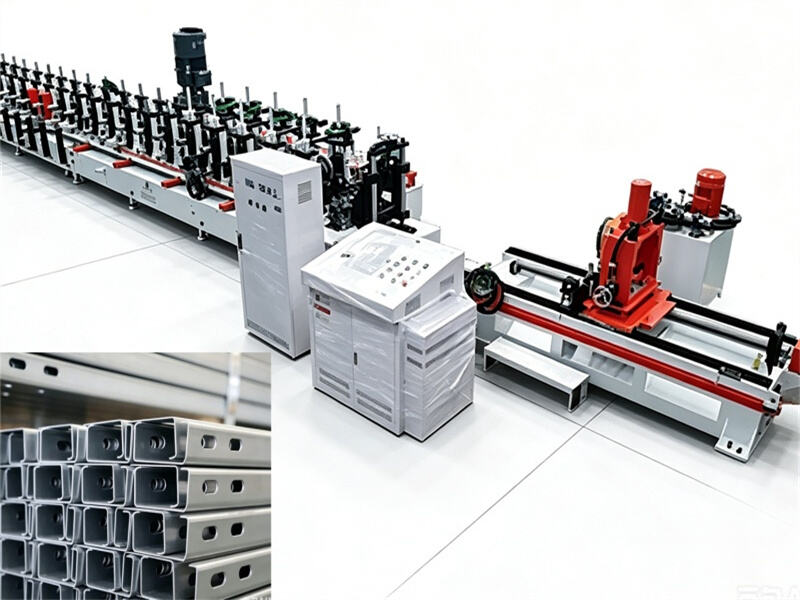
The equipment can manufacture different C-shaped steel profiles according to customer drawings. Moreover, manufacturers can configure the machine with suitable punching, cutting, and automatic collection systems to meet different production requirements.
Heavy-duty forming capability
The machine supports various steel materials, including Q235 (ASTM A36) and Q550 high-strength steel. Its mechanical design focuses on handling demanding material conditions while maintaining stable operation.
For manufacturers working with thick steel strips, machine rigidity plays an important role. A reinforced frame, properly selected shafts, and precision-machined rollers help reduce vibration and maintain forming consistency.
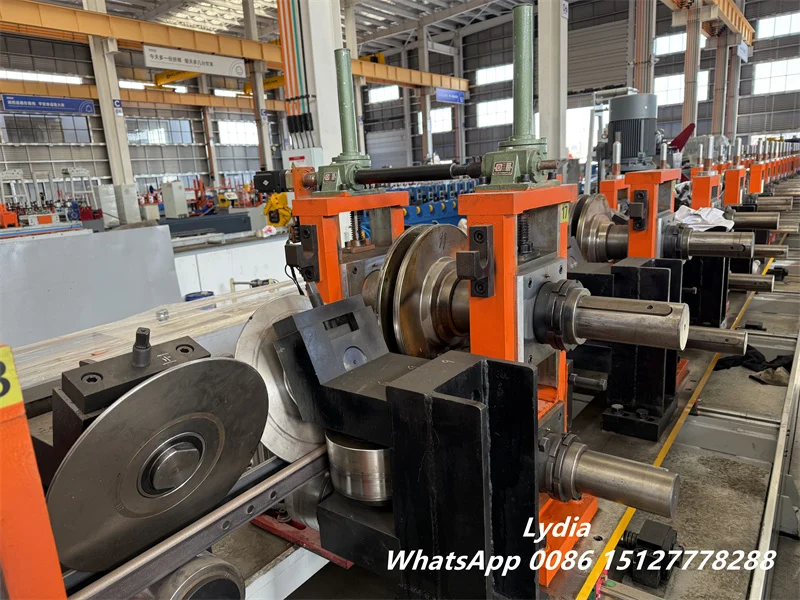
Precision roller and shaft configuration
ZTRFM selects durable components for the forming section to support long-term industrial operation.
The machine uses Cr12 forming rollers to provide excellent wear resistance. In addition, 45# steel shafts provide the strength needed to transmit forming forces between the roller stations.
The standard configuration includes 80 mm roller diameter and a production speed of approximately 10–30 m/min, depending on the material and profile requirements.
PLC control and operating efficiency
An integrated PLC control system allows operators to set production parameters through a touchscreen interface. It coordinates the forming process and cutting operations to maintain consistent profile dimensions and product lengths.
Furthermore, the control system simplifies daily operation and helps reduce manual input errors. Manufacturers can also request customized electrical configurations to meet local factory standards.
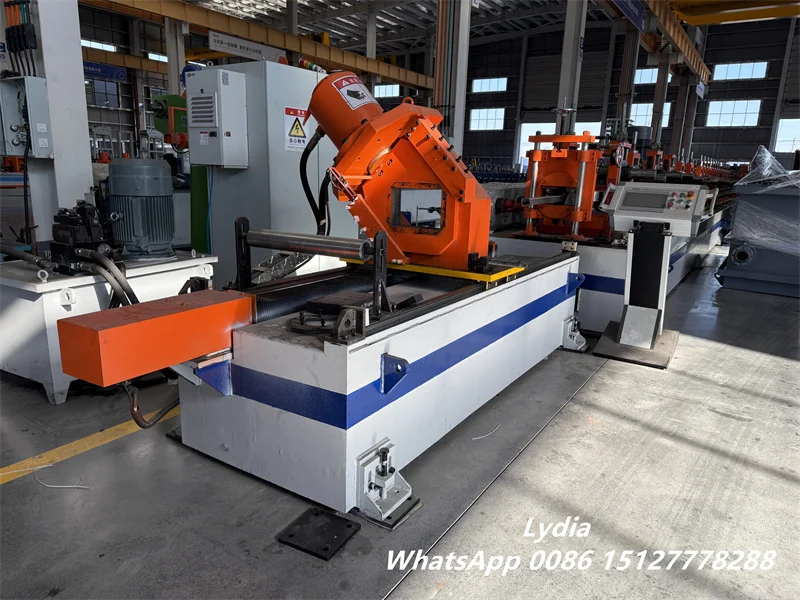
Technical Specifications
| Item | Specification |
|---|---|
| Product Name | Heavy Duty C Channel Roll Forming Machine |
| Application | C-shaped steel profile production |
| Material | Q235 (ASTM A36), Q550 |
| Material Type | Hot-rolled and cold-rolled steel |
| Forming Speed | 10–30 m/min |
| Roller Diameter | 80 mm |
| Roller Material | Cr12 |
| Shaft Material | 45# Steel |
| Main Motor | 5.5 kW (configuration dependent) |
| Voltage | 220V / 380V |
| Frequency | 50Hz / 60Hz |
| Control System | PLC |
| Warranty | 1 Year |
Note: The above parameters describe a reference configuration. ZTRFM can customize motor power, profile dimensions, material thickness, punching systems, and cutting units according to the customer’s technical requirements.
4. Applications and Customized Manufacturing Solutions
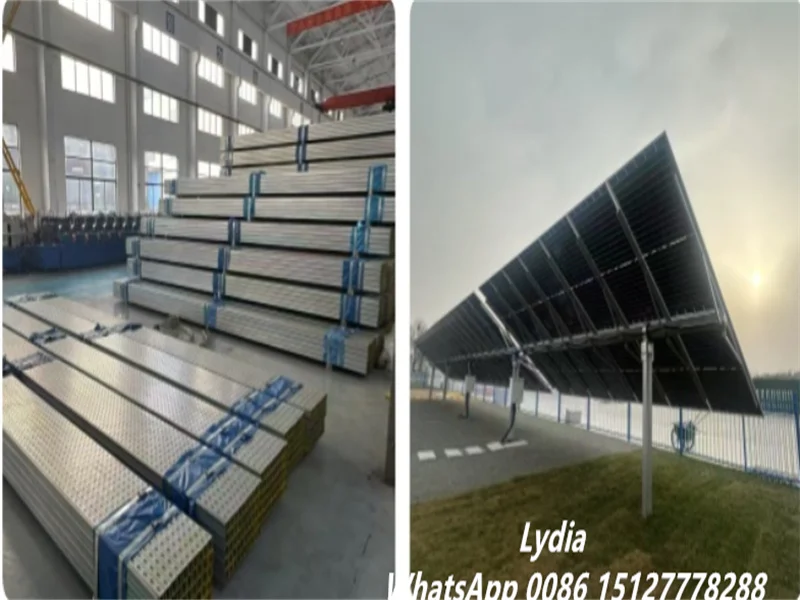
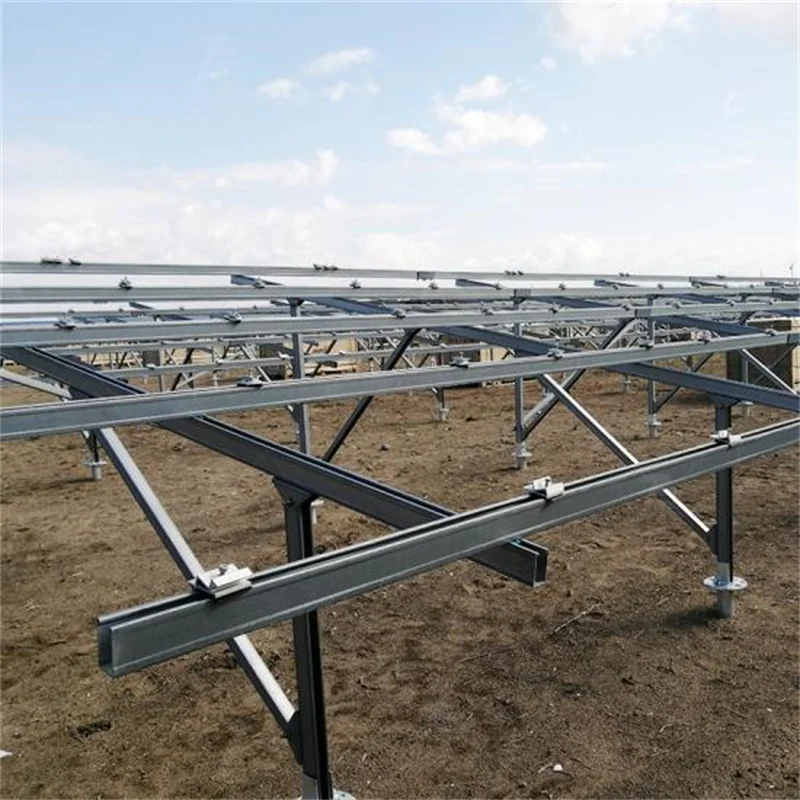
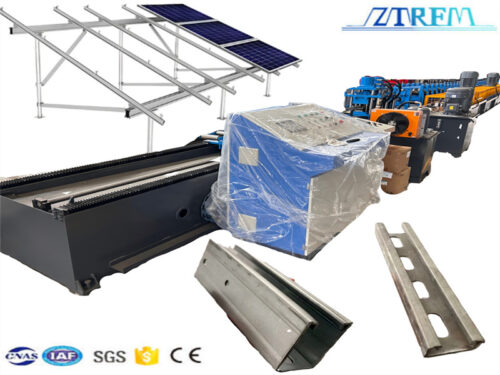
C channel and U channel profiles serve a wide range of structural applications. In the solar industry, manufacturers use them to produce mounting rails, support legs, cross members, and diagonal braces.
Beyond photovoltaic installations, the same profiles also support steel structure buildings, industrial warehouses, metal framing systems, ceiling frameworks, and prefabricated construction projects.
For customers with specialized requirements, ZTRFM provides customized C Channel Roll Forming Machines based on finished product drawings and production targets.
Customization options include profile dimensions, material thickness, roller configurations, punching positions, cutting methods, and automatic stacking systems. In addition, we can configure electrical components and control systems to suit different countries and factory environments.
For manufacturers producing complete solar mounting structures, combining a sigma channel production line with a C/U channel production line can expand the product portfolio. This approach allows factories to manufacture both primary structural members and secondary connection components in-house.
5. How to Select the Right Solar Channel Roll Forming Machine
Before purchasing a Solar Mounting Structure Roll Forming Machine, manufacturers should define their production requirements rather than selecting equipment based only on advertised speed or machine price.
First, prepare complete profile drawings that include web height, flange width, lip dimensions, hole positions, and dimensional tolerances. These details help engineers calculate the required forming stations and design the roller tooling.
Next, confirm the material grade, coating type, and thickness range. Pre-galvanized steel and zinc-aluminum-magnesium coated steel may require different processing considerations depending on the material specification and finished surface requirements.
Production flexibility is another important factor. If your factory frequently changes profile dimensions, an automatic size-adjustable machine may offer better long-term value than a dedicated fixed-size line.
In addition, consider the punching frequency, cutting accuracy, required output, and finished product handling method. A complete production solution should coordinate all these processes rather than focus on the roll forming section alone.
At ZTRFM, our engineering team works with customers to review profile drawings, confirm technical parameters, design the production layout, and manufacture equipment according to actual project requirements.
From mechanical manufacturing and factory testing to installation guidance and after-sales support, we aim to provide dependable roll forming solutions for customers worldwide.
6. Why Choose ZTRFM for Solar and Heavy-Duty Roll Forming Equipment?
ZTRFM (Cangzhou Zhongtuo Roll Forming Machinery) specializes in designing and manufacturing roll forming equipment for international customers. Our product range covers solar mounting profiles, C/Z purlins, heavy-duty channels, roof and wall panels, and various customized steel sections.
We understand that different manufacturers have different production goals. Therefore, we focus on practical engineering solutions instead of offering a single standard configuration for every project.
Our project service includes technical consultation, profile analysis, roller tooling design, machine manufacturing, factory acceptance testing, installation guidance, and operator training.
Furthermore, we can integrate punching, hydraulic cutting, servo systems, and automatic stacking equipment to create a complete production line.
Whether you plan to manufacture sigma purlins, C/U solar channels, or heavy-duty structural C profiles, ZTRFM can develop a machine configuration that matches your material, product drawings, and production targets.
Contact ZTRFM today to discuss your solar mounting profile requirements and receive a customized roll forming machine proposal.
Frequently Asked Questions (FAQ)
Q1: What is the main difference between a sigma channel and a C channel?
A sigma channel features additional folds in its web, which improve stiffness and structural performance in suitable applications. A C channel has a simpler flat-web design with two flanges and return lips, making it suitable for many structural and solar mounting applications.
Q2: Can one roll forming machine produce both sigma and C/U profiles?
A conventional dedicated machine cannot automatically produce all three profile types without appropriate tooling and structural modifications. Manufacturers should evaluate profile compatibility and consider separate production lines when they need different cross-sectional designs.
Q3: What materials can a heavy-duty C channel roll forming machine process?
Depending on its configuration, the machine can process Q235, Q550, and other specified hot-rolled or cold-rolled steel materials. The maximum thickness and forming capacity should be confirmed against the actual profile drawings.
Q4: Can ZTRFM customize the solar channel roll forming line?
Yes. ZTRFM provides customized solutions covering profile dimensions, steel thickness, punching patterns, cutting systems, production speeds, and automatic stacking equipment.
Q5: What information should I provide when requesting a quotation?
Please provide your profile drawings, material grade, thickness range, required production speed, hole patterns, cutting length, and expected daily output. These details help our engineers recommend a suitable machine configuration and prepare an accurate quotation.


Reviews
There are no reviews yet.