

Double wave beam metallic guardrails are widely used as an essential roadside safety barrier system on highways, bridges, and high-risk traffic areas. Designed to provide reliable protection against vehicle run-off accidents, these guardrails help absorb collision energy and reduce the severity of impacts.
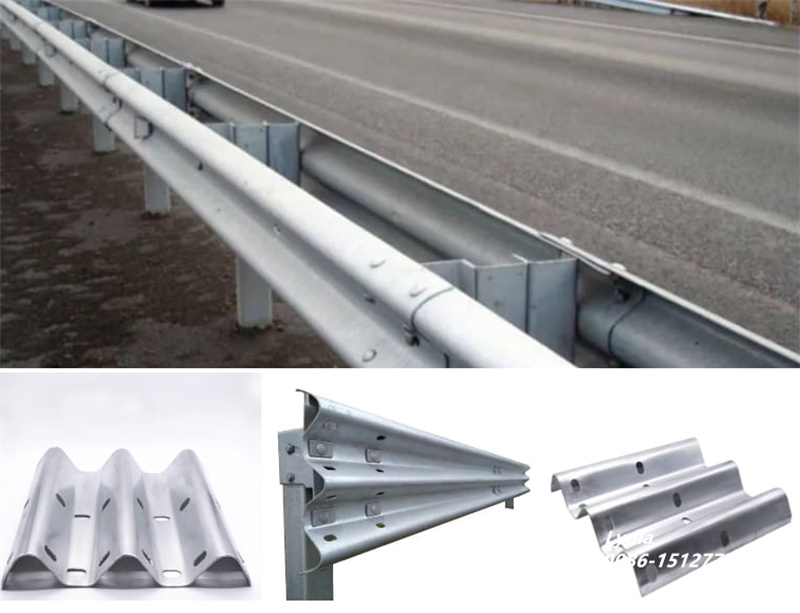
The two-wave (W-beam) guardrail features a distinctive W-shaped steel beam profile manufactured from high-strength galvanized steel. When installed with steel posts, spacers, and fastening hardware, the system forms a continuous protective barrier along roadways. Its semi-rigid structure allows the guardrail to effectively redirect vehicles while minimizing damage to both the vehicle and surrounding infrastructure.
Typically, a double wave guardrail system consists of two corrugated beams connected to vertical posts at regular intervals. This structure creates an angular safety barrier that prevents vehicles from leaving the roadway, especially in dangerous sections such as curves, slopes, bridges, and embankments.Double Wave Beam Metallic Guardrails.
Typical Dimensions and Specifications
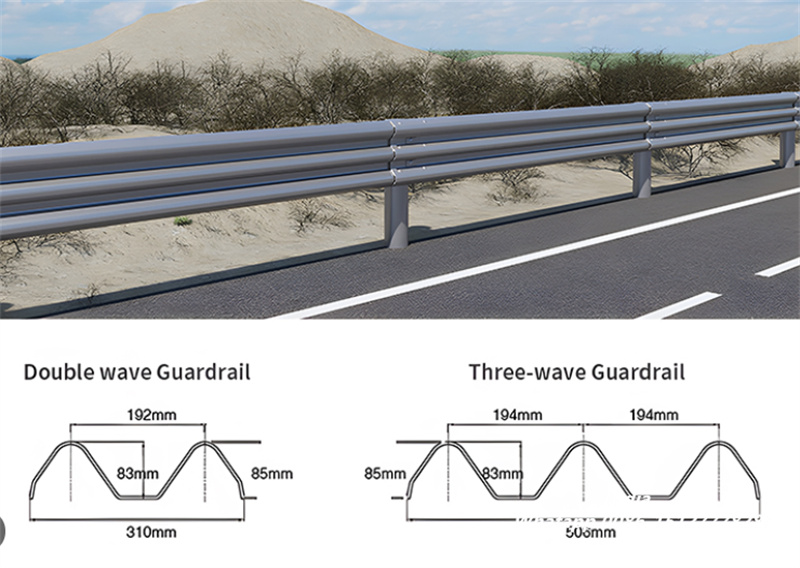
Standard double-wave beam guardrails are produced in various sizes to meet international road safety standards. Common specifications include:
- Panel Length: 4100–4400 mm
- Beam Width: 310 mm
- Wave Height: 85 mm
- Steel Thickness: 2.75 mm – 3.0 mm (customizable up to 6 mm)
- Post Spacing: Usually 2 m, 3 m, or 4 m depending on project requirements
Custom dimensions can also be manufactured to meet specific engineering designs.
Surface Treatment Options
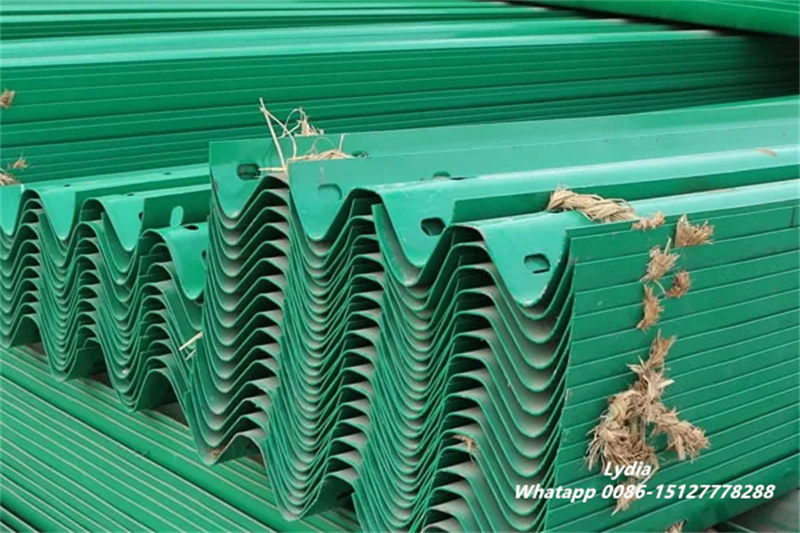
To ensure excellent corrosion resistance and long service life in outdoor environments, guardrail beams are typically treated with protective coatings, including:
- Hot-dip galvanizing (HDG)
- Aluminized coating
- Static powder spraying
- PVC coating
For hot-dip galvanizing, the zinc coating thickness generally ranges from 61 μm to 85 μm, or can be customized according to project requirements.
Applications of Double Wave Guardrails
Double wave steel guardrails are installed in a wide range of transportation infrastructure projects, including:
- Expressways and national highways
- Bridge approaches
- Mountain roads and slopes
- Port and dock areas
- Industrial access roads
- Road curves and accident-prone sections
By absorbing collision energy and guiding vehicles back onto the roadway, the guardrail system helps reduce vehicle damage and improve overall road safety.
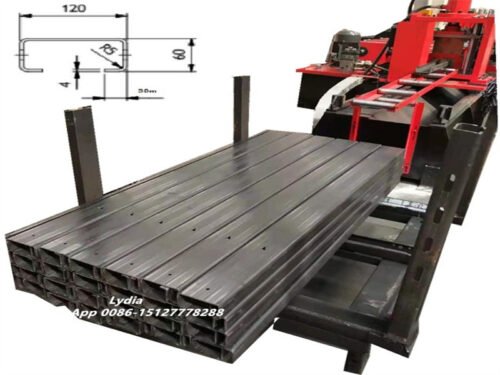
For example, a typical installation may use U120 steel posts with a thickness of around 6 mm and lengths of 1.5 m to 1.75 m, which are anchored into the ground to support the guardrail beam.
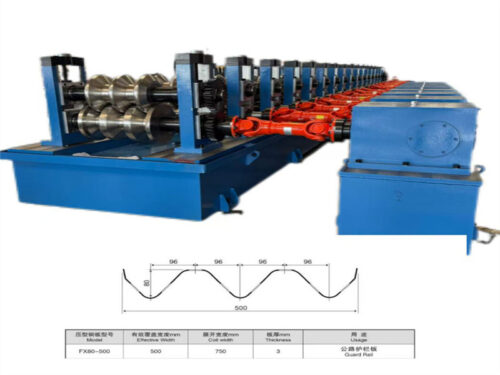
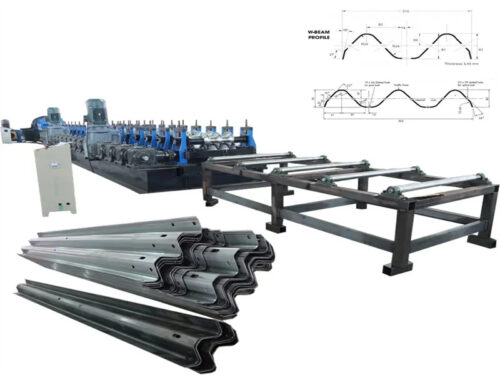
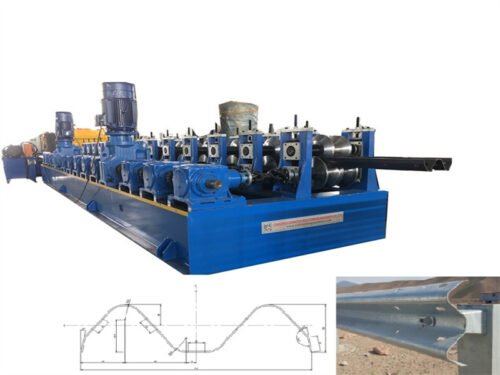
2-3 Wave Highway Guardrail Roll Forming Machine Production Line
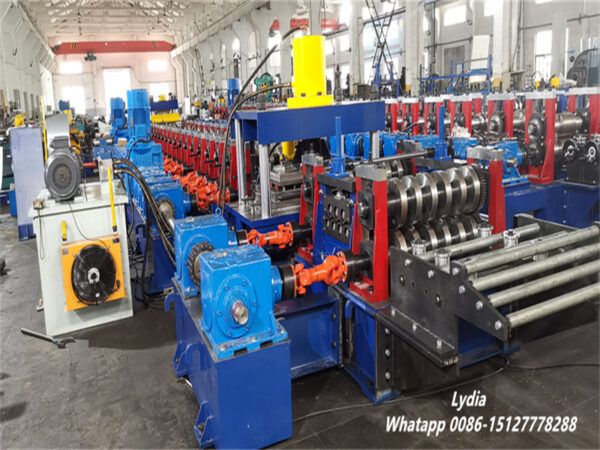
The 2-3 Wave Highway Guardrail Roll Forming Machine is designed for the high-efficiency production of highway guardrail panels widely used in road safety systems. This fully automatic production line integrates decoiling, leveling, punching, roll forming, cutting, conveying, and stacking into one continuous process.
With advanced PLC control, heavy-duty forming rollers, and high-precision punching systems, the production line can manufacture both 2-wave and 3-wave guardrail panels with stable quality and high productivity. This equipment is widely used by highway infrastructure manufacturers, steel processing companies, and road safety barrier suppliers.
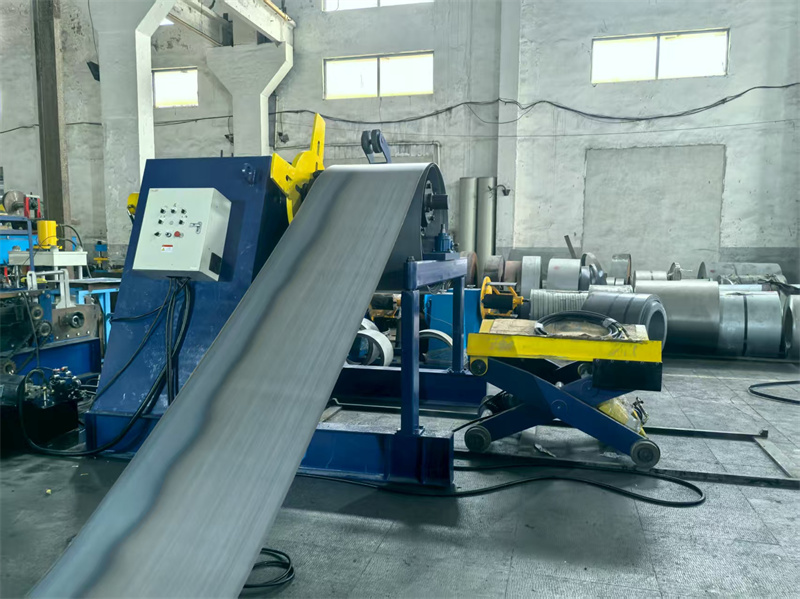
Production Process of the Guardrail Roll Forming Line
The complete production line follows an automated workflow:
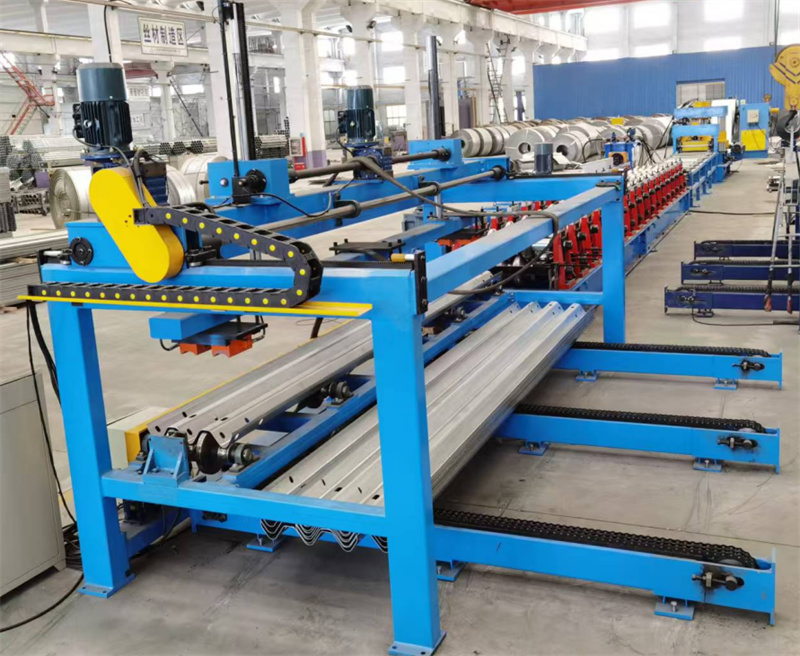
Decoiler → Leveling Machine → Feeding & Head Shovel → Hydraulic Punching → Roll Forming → Hydraulic Cutting → Conveyor Table → Automatic Stacking
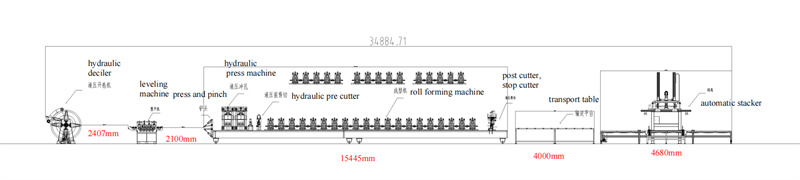
This integrated process ensures continuous production with high accuracy and minimal manual operation.
H2: Main Technical Features
1. High Efficiency Production
The guardrail roll forming machine can reach a production speed of up to 10 m/min, producing approximately 1–2 panels per minute when manufacturing 4500 mm long guardrail sheets.
2. Dual Profile Production (2-Wave & 3-Wave)
The production line is equipped with interchangeable forming modules, allowing manufacturers to produce both:
- 2 Wave Guardrail Panels
- 3 Wave Guardrail Panels
Changing the lifting module enables quick switching between profiles.
3. Heavy Duty Hydraulic Punching System
The line is equipped with three punching stations:
- 300T Hydraulic Punching Machine – punches 18 oval holes simultaneously for guardrail installation
- 60T Punching Machine – used for product traceability marking
- 30T Punching Machine – punches center holes when required
The punching molds are made from Cr12Mov steel, heat-treated to HRC58–62 for long service life.
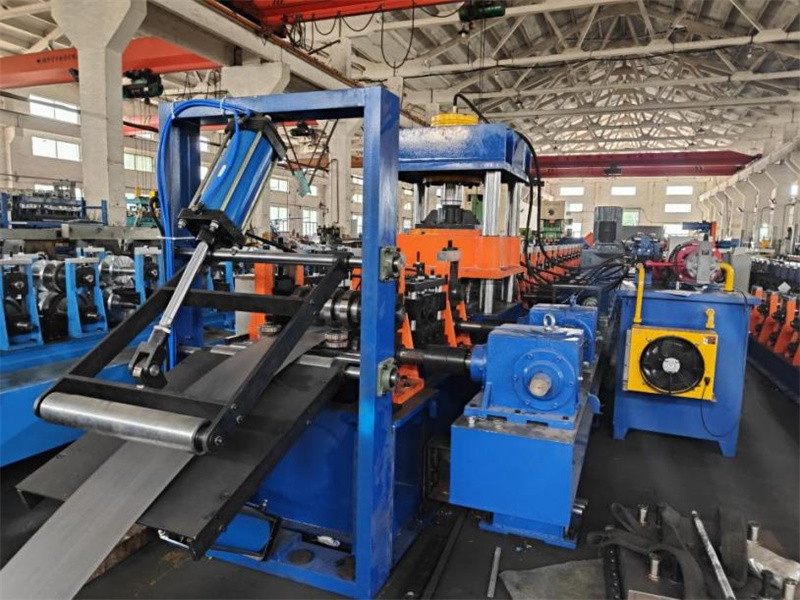
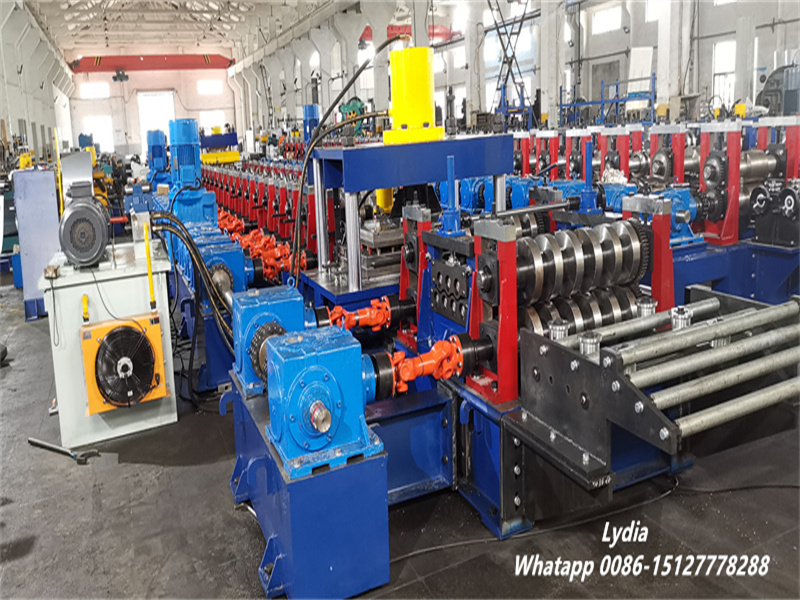
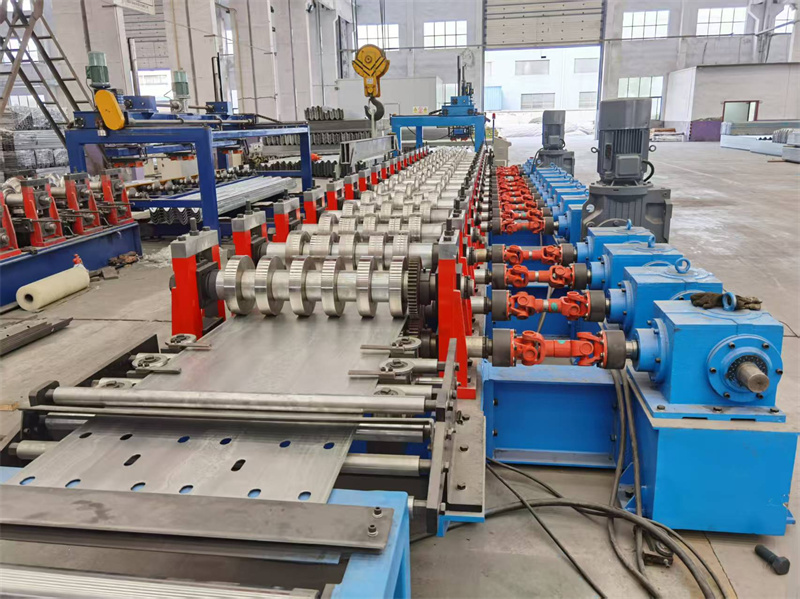
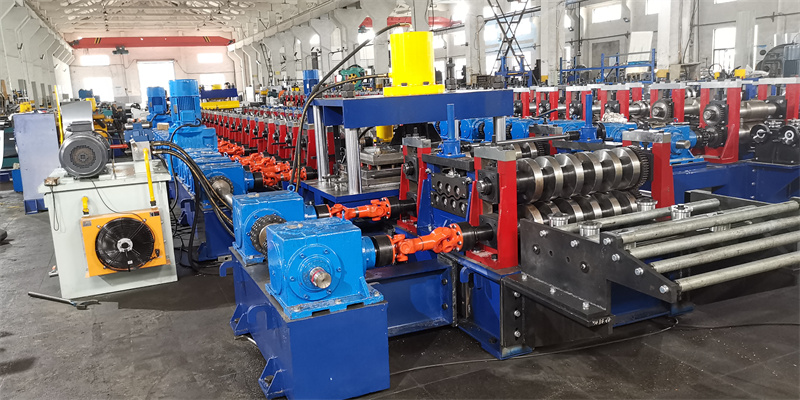
4. High Precision Roll Forming System
The forming section uses gearbox transmission with heavy-duty shafts (Φ110mm) to ensure stable forming of 3.0 mm thick steel.
Key features include:
- Cr12Mov hardened forming rollers
- CNC precision machining
- Water cooling system
- Modular forming stations
Forming stations:
- 20 stations for 3-wave guardrail
- 15 stations for 2-wave guardrail
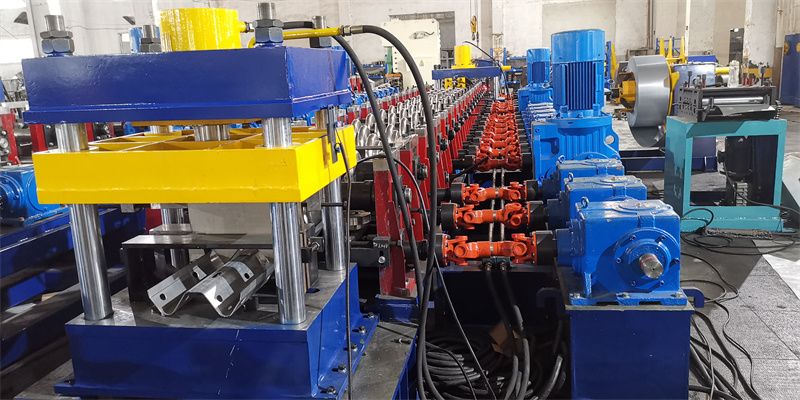
5. Intelligent PLC Control System
The production line is controlled by a Siemens PLC system, ensuring easy operation and stable production.
Main electrical components include:
- Siemens PLC controller
- Siemens inverter
- Siemens HMI touch screen
- Omron encoder
The interface supports the Chinese and English languages.
Raw Material Specifications
The machine supports multiple structural steel grades used in highway barrier manufacturing.
Material Types
- Q235
- Q355
- S235JR
- S355JR
Material Specifications
| Item | Specification |
|---|---|
| Thickness | 3.0 mm |
| Coil Width | 477 mm / 744 mm |
| Coil Inner Diameter | 508–600 mm |
| Coil Outer Diameter | ≤1600 mm |
| Coil Weight | ≤10 Tons |
Guardrail Panel Specifications
The production line manufactures guardrail panels according to standard highway specifications.
| Parameter | Value |
|---|---|
| Panel Width | 310 mm / 506 mm |
| Panel Height | 85 mm |
| Panel Length | 4000 / 4320 / 4500 mm |
| Length Tolerance | ±2 mm |
Custom sizes can also be produced according to customer requirements.
Major Equipment Configuration
The complete guardrail forming production line includes:
- Hydraulic Decoiler with Loading Car
- Leveling Machine
- Hydraulic Feeding & Shovel Device
- Three Hydraulic Punching Stations
- Roll Forming Machine
- Hydraulic Stop Cutting System
- Conveyor Table
- Automatic Stacking System
- Hydraulic Stations
- PLC Electrical Control System
The full production line length is approximately 35 meters.
Machine Power and Factory Requirements
| Item | Specification |
|---|---|
| Total Power | About 138 kW |
| Voltage | 380V / 50Hz / 3 Phase |
| Production Speed | ≤10 m/min |
| Machine Length | Approx. 35 m |
| Installation Area | 35m × 4m |
Operating temperature range: -10°C to 50°C
Advantages of the Guardrail Roll Forming Machine
✔ Heavy-duty structure for 3mm thick steel forming
✔ High precision multi-hole punching system
✔ Interchangeable modules for 2-wave and 3-wave production
✔ Intelligent PLC automatic control
✔ High productivity and stable performance
✔ Long service life with heat-treated rollers
Optional Equipment
The production line can also be customized with optional features:
- Automatic stacking system
- Servo feeding system
- Automatic packaging system
- Online embossing or marking system
FAQ
What is the difference between 2-wave and 3-wave guardrails?
2-wave guardrails are widely used on standard highways, while 3-wave guardrails provide stronger impact resistance and are commonly installed on bridges and high-risk road sections.
What thickness of steel can this machine process?
The machine is designed to process 3.0 mm thick steel coils, commonly used in highway guardrail production.
Can the machine produce different guardrail lengths?
Yes. The cutting system is controlled by PLC, allowing flexible adjustment of panel lengths such as 4000 mm, 4320 mm, or 4500 mm.


Reviews
There are no reviews yet.