
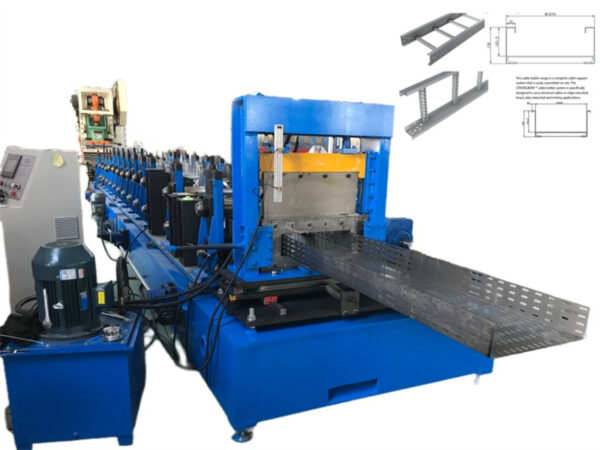
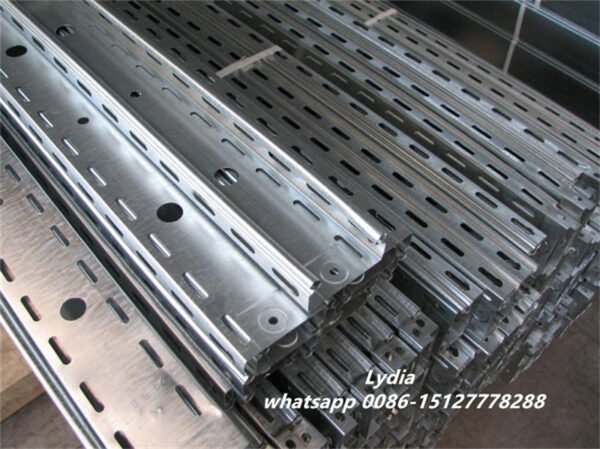
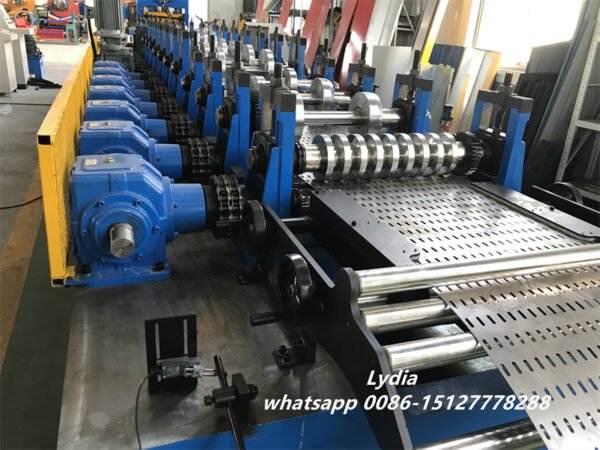
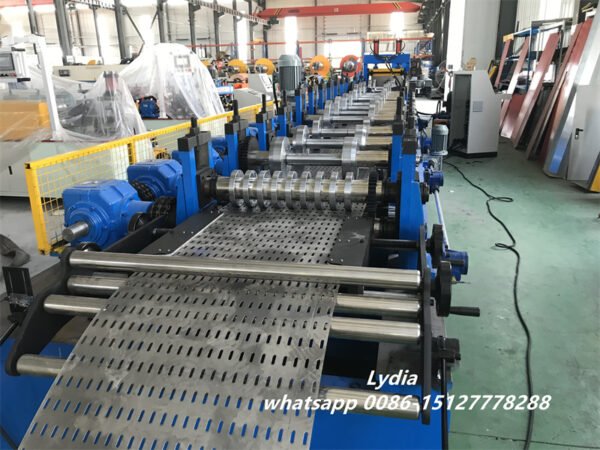
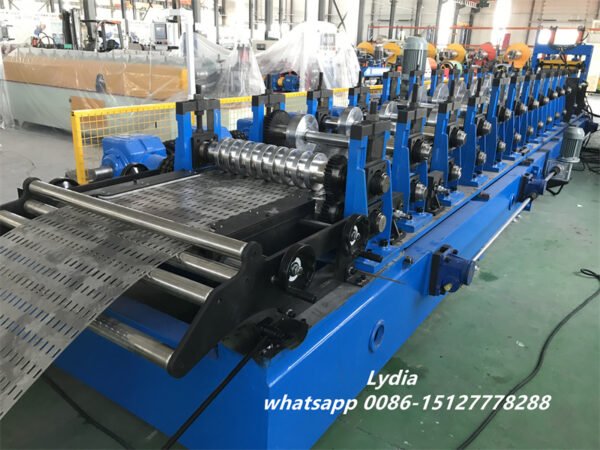
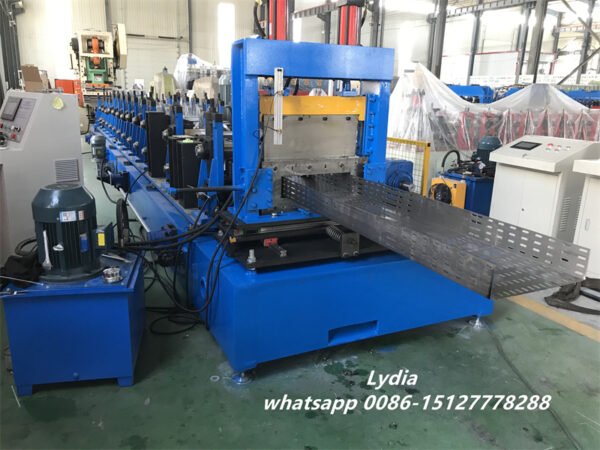
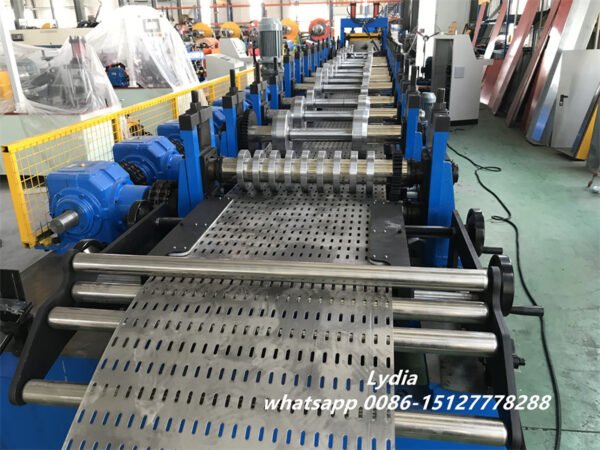
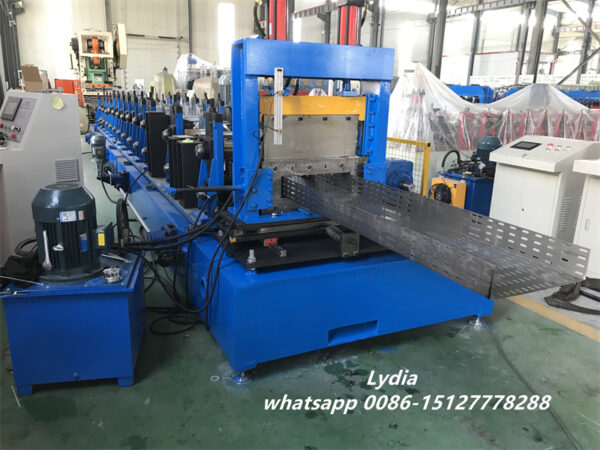
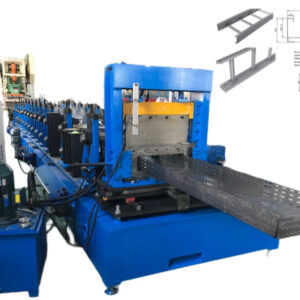
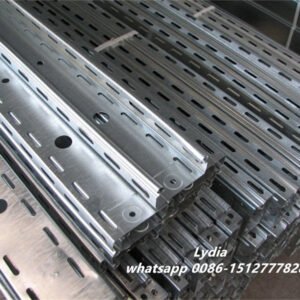
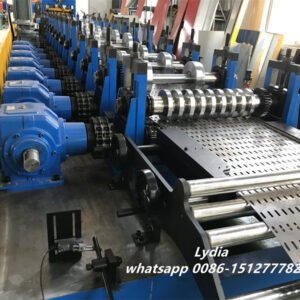
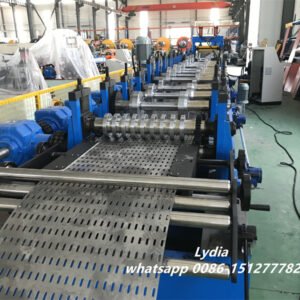
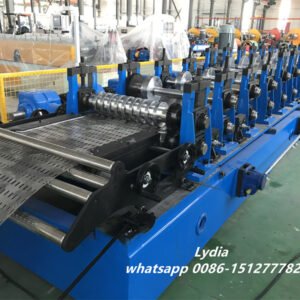
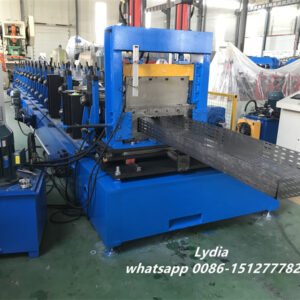
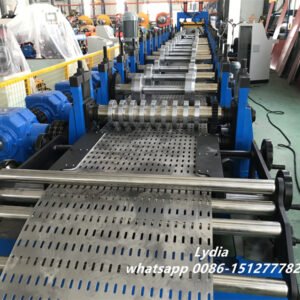
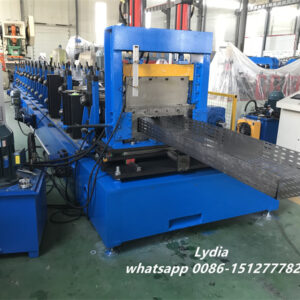

As the demand for diversified cable tray specifications continues to grow in industrial plants, data centers, commercial buildings, solar projects, and infrastructure construction, manufacturers are facing increasing pressure to produce multiple cable tray sizes efficiently while maintaining high dimensional accuracy.
Traditional cable tray roll forming machines require manual adjustment of rollers, spacers, guide systems, and punching positions whenever the tray width, height, or material thickness changes. This process can take several hours and often leads to production downtime, labor costs, and dimensional inconsistencies.
To solve these challenges, modern automatic cable tray roll forming machines integrate servo-driven adjustment systems, PLC control technology, intelligent sensors, and online inspection devices to achieve fast and accurate one-click size changes.
In this article, we will explain how a fully automatic cable tray roll forming machine achieves automatic adjustment and why it is becoming the preferred solution for cable tray manufacturers worldwide.
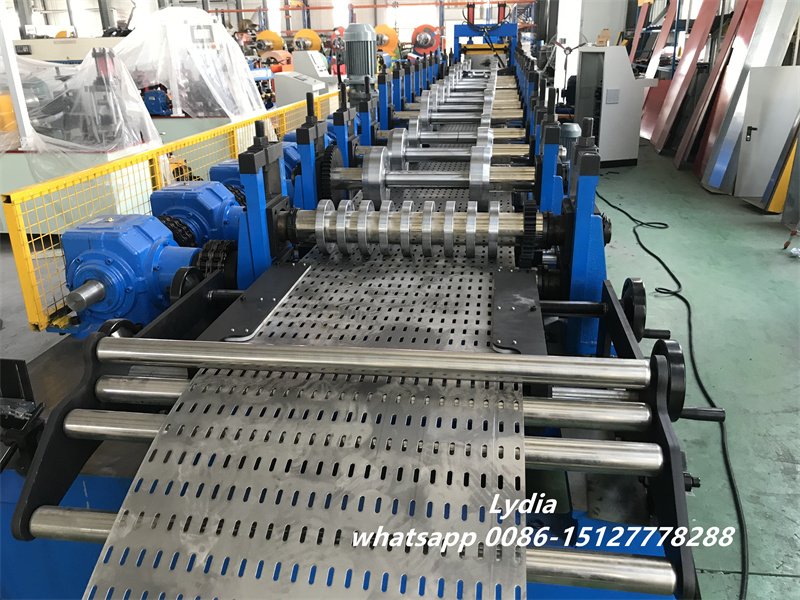
What Is an Automatic Cable Tray Roll Forming Machine?
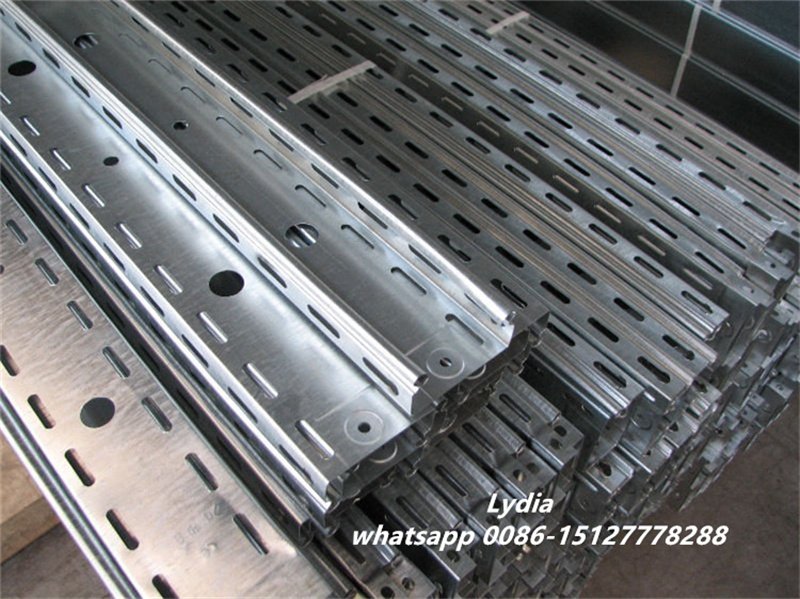
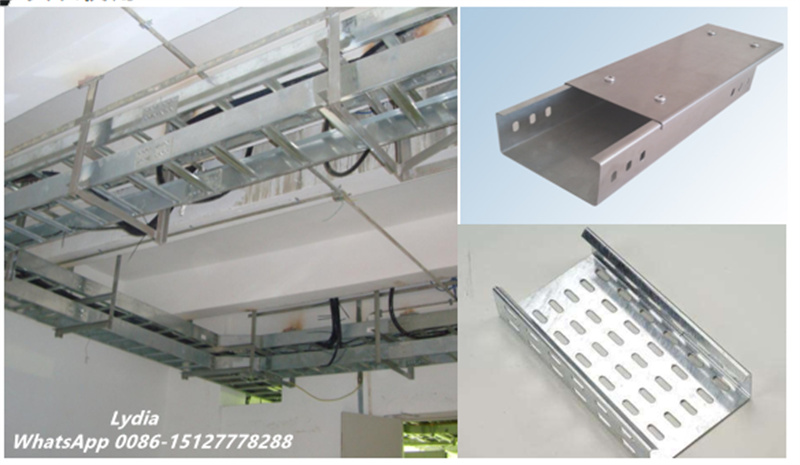
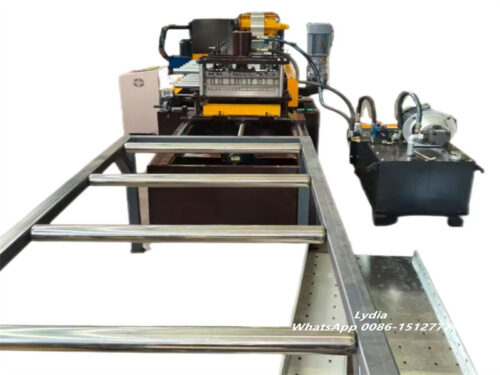
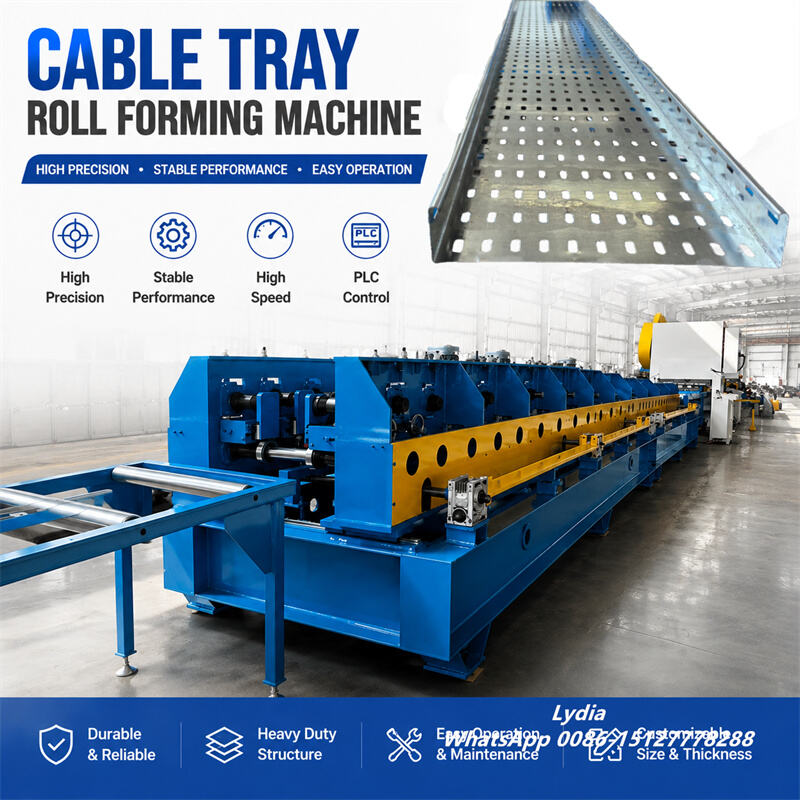
An Automatic Cable Tray Roll Forming Machine is an advanced and intelligent production line designed to manufacture various types of cable trays while automatically adjusting forming parameters according to different product specifications. Unlike traditional machines that require manual adjustment of rollers, spacers, guides, and punching units, a modern PLC-controlled Cable Tray Roll Forming Machine can automatically modify the cable tray bottom width, side wall height, roller gap, punching positions, feeding alignment, and cutting length through a servo-driven control system. Operators only need to select a stored production recipe on the HMI touchscreen, and the entire line automatically moves to the required positions. This technology is widely used for producing cable trays, perforated cable trays, ladder cable trays, electrical trunking systems, and electrical support channels, providing manufacturers with higher efficiency, lower labor costs, and faster product changeovers.
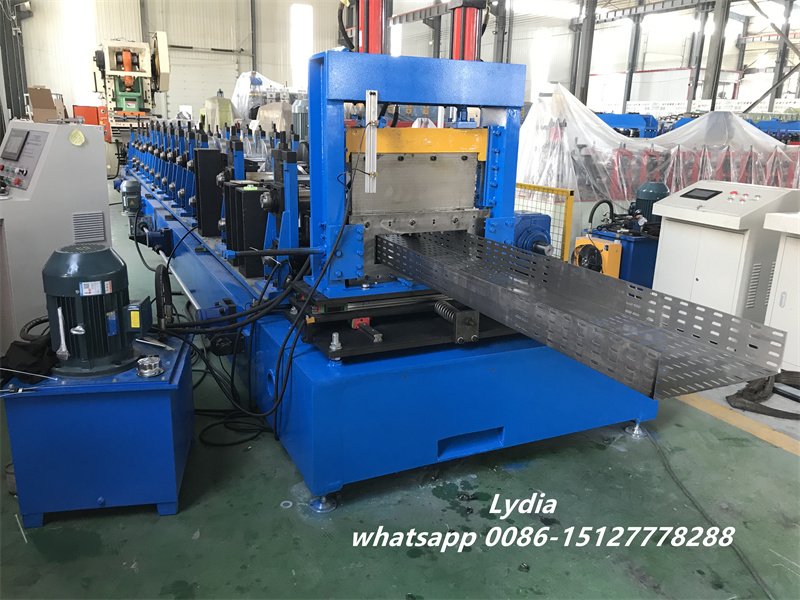
1. Automatic Width Adjustment
Among all intelligent functions, Automatic Width Adjustment is one of the most valuable features of a modern Cable Tray Roll Forming Machine. Traditional production lines require operators to loosen bolts, remove spacers, manually reposition roll forming stations, and realign side rollers whenever the tray width changes. This process is labor-intensive and can take several hours. In contrast, an Automatic Adjustable Cable Tray Roll Forming Machine uses heavy-duty linear guide rails, servo motors, precision ball screws, and absolute encoders to move all forming stations simultaneously. Once a new cable tray width is selected on the touchscreen, the PLC sends commands to the servo motors, automatically positioning each roll forming station with high precision. This system supports tray widths from 100 mm to 600 mm, achieves positioning accuracy of up to ±0.05 mm, eliminates manual spacer replacement, and reduces changeover time from hours to just a few minutes while maintaining perfect left-right synchronization.
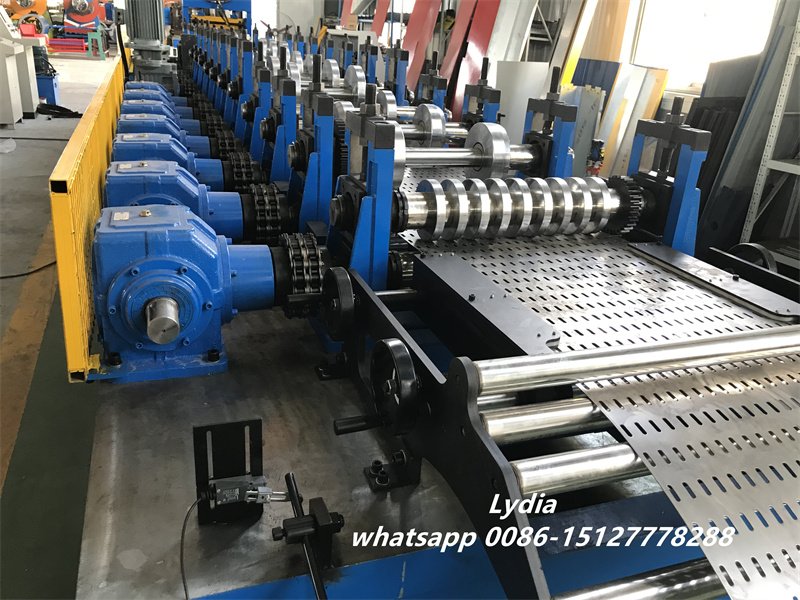
2. Automatic Side Height Adjustment
The side wall height of a cable tray plays a critical role in determining its structural strength and load-bearing capacity. Therefore, modern Automatic Cable Tray Roll Forming Machines are equipped with servo-controlled height adjustment systems that automatically adapt to different tray specifications. The upper roller assemblies are mounted on lifting mechanisms powered by servo motors, worm gear reducers, and precision lead screws. When operators select a new cable tray size, the PLC automatically calculates the required roller positions based on the desired tray height, material thickness, and steel properties. The system then raises or lowers the upper rollers accordingly. This intelligent adjustment technology supports common tray heights ranging from 25 mm to 100 mm, provides positioning accuracy of approximately ±0.03 mm, ensures consistent bending quality, and completely eliminates the need for manual roller adjustments.
3. Automatic Roller Gap Adjustment
Different cable tray products often require varying material thicknesses, making Automatic Roller Gap Adjustment an essential function in modern roll forming equipment. Typical cable tray production involves steel thicknesses ranging from 0.8 mm to 2.0 mm, and incorrect roller gaps can lead to defects such as deformation, surface damage, or incomplete bends. To solve this problem, advanced Cable Tray Roll Forming Machines integrate laser thickness sensors, pressure sensors, and servo-controlled upper roller systems. As material enters the machine, the sensors automatically measure the actual thickness and transmit the data to the PLC. The control system then adjusts the roller gap in real time to maintain optimal forming pressure. This intelligent compensation system helps achieve stable forming performance, improved surface quality, reduced material waste, and highly consistent product dimensions across different coil batches.
4. Automatic Punching Position Adjustment
Many cable tray products require precise punching patterns, including mounting holes, ventilation holes, and cable routing holes. Traditional punching systems often require manual die repositioning whenever tray widths change, resulting in long setup times and increased labor costs. A modern Servo Punching Cable Tray Roll Forming Machine eliminates these challenges through an automated punching adjustment system. The servo-driven punching unit automatically moves tooling positions according to the selected cable tray width, ensuring that holes remain perfectly aligned regardless of product size. All punching patterns are stored within the machine’s recipe database and can be recalled instantly. This technology provides automatic hole alignment, eliminates manual die adjustments, reduces setup time, and significantly improves punching accuracy and production efficiency.
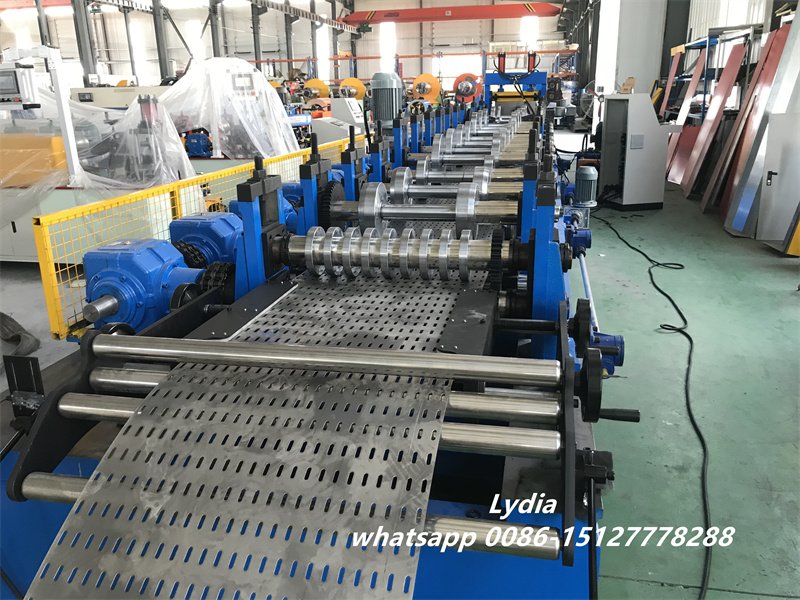
Intelligent PLC Control System
The core of every Automatic Cable Tray Roll Forming Machine is its Intelligent PLC Control System, which coordinates all machine movements and production functions. Modern production lines typically utilize internationally recognized control platforms such as Siemens PLC, Mitsubishi PLC, EtherCAT communication networks, and industrial-grade touchscreen HMIs. Through an advanced recipe management system, operators can quickly select predefined specifications such as 200 × 50 mm cable trays, 300 × 75 mm cable trays, or 400 × 100 mm cable trays. Once selected, the PLC automatically calculates and adjusts all necessary parameters, including forming width positions, side wall heights, roller gaps, punching coordinates, and cutting lengths. More than 100 product recipes can be stored and recalled instantly, allowing manufacturers to achieve fast product changeovers, intelligent production management, and highly flexible manufacturing operations.
Closed-Loop Inspection and Automatic Compensation
One of the most advanced features of modern cable tray roll forming lines is online quality monitoring.
A laser profile scanner installed at the exit of the machine continuously measures:
- Tray width
- Side wall height
- Bend angles
- Flatness
The measured data is compared with target specifications in real time.
Automatic Error Correction
If deviations are detected:
- Width error > 0.1 mm
- Height error > 0.08 mm
the PLC automatically adjusts servo positions to compensate.
This creates a true closed-loop control system.
Benefits
- Eliminates manual measurement
- Maintains dimensional consistency
- Reduces scrap rates
- Supports unattended production
Fully Automated Changeover Process
The complete automatic adjustment process typically follows these steps:
Step 1: Select Product Recipe
The operator selects the desired cable tray specification from the HMI.
Example:
- Width: 400 mm
- Height: 80 mm
- Thickness: 1.2 mm
Step 2: Automatic Positioning
The machine automatically adjusts:
- Roll forming stations
- Side guides
- Punching units
- Roller gaps
All servo axes move simultaneously.
Step 3: Trial Production
A short sample section is produced at low speed.
The laser inspection system measures the profile dimensions.
Step 4: Automatic Compensation
The PLC compares actual dimensions with target values.
Necessary corrections are automatically applied.
Step 5: Full-Speed Production
Once the profile meets tolerance requirements, the production line accelerates to normal operating speed.
Typical production speed:
- 15–25 m/min
Future Trends in Cable Tray Manufacturing
As Industry 4.0 technologies continue to develop, the next generation of cable tray roll forming machines will incorporate:
- MES integration
- Cloud-based recipe management
- Remote diagnostics
- Predictive maintenance
- AI-assisted process optimization
- Digital production monitoring
These technologies will further improve efficiency and reduce operational costs.
The automation of modern Cable Tray Roll Forming Machines is built upon three key technologies: servo-driven mechanical adjustment, intelligent PLC control, and real-time laser inspection feedback.
By replacing manual adjustments with automated servo systems, manufacturers can achieve rapid specification changes, higher production accuracy, lower labor costs, and significantly reduced downtime. With automatic width adjustment, height adjustment, roller gap control, punching synchronization, and closed-loop quality compensation, today’s cable tray production lines have evolved into highly flexible and intelligent manufacturing systems.
For companies producing cable trays in multiple sizes, investing in a fully automatic cable tray roll forming machine is no longer just an upgrade—it is a strategic step toward smarter, faster, and more profitable manufacturing.



Reviews
There are no reviews yet.