
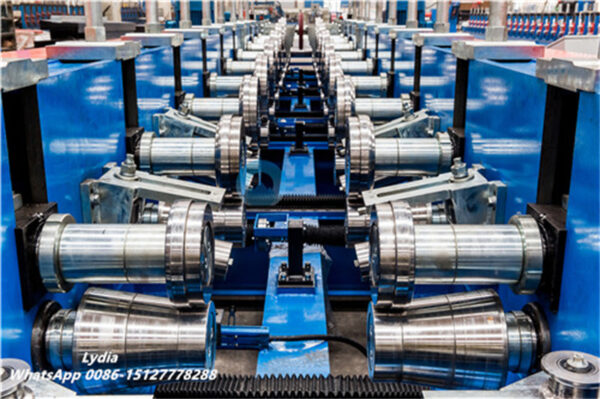
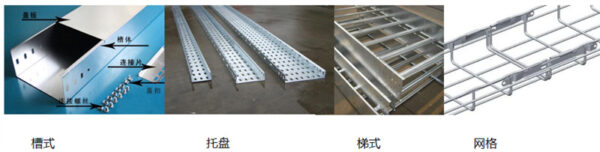
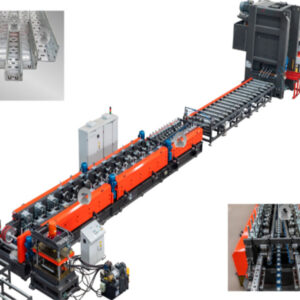
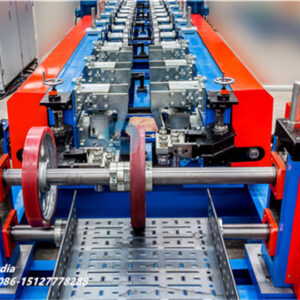
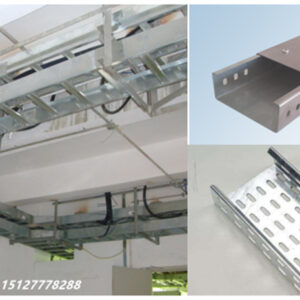
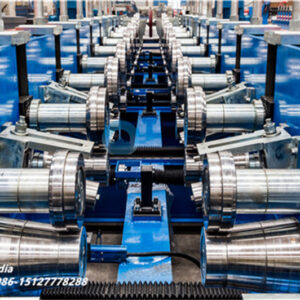

Cable tray systems play a critical role in modern electrical infrastructure. They support, protect, and organize power cables, communication cables, and data transmission lines in commercial, industrial, and utility projects. As global demand for cable management solutions continues to grow, manufacturers are increasingly investing in advanced cable tray roll forming machines to improve production efficiency and product quality.
Understanding the different types of cable tray roll forming machines, as well as the distinction between pre-cut and post-cut technologies, can help manufacturers choose the most suitable production solution for their business.
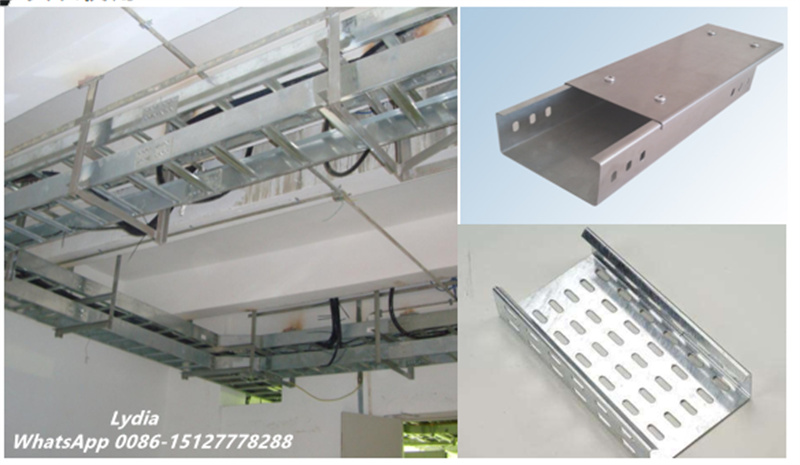
Different Types of Cable Tray Roll Forming Machines
The cable tray industry includes several product categories, and each category may require a different manufacturing process. Therefore, roll forming machine configurations vary according to the tray design, material thickness, and market requirements.
Ladder Cable Tray Roll Forming Machine
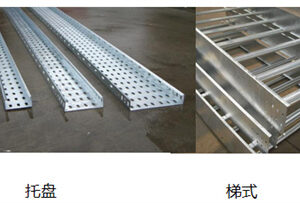
A ladder cable tray roll forming machine produces the side rails used in ladder-type cable tray systems. These trays consist of two longitudinal side members connected by cross rungs.
Ladder trays offer excellent ventilation and heat dissipation, making them ideal for heavy-duty power cable installations. Manufacturers often prefer ladder trays for industrial plants, power stations, and large infrastructure projects.
For customers already producing perforated cable trays, ladder tray side rails can often be manufactured using modified cable tray production lines, reducing equipment investment.
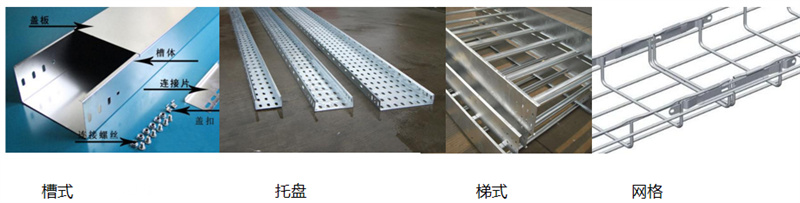
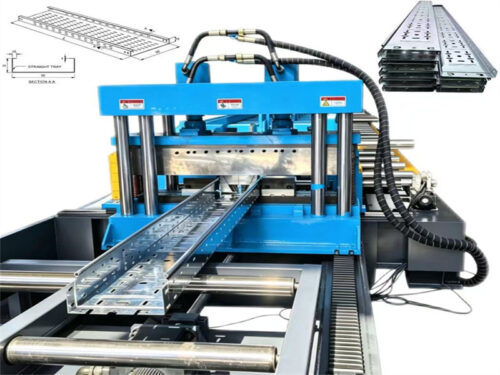
Perforated Cable Tray Roll Forming Machine
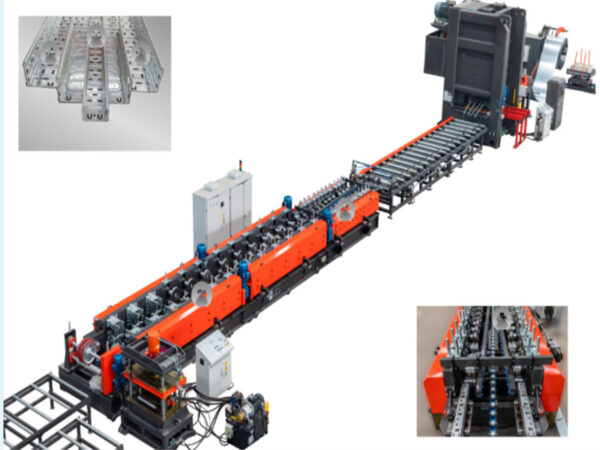
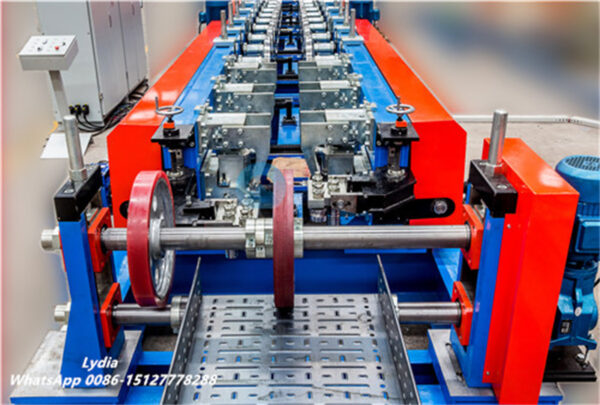
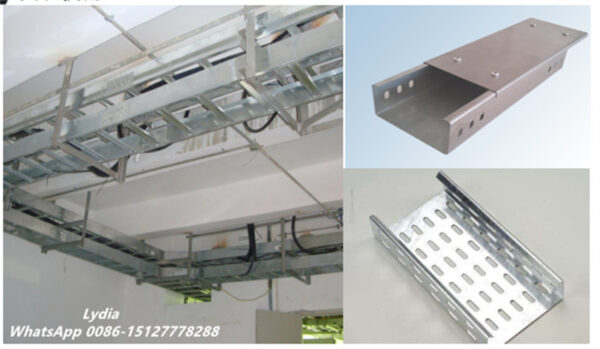
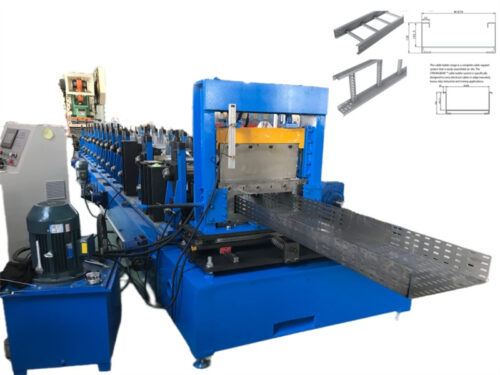
A perforated cable tray machine manufactures tray sections with punched holes in the bottom and side walls. These openings improve airflow while reducing overall product weight.
Because perforation patterns vary significantly among different countries and standards, manufacturers typically integrate:
- Hydraulic punching systems
- Servo feeding units
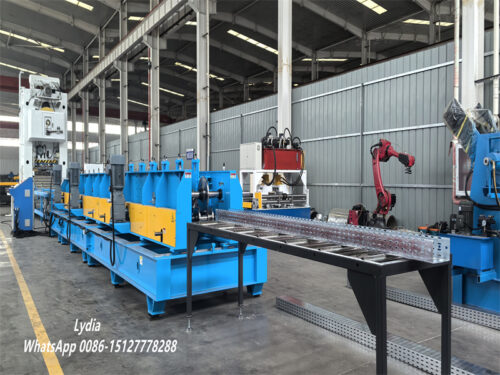
- High-speed roll forming sections
- Automatic cutting systems
This machine type is widely used for commercial buildings, shopping centers, hospitals, and office complexes.
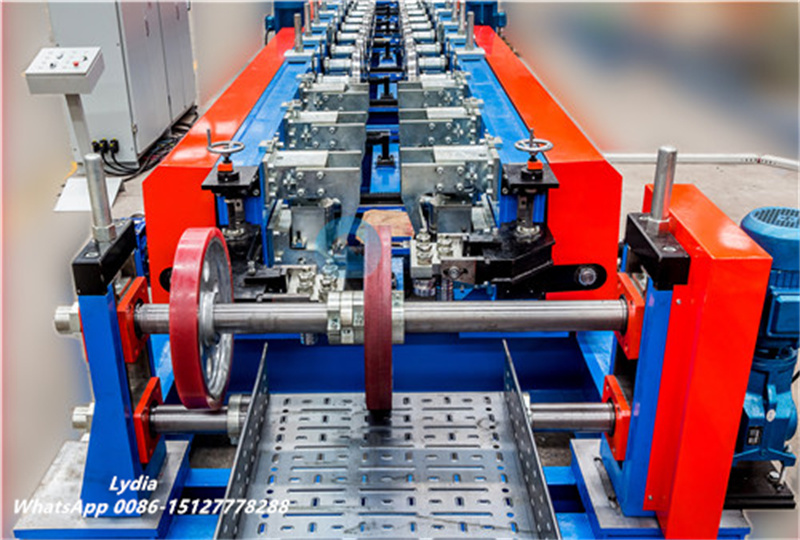
Solid Bottom Cable Tray Roll Forming Machine
A solid-bottom cable tray roll forming machine produces enclosed trays without ventilation holes.
These trays provide enhanced protection against dust, moisture, and electromagnetic interference. Consequently, they are commonly used for communication cables, fiber optic cables, and control systems installed in sensitive environments.
European Standard Cable Tray Roll Forming Machine
European markets often require specially designed cable trays that comply with strict structural and safety standards.
Compared with conventional cable trays, European standard cable tray machines usually require:
- Dedicated punching dies
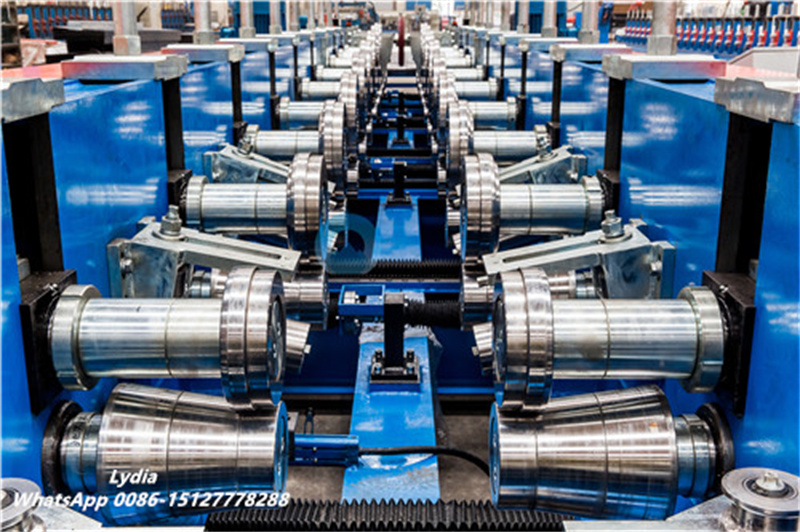
- Multiple roll forming stations
- Precision servo feeding systems
- Heavy-duty hydraulic presses
As a result, the initial investment is considerably higher, but manufacturers gain access to premium construction and industrial projects throughout Europe and other international markets.
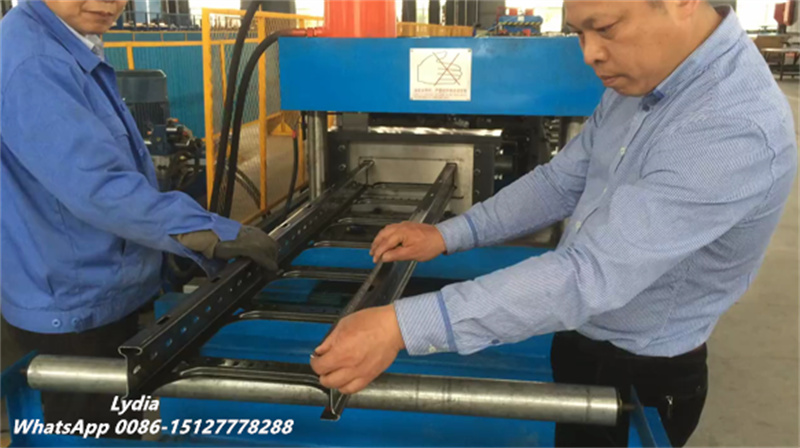
Comparison of Common Cable Tray Types
| Cable Tray Type | Structure | Main Advantages | Typical Applications |
|---|---|---|---|
| Ladder Cable Tray | Open ladder structure | Excellent ventilation and load capacity | Power plants, factories, substations |
| Perforated Cable Tray | Ventilated bottom with holes | Good heat dissipation and lightweight design | Commercial buildings, offices |
| Solid Bottom Cable Tray | Fully enclosed structure | Superior protection and EMI shielding | Data centers, communication systems |
| European Standard Cable Tray | Reinforced engineered profile | High strength and compliance with international standards | Industrial and infrastructure projects |
What Is a Pre-Cut Cable Tray Roll Forming Machine?
In a pre-cut cable tray roll forming machine, the steel coil is punched and cut to the required length before entering the roll forming section.
The production sequence follows these steps:
Coil feeding → Punching → Cutting → Roll forming → Finished product
This design offers several important advantages. First, manufacturers can reduce tooling costs because the cutting operation occurs before profile formation. Second, maintenance becomes simpler due to the relatively straightforward cutting mechanism. Additionally, pre-cut systems perform well when producing products with fixed lengths and moderate production speeds.
However, pre-cut machines may generate slight dimensional variations at the leading and trailing edges of the profile. Therefore, they are generally preferred for standard cable tray production rather than high-precision applications.
What Is a Post-Cut Cable Tray Roll Forming Machine?
A post-cut cable tray roll forming machine performs cutting after the profile has been completely formed.
The production sequence becomes:
Coil feeding → Punching → Roll forming → Cutting → Finished product
This method allows the machine to produce highly accurate profile lengths and cleaner product ends. Furthermore, manufacturers can easily change production lengths through the PLC control system without adjusting upstream processes.
Because of these advantages, post-cut technology has become increasingly popular for:
- High-speed production lines
- Export-oriented manufacturing
- European-standard cable trays
- Precision cable management systems
The main disadvantage is the higher investment cost. Since the cutting system must accommodate the fully formed profile, tooling and hydraulic components become more complex.
Pre-Cut vs. Post-Cut: Which Solution Is Better?
Selecting the right cutting method depends on production goals, budget, and target markets.
| Feature | Pre-Cut System | Post-Cut System |
|---|---|---|
| Initial Investment | Lower | Higher |
| Tooling Complexity | Simple | More Complex |
| Length Accuracy | Good | Excellent |
| Production Flexibility | Moderate | High |
| Maintenance Cost | Lower | Moderate |
| Suitable Products | Standard cable trays | Premium and precision trays |
In general, manufacturers targeting local construction projects often choose pre-cut systems because they offer a lower investment and reliable output. On the other hand, companies serving international markets frequently select post-cut machines to achieve superior precision and meet stricter customer requirements.
Choosing the Right Cable Tray Roll Forming Machine
The ideal cable tray roll forming machine should match both your current production requirements and future market expansion plans. Before making an investment, manufacturers should evaluate product types, material thickness, production volume, and regional standards.
Whether producing ladder cable trays, perforated cable trays, solid-bottom trays, or European-standard systems, a properly designed roll forming line can significantly improve efficiency, reduce labor costs, and ensure consistent product quality.
As global infrastructure development continues to accelerate, advanced cable tray roll-forming equipment remains one of the most valuable investments for metal forming manufacturers seeking long-term growth and competitiveness.




Reviews
There are no reviews yet.